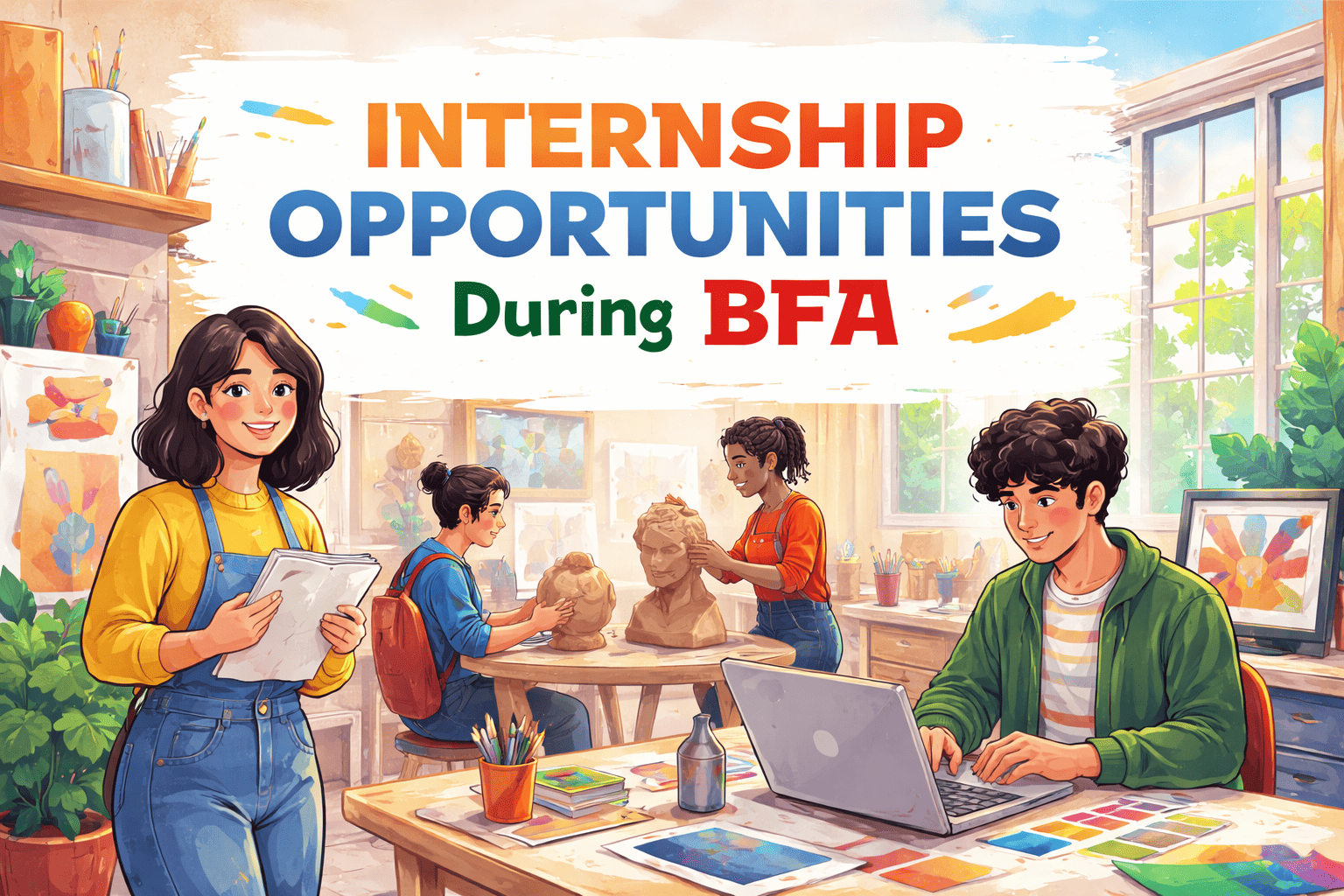
Internship Opportunities During BFA: Top Programs for Students Seeking Experience in Arts and Humanities
Exploring internship opportunities during your Bachelor of Fine Arts (BFA) journey can be a transformative step toward building a successful career in the arts and humanities. Internships provide hands-on experience, industry exposure, and the chance to apply your creative skills in real-world settings.
Whether you’re based in Delhi NCR, Noida, or beyond, discovering top programs tailored for BFA students can help you gain practical insights, expand your portfolio, and develop valuable networks. This guide highlights the most sought-after internship options, empowering you to take confident strides toward your artistic ambitions and future professional growth.
BFA Internships: A Brief Overview
Internships during a Bachelor of Fine Arts program provide essential real-world experience, bridging the gap between academic learning and professional practice in arts and humanities. Students in Delhi NCR and Noida can gain hands-on skills, expand their portfolios, and build valuable industry networks by interning at museums, creative agencies, and cultural institutions.
These opportunities foster both technical and soft skills while deepening an appreciation for history, heritage, and interdisciplinary fields. Thoughtfully chosen internships empower students to confidently shape their creative careers and stand out in the evolving art landscape.
Key Highlights
- Internships bridge academic learning with real-world arts experience, enhancing professional skills for BFA students.
- Product design and museum internships help BFA aspirants build strong portfolios and develop hands-on, interdisciplinary skills.
- Strategic selection of internships in Delhi NCR and Noida boosts career prospects through relevant exposure and mentorship.
- National Museum internships offer immersive artistic, curatorial, and digital media experiences for students passionate about India’s heritage.
- Internships deepen understanding of history, enrich portfolios, and empower students to innovate in the creative and cultural sectors.
Exploring the Importance of Internships During BFA Studies
Pursuing a BFA after completing 12th opens doors to creative and intellectual exploration, but translating these passions into employment often hinges on practical experience. Internships play a pivotal role for students seeking to connect coursework with the demands of the professional arts and humanities world.
By joining a thoughtfully designed internship programme, BFA students gain exposure that can’t be replicated in the classroom, real-world work environments, industry connections, and practical skills development.
Understanding why these programs matter can shape how students approach both their academics and their future careers, especially for those studying in dynamic hubs like Delhi NCR and Noida, where opportunities to intern are abundant and diverse.
Read more: What Can You Do with a BFA? 15 High-Paying Creative Careers
How Internships Bridge Academic Learning and Real-World Work?
The transition from academic theory to professional practice is a challenge that many BFA students face. An internship programme acts as a vital bridge, helping students connect what they’ve learned in lectures to practical work in studios, creative agencies, or museums.
Participating as an intern during your BFA isn’t just about filling out your resume; it’s about actively engaging with the creative workflow, receiving constructive feedback, and developing adaptability, all within the context of real organizational projects. This exposure cultivates not only technical abilities but also professional habits such as collaboration, time management, and client communication, which are crucial for long-term success in the arts and humanities sector.
Book Now →
Moreover, internships offer students a chance to discover which areas of their field resonate most with their talents and ambitions. By working on diverse projects, BFA students often uncover new interests, perhaps in curatorial work, art therapy, or design, which can inform their future educational or career choices.
For those based in Delhi NCR and Noida, the breadth of available programs means there’s ample opportunity to explore a range of creative settings, from innovative startups to established cultural institutions. This immersion in real-world work provides a depth of experience that textbooks simply can’t offer, allowing students to build a network and establish mentors who may guide their careers post-graduation.
As BFA students continue their studies, strategically choosing where to intern can greatly enhance not only employability but also confidence and a genuine sense of readiness for the challenges and rewards of creative work.
Do you want free career counseling?
Ignite Your Ambitions- Seize the Opportunity for a Free Career Counseling Session.
Designing Your BFA Career Path: Pursuing a Product Design Intern Role
Creating a successful career as a BFA student means seeking out hands-on experiences that propel your growth beyond the classroom. While understanding Fine Arts Course fees is an important part of planning your education, landing a product design intern role is one of the most dynamic ways to merge creativity, strategy, and real-world application. These internships help bridge the gap between academic projects and industry demands, letting you apply your artistic talents to develop market-ready solutions for innovative companies.
By pursuing opportunities that start quickly, BFA aspirants can stay ahead, refine their graphic design and animation skills, and begin building a strong portfolio that attracts future employers.
Skills and Portfolio Tips for Aspiring Product Designers
Stepping into a product design intern position as a fresher opens the door to learning directly from industry leaders, but preparation is key. For students pursuing a BFA course after 12th, one of the most important assets you’ll need is a well-tailored portfolio. When applying for product design internships, ensure your portfolio includes a mix of classroom assignments and personal projects that showcase technical skills, such as proficiency with graphic design and animation software, as well as your unique creative voice.
Showcasing a range of case studies, detailing your process from concept sketches to final prototyping, proves your ability to think critically and adapt designs based on feedback, which employers in the arts and humanities fields highly value. These skills also play a crucial role in expanding career options after BFA, especially in design-driven industries.
In today’s digital-first world, product designers must master both the fundamentals of design theory and the practical tools demanded by the industry. Your portfolio should include work created using essential platforms such as Adobe Creative Suite, as well as projects utilizing motion and animation, demonstrating how you bring static concepts to life with storytelling and interaction.
Good communication strengthens your presentation—annotate your portfolio with concise explanations about your inspiration, choices, and problem-solving strategies for each featured project. These portfolio tips for BFA admissions and internships ensure clarity, guiding reviewers through your work while highlighting your ability to present ideas effectively—an invaluable skill for any fresher breaking into product design roles.
Don’t overlook soft skills in your resume or portfolio. The collaborative nature of a product design intern role means employers want to see evidence of teamwork, adaptability, and time management. Volunteer work, group assignments, or freelance gigs can supplement your academic work, especially if they reflect your graphic design or animation capabilities.
For BFA students in Delhi NCR and Noida, actively seek feedback from mentors or visit design studios for portfolio reviews—this real-world insight refines your presentation and readies you for competitive jobs. If you’re just starting out, remember: your growth mindset, openness to critique, and genuine passion for learning will help you thrive as you launch your creative journey through an internship that could shape your future in the arts.
Museum Internship: Gaining Hands-On Experience in Art Spaces
For BFA students eager to bridge academic learning with authentic professional engagement, a museum internship delivers an immersive journey into the heart of the art world. Intern jobs within museums offer more than traditional work experience; they open doors to research-oriented internships that intersect history, curation, and creative practice.
Students discover new facets of the arts and humanities by participating in live gallery management, exhibition development, and educational outreach. Especially for those studying in vibrant cities like Delhi NCR and Noida, these roles not only amplify practical skills but also cultivate an appreciation for the preservation and communication of culture.
Unique Learning Outcomes from Working Within a Museum Environment
Stepping into a museum internship grants BFA students an exceptional platform to develop practical, career-defining skills in ways the classroom simply can’t. Unlike other intern jobs, museum roles are deeply rooted in the tangible interaction between art, audience, and history.
As students handle original artifacts, engage in research-oriented internships, and support curatorial activities, they’re exposed to the wide-reaching impact of art preservation and storytelling. This hands-on work makes academic concepts come alive, building a skill set that extends far beyond textbook theory into the realm of true professional practice.
One of the most significant learning outcomes for students is an appreciation for interdisciplinary work. Museum internships involve multifaceted tasks: cataloging artworks, assisting with interactive exhibits, or compiling research on historical periods to inform visitors and guide museum programming.
By engaging regularly with museum staff, historians, and visiting scholars, students refine both their communication and analytical abilities. These are transferable skills, applicable to a broad spectrum of careers in the arts and humanities, from education and archival management to urban arts policy and creative entrepreneurship in creative hubs like Delhi NCR and Noida.
Another substantial benefit is the immersion in research-oriented internships that foster critical thinking. Gathering detailed background on artworks and artists, planning exhibition narratives, or contributing to public histories demands patience, curiosity, and accuracy, qualities essential for professional growth.
By the end of a museum internship, students gain portfolio-worthy projects and, more importantly, a nuanced understanding of how cultural work shapes, and is shaped by, the broader world. If you’re passionate about connecting history with contemporary experience, pursuing a museum internship could be a transformative step in your BFA journey.
Having completed a rewarding museum internship, I developed a variety of valuable skills and experiences, including:
- Assisting with exhibit planning and installation alongside curators and designers
- Conducting educational tours for student and community groups
- Cataloguing artifacts and updating digital databases for collections management
- Supporting event coordination for public programs and special exhibitions
- Developing interpretive materials for a diverse audience
- Collaborating with interdisciplinary teams on research projects
- Handling and preserving delicate historical objects under supervision
These experiences emphasize how a museum internship can foster both professional growth and a deeper appreciation for cultural heritage.
Choosing the Right Internship Programme for Arts and Humanities Students
Selecting the right internship in the arts and humanities field is a crucial step for students who want to gain real-world experience and launch meaningful careers. For BFA aspirants in Delhi, Noida, and the larger NCR region, the sheer variety of programs and organizations can feel overwhelming. To make the most of your internship opportunity, it’s essential to focus on internships that align with your creative goals, fit your schedule, and reflect the realities of the job market.
With careful consideration, the right program can help you uncover your strengths, build valuable networks, and open doors to future jobs in the arts sector.
| Criteria | Why It Matters | Tips for Evaluation | Example Questions to Ask |
| Relevance to Career Goals | Ensures the experience aligns with your academic and professional aspirations | Review the internship description and learning objectives | How does this role support my long-term goals? |
| Mentorship & Support | Quality guidance enhances learning and skill development | Inquire about the structure of supervision and feedback | Will I have a dedicated supervisor or mentor? |
| Professional Development | Opportunities to grow technical and transferable skills | Investigate available workshops, training, or networking events | What resources are provided for skill-building? |
| Work Environment | Positive settings foster better engagement and creativity | Ask about team culture and structures for collaboration | Can you describe the organization’s work culture? |
| Compensation and Logistics | Practicalities affect accessibility and overall experience | Clarify stipends, schedules, and any support services offered | Is the internship paid, and what are the working hours? |
Criteria for Selecting a Meaningful Program in Delhi NCR and Noida
With so many options for an internship in arts and humanities available in places like Delhi, Noida, and across the NCR, BFA students should be strategic in their approach to choosing where to apply. The right program can shape your exposure and career trajectory, while the wrong choice could mean missed opportunities. Start by identifying your artistic and academic strengths, whether your passion lies in studio art, curation, art history, or creative writing, as this clarity helps you narrow down programs that’ll complement your skills and interests.
Additionally, analyze the organization’s mission and history: reputable programs with a track record of positive student experiences are more likely to offer structured mentorship and impactful work assignments, rather than menial tasks unrelated to your career goals.
Location plays a huge role for students in Delhi and Noida. Choosing a BFA program that’s easily accessible not only ensures regular attendance but also helps you network with local professionals and gain familiarity with the art scene in your city.
Some of the best jobs for students are those that allow you to balance academic responsibilities with hands-on creative projects. Many established arts organizations and museums in Delhi NCR collaborate with universities and colleges, presenting formal programs tailored for BFA students, which often include learning modules, guided portfolio development, and feedback sessions from practitioners and curators.
Finally, don’t underestimate the value of an active mentor: build relationships with supervisors or team leaders who are willing to offer personalized advice and support as you navigate the arts employment landscape in Delhi and Noida. Ultimately, choosing thoughtfully will set you apart, build your confidence, and make your journey as a BFA student both rewarding and career-defining in India’s competitive arts sector.
Cultural Insights: How Internships Enhance Understanding of History and Heritage
For BFA students in India, particularly in culturally rich regions like Delhi NCR and Noida, immersive internships offer a transformative avenue to truly engage with history and heritage beyond books and theory. Each remote, summer internship, or winter internship in a museum, archive, or cultural foundation invites students to interact directly with artworks, artifacts, and the narratives that have shaped civilizations over centuries.
Whether you’re analyzing ancient manuscripts in a museum or curating social media campaigns to promote heritage sites, these experiences spark a profound appreciation for historical context and the interplay between art and culture.
This active learning directly impacts a student’s creative practice. The hands-on tasks, from handling priceless relics to researching folk traditions, encourage critical thinking about how art both records and shapes historical memory. Students reflect on the role heritage plays in shaping contemporary identities, influencing everything from graphic design to product invention.
In fact, understanding how traditional motifs or historical narratives inspire modern design opens doors to interdisciplinary pursuits, just as explored in programs like those detailed under fashion design course fees in India.
Whether you choose a summer internship to dive into curatorial work or a remote project to contribute to heritage digitization, these experiences elevate your portfolio and sharpen your storytelling, giving you compelling content to share with future employers.
Ultimately, every internship, be it remote, summer, or winter, offers a lens through which BFA students can view and reinterpret history. These roles not only help preserve India’s artistic legacy but also empower students to use tradition as a springboard for innovation, making cultural insights a central part of their journey from student to creative professional. Take the next step, explore your options, and let your understanding of history and heritage become a powerful asset in your evolving career.
Final Thoughts
Exploring internships during your BFA journey in Delhi NCR or Noida can set you apart in the competitive arts and humanities landscape. By engaging with renowned galleries, creative agencies, and cultural organizations, you gain not just practical experience but also a vital professional network. If you’re ready to transform your passion into a promising career, don’t hesitate to download our free guide to top internships for BFA students or connect with past interns for real-world testimonials. Take the first step toward a rewarding future in the arts today!