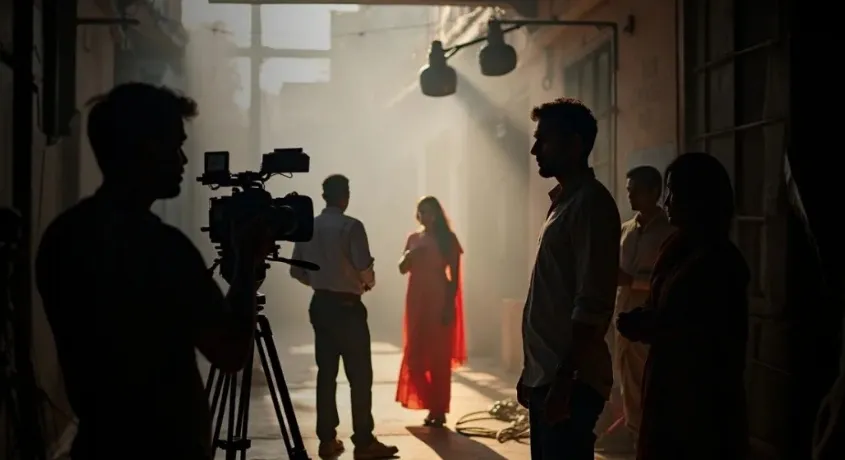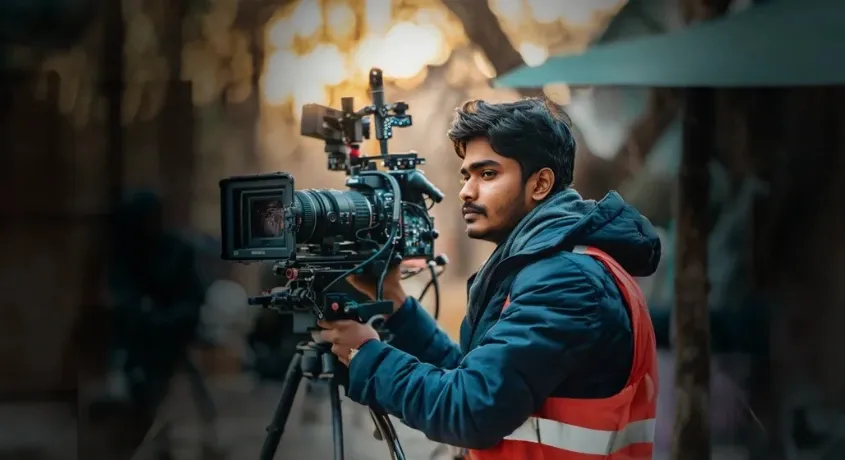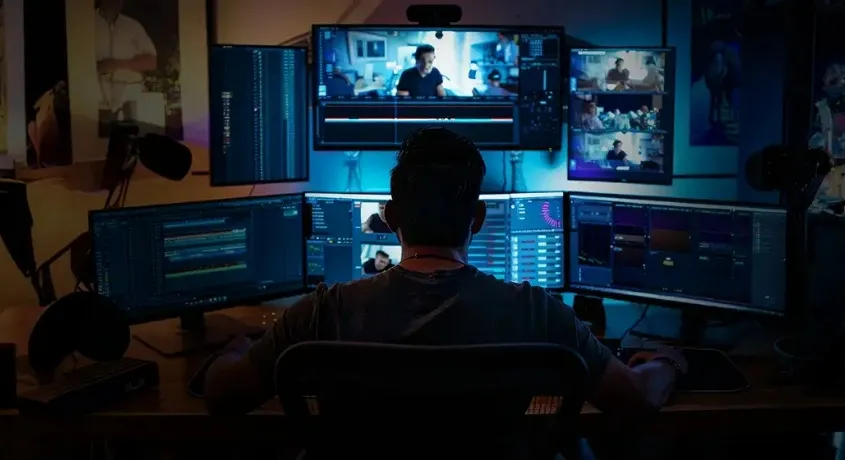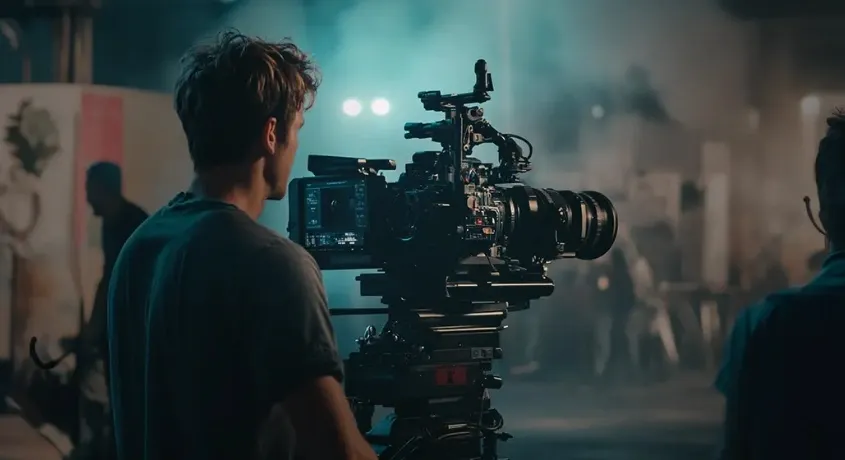
From the art of acting, where you will breathe life into characters, to the intricate craft of directing and guiding narratives with vision and creativity, the School of Cinema at AAFT ensures you master every aspect of the cinematic spectrum.
33+
Years of Cinema Education
Top 10
Ranked by Cine Premiere
2500+
Short Film Produced
1000+
Celebrity Interactions
AI
Integrated Curriculum
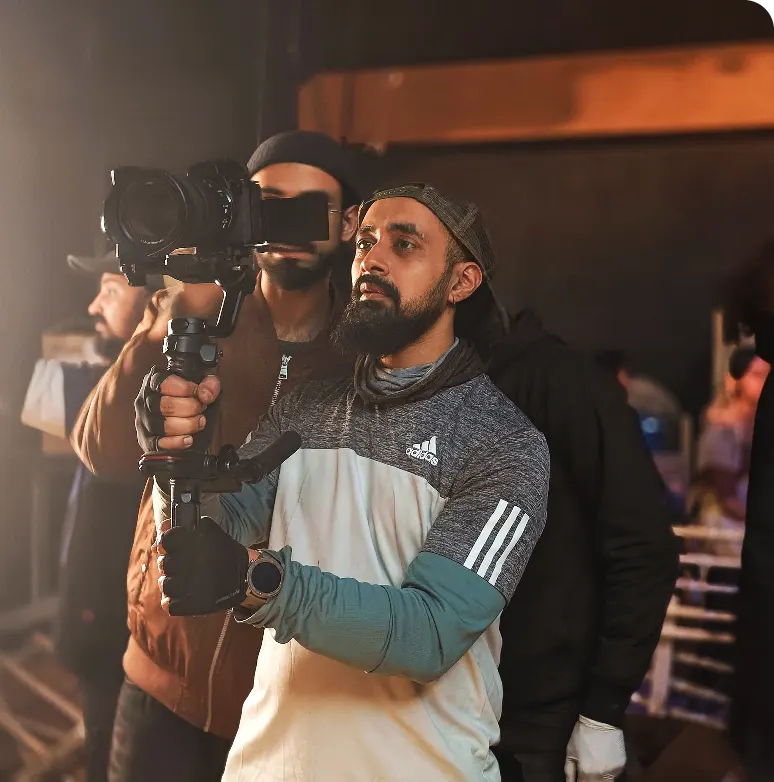
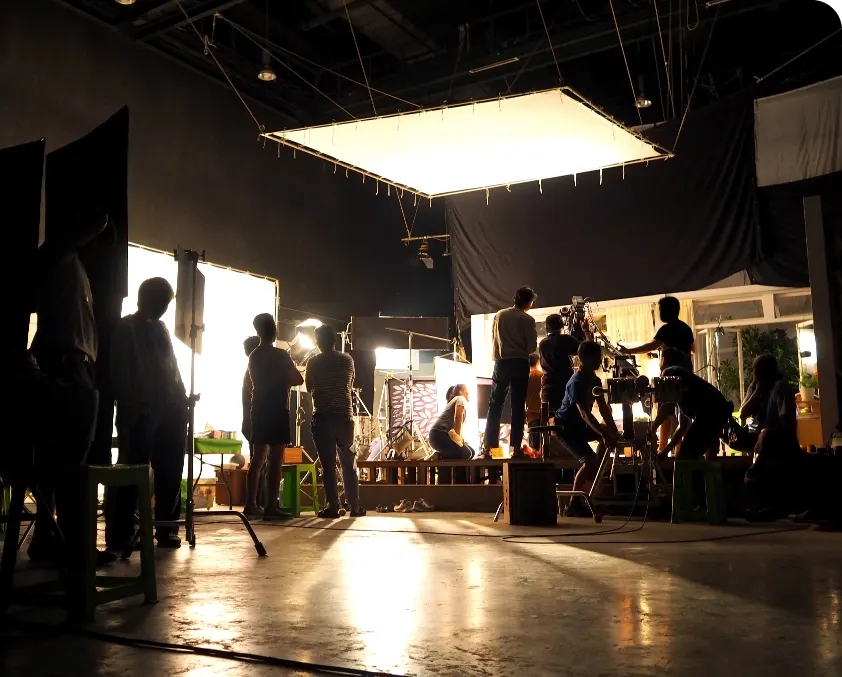
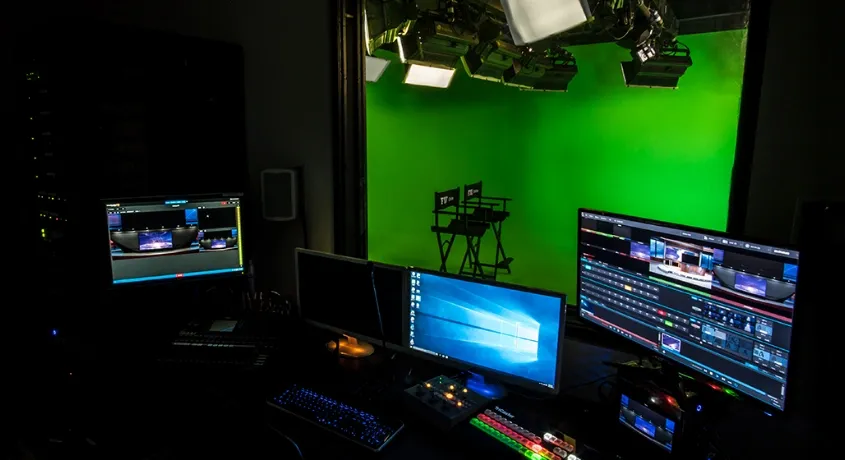
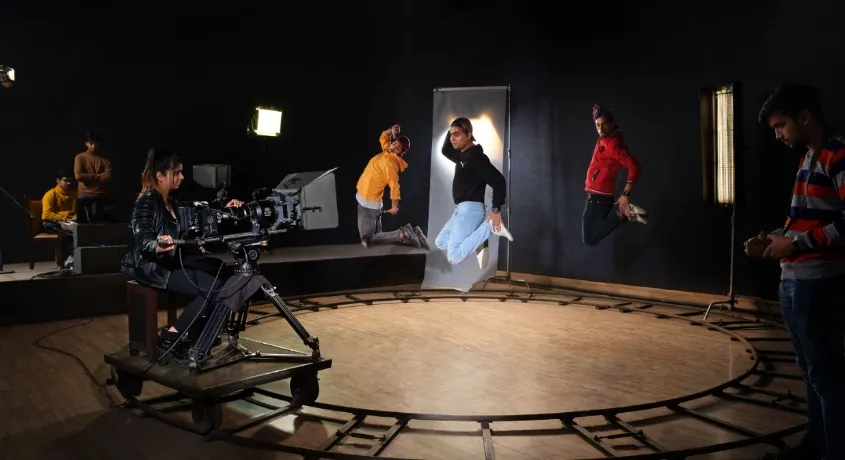
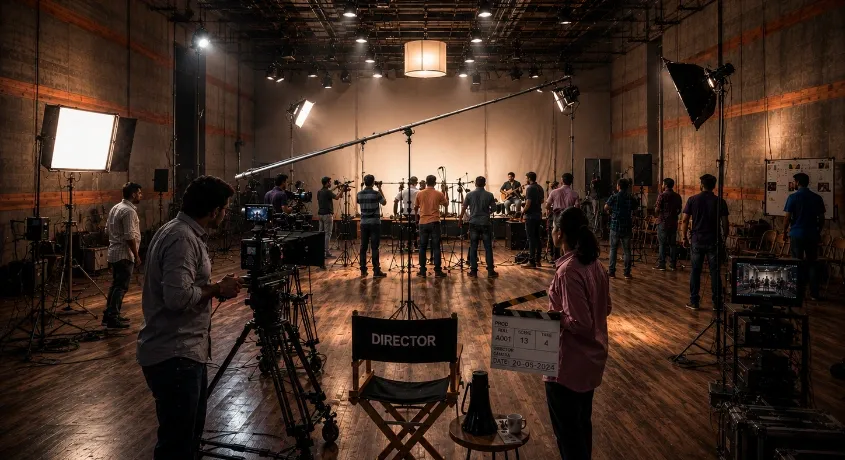
AAFT School of Cinema is where students are introduced to the world of cinematographic creation: scriptwriting, editing, working on a film set, directing actors, lighting, camera manipulation and shooting, sound, visual, and sound montages. Our state-of-the-art facilities, including a mini film training studio, post-production lab, screening theater, Mini TV training studio, production studio, and shooting floors, enable our students to gain hands-on experience and develop a deep understanding of filmmaking.
School of Cinema takes a hands-on approach to help students understand methodologies like directing, camera operation, photo direction, art direction, sound design, and editing. If cinema is your calling, take a step to elevate your career with AAFT.







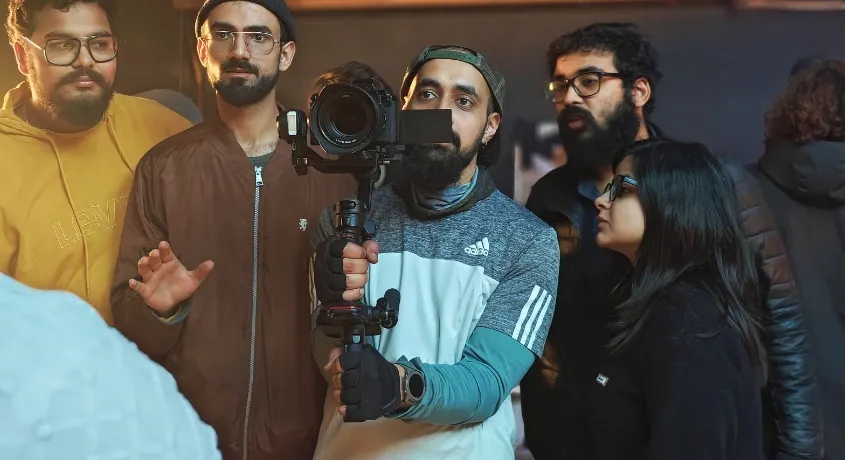
AAFT School of Cinema is highly equipped with professional cameras and production studios that allow students to gain hands-on experience in industry operations.
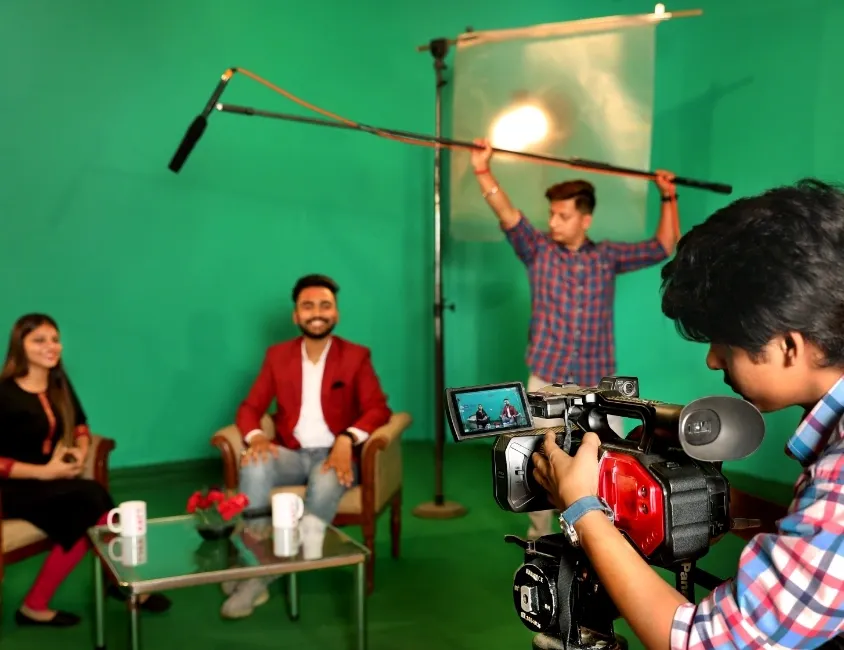
Croma Studio
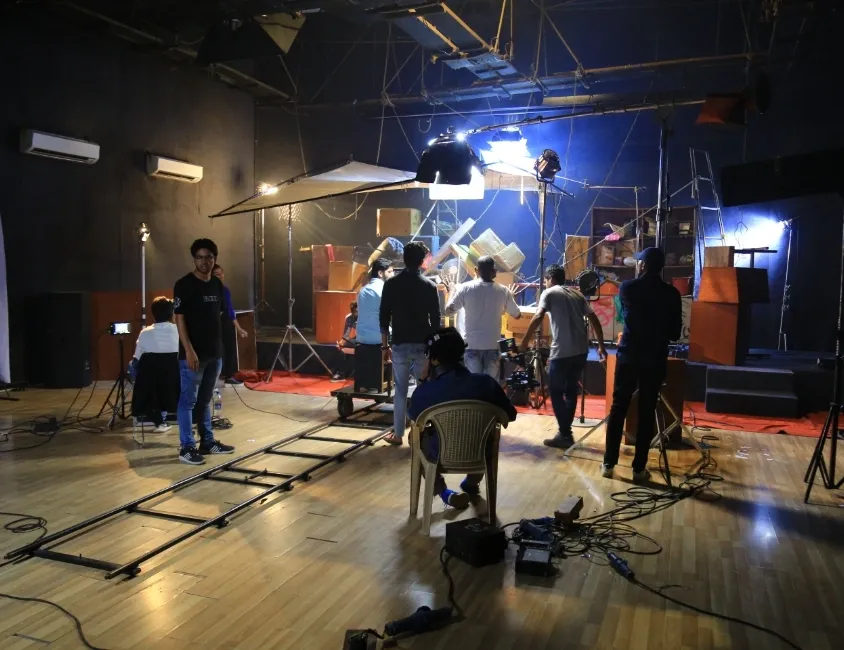
Film Shooting Studio
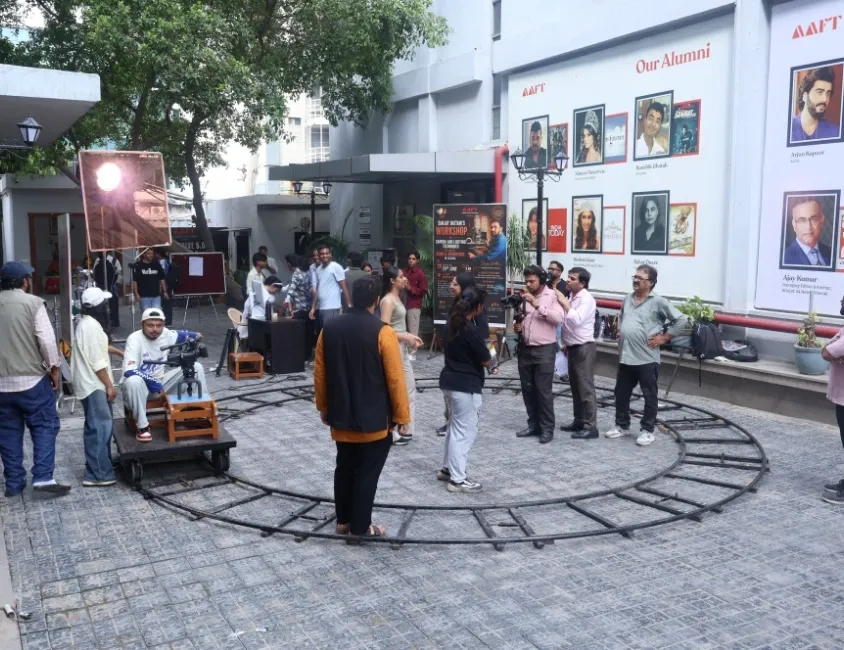
Outdoor Shooting Facility
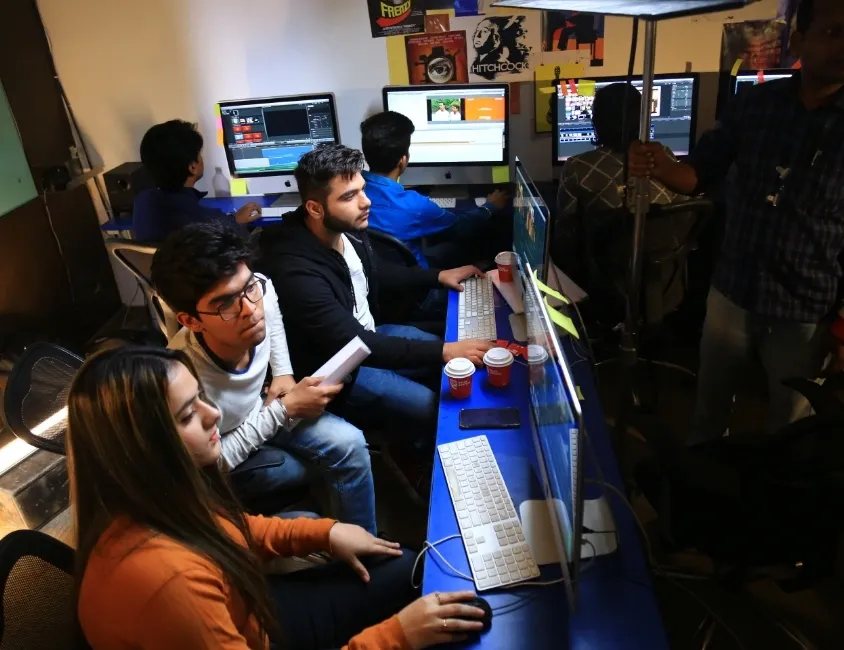
Post Production Lab

Rehearsal Hall
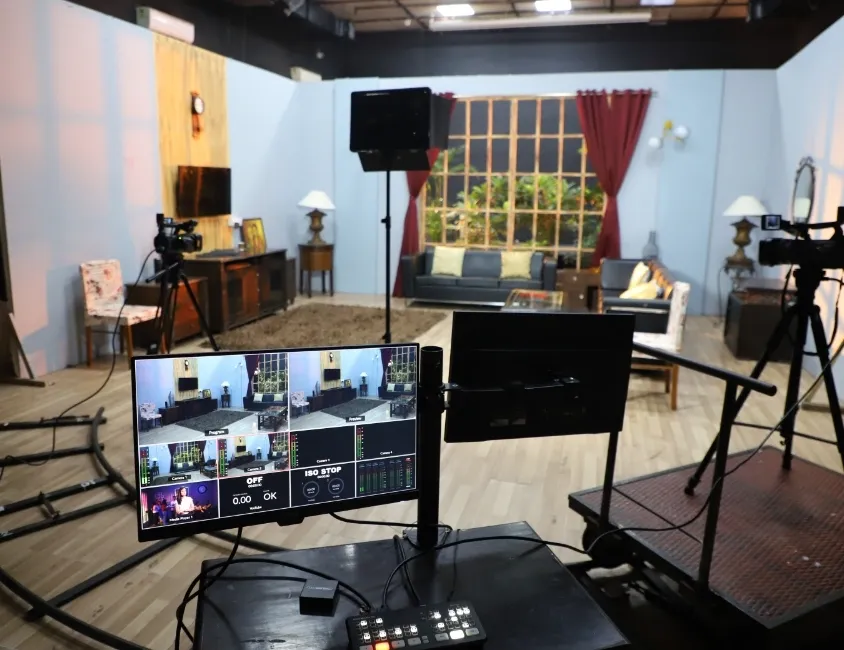
Studio Multi Cam Setup
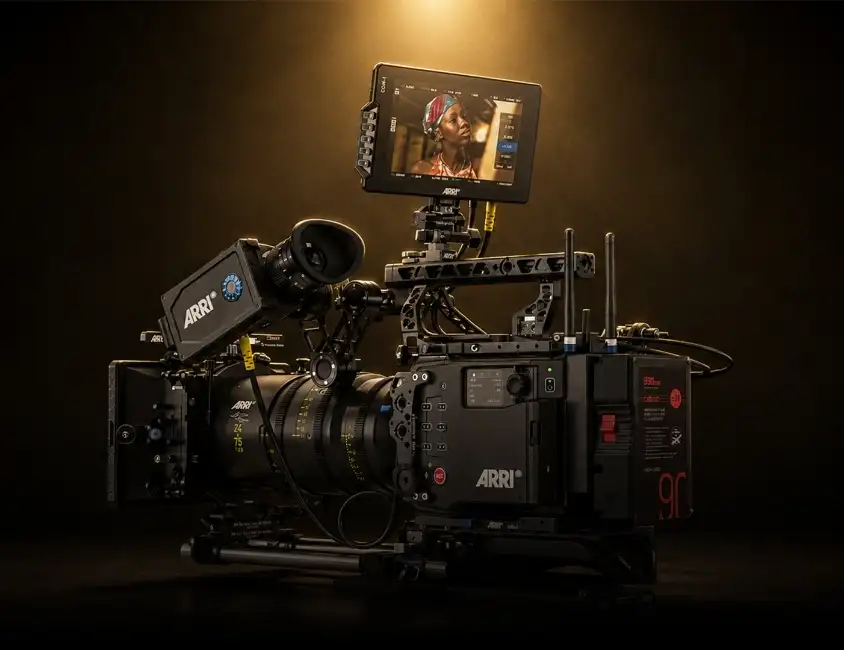
Arri Alexa Camera
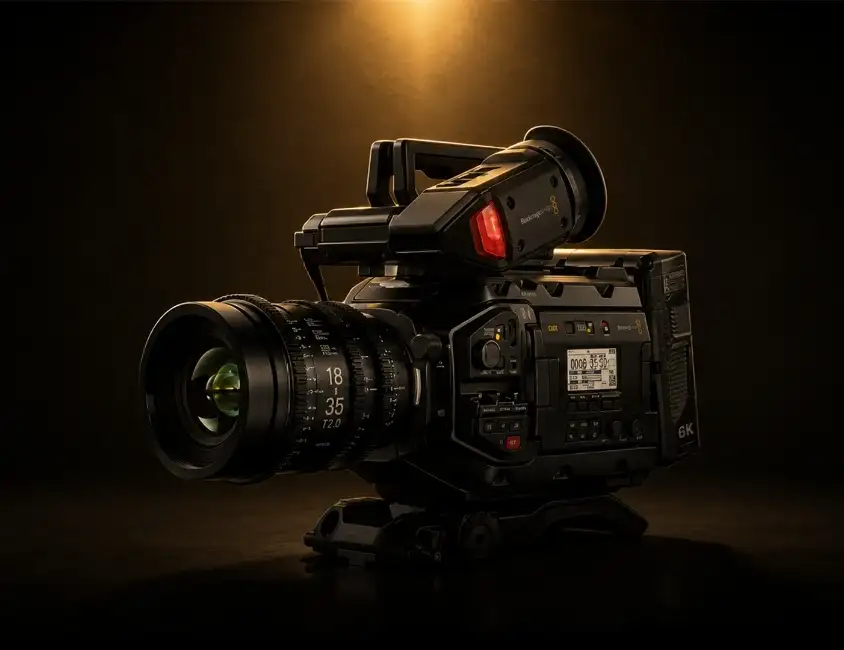
Black Magic URSA Mini 4k Camera
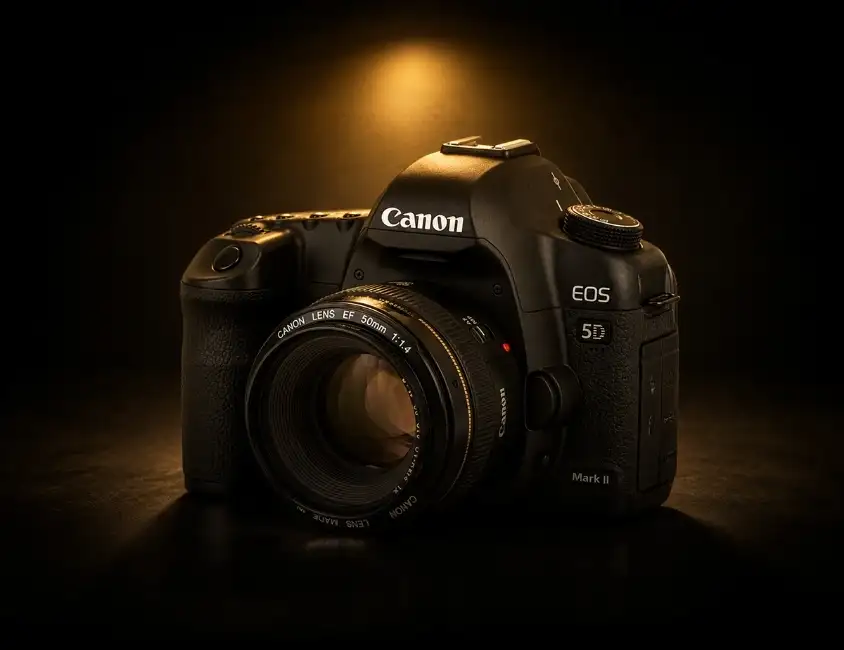
Canon 5D Mark ii Camera
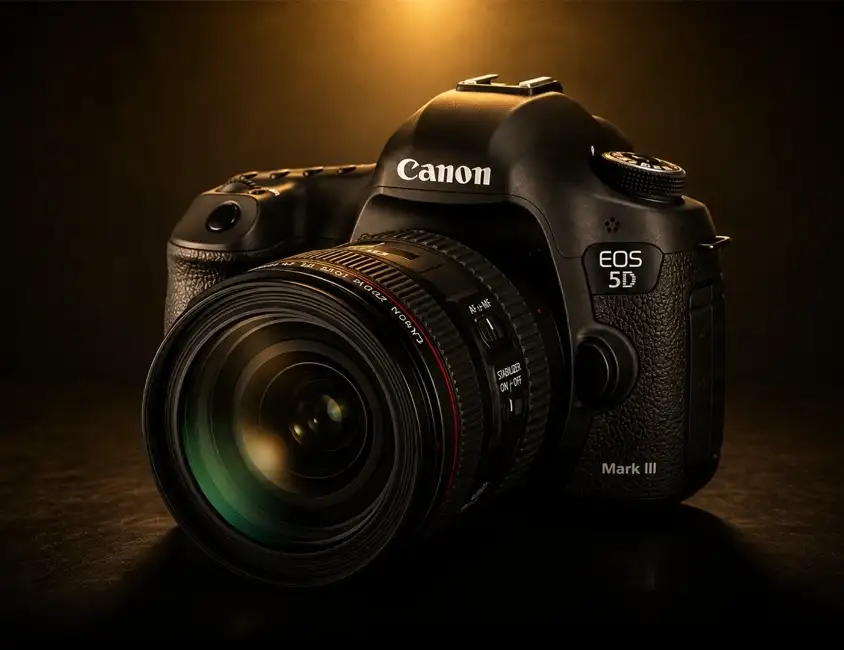
Canon 5D Mark iii Camera
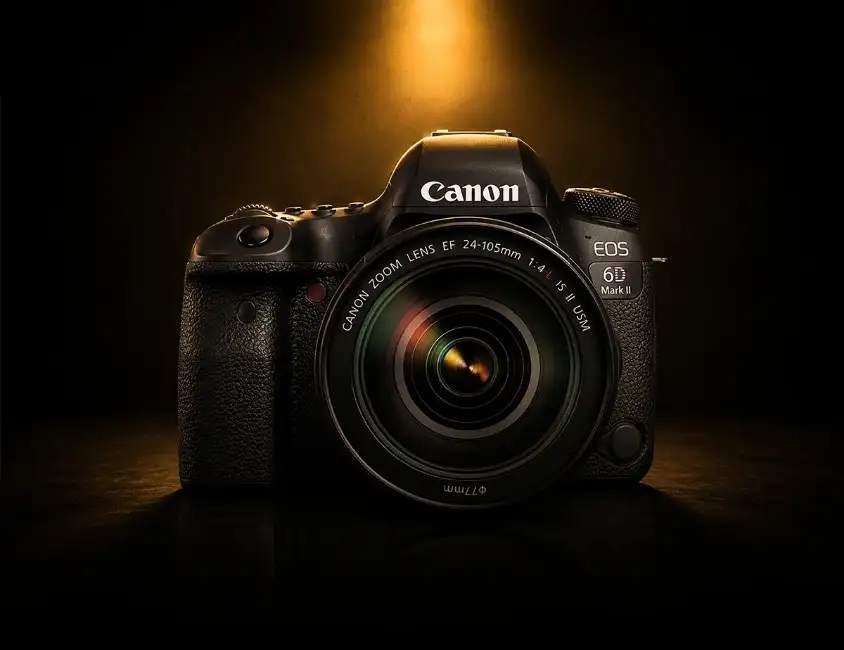
Canon 6D Mark ii Camera
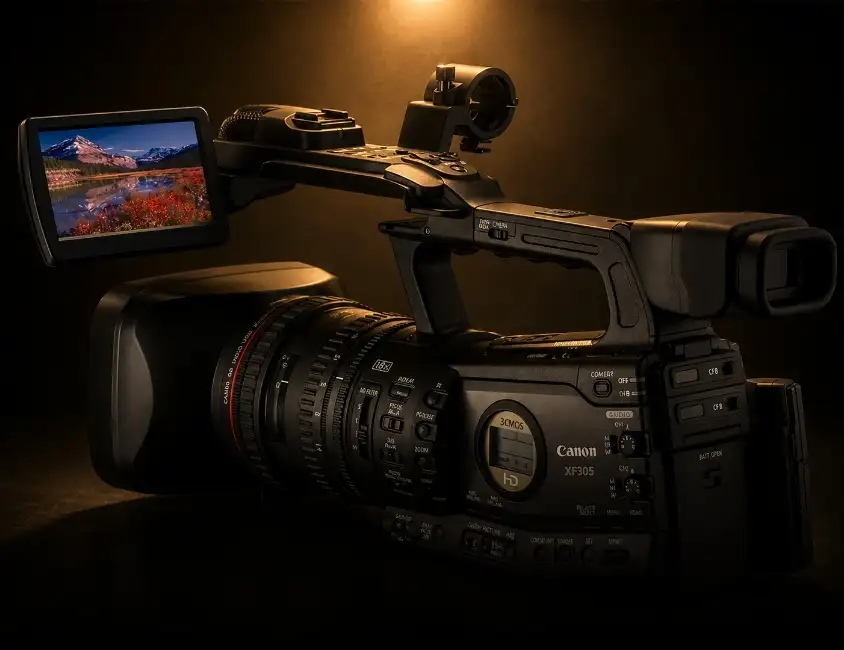
Canon XF 305 Camera
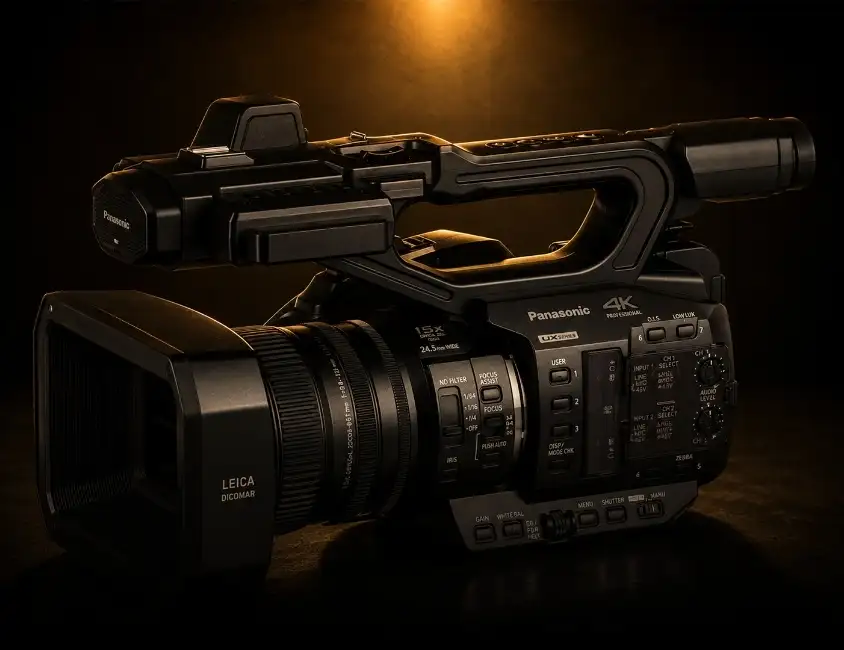
Panasonic AG UX90 Camera
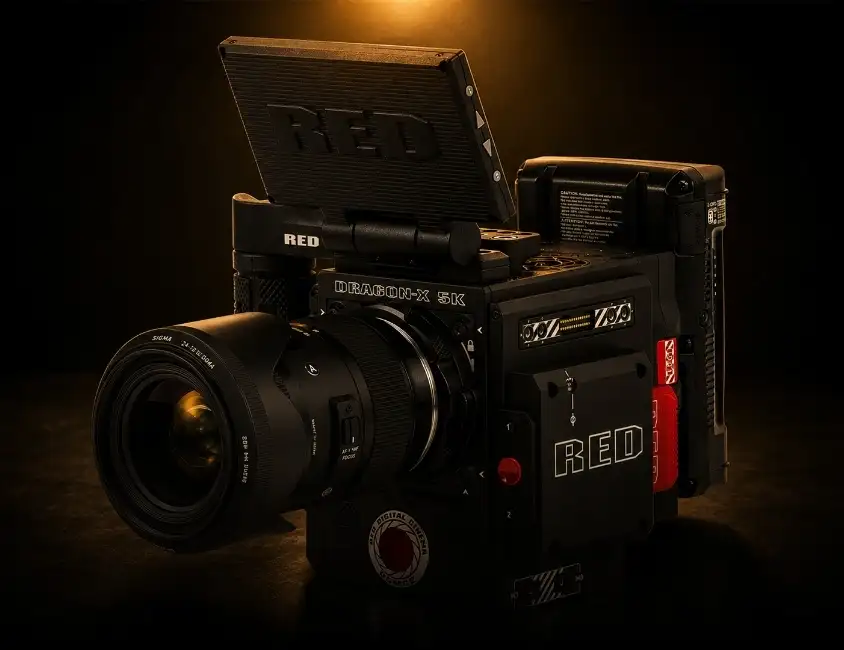
RED Dragon Camera
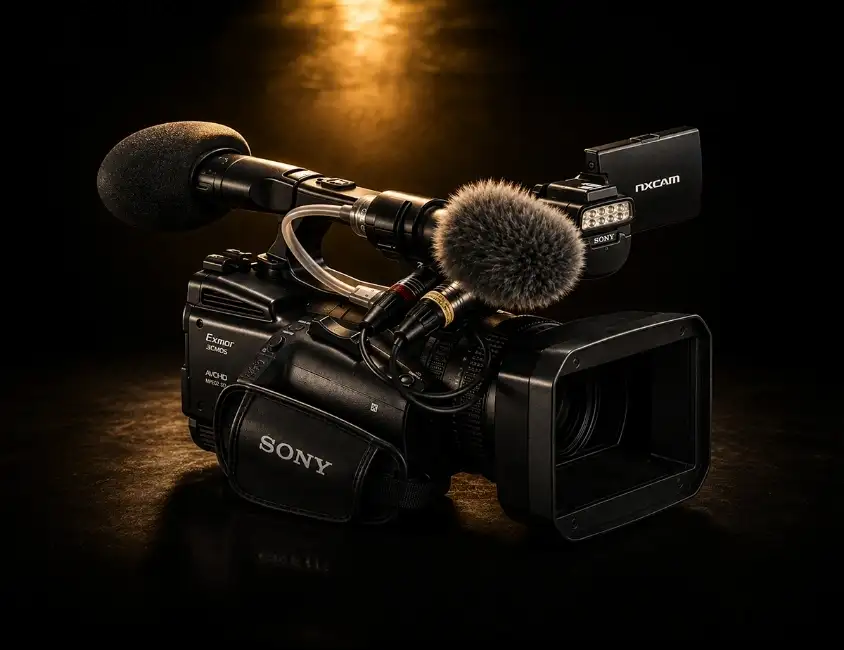
Sony NX 5R Camera
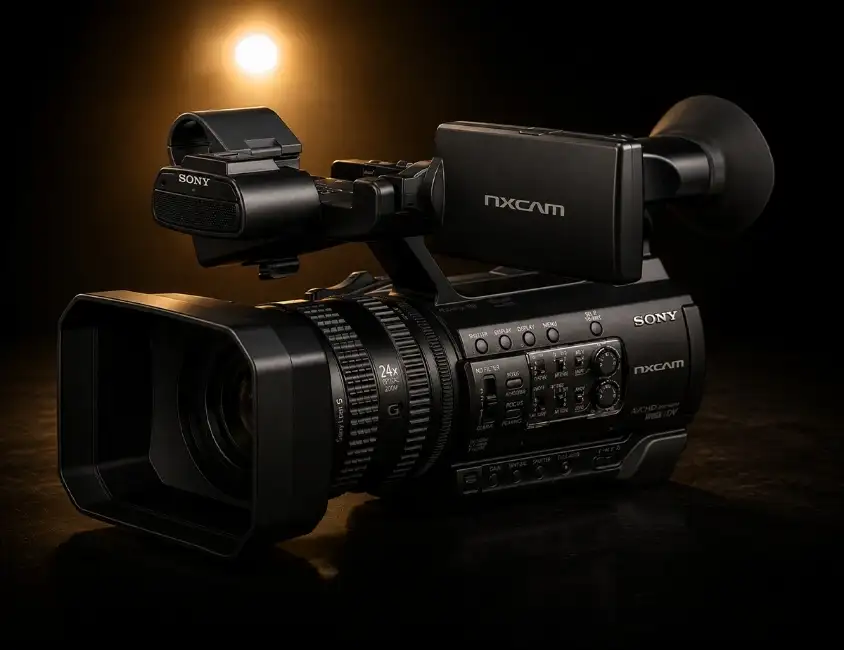
Sony NX 100 Camera
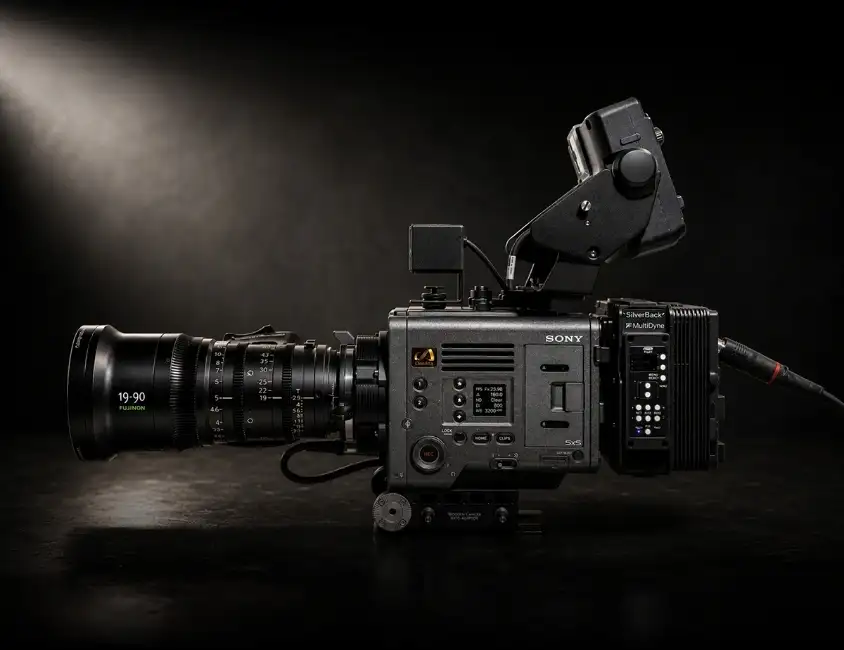
Sony Venice Camera
At AAFT School of Cinema, students are trained to step confidently onto real-life sets. Our curriculum combines hands-on training with mentorship from industry experts, while practical avenues for filmmaking, direction, cinematography, screenwriting, editing, and production help students build industry-ready skills, preparing them for opportunities across films, OTT platforms, television, advertising, music videos, and digital media.
Prasanna Bisht
Worked as: Actor & Director (Maamla Legal Hai)
B.SC CINEMA (2016-19 BATCH)

Shantanu Singh
Worked as: Editor & Asst. Director (Heeramandi)
B.SC CINEMA (2017-20 BATCH)

Rishi Solanki
Worked as: Casting Director & Actor (Homebound)
B.SC CINEMA (2017-20 BATCH)

Vipul Tyagi
Worked as: Asst. Director (Nawabzaade)
B.SC CINEMA (2018-20 BATCH)

At AAFT School of Cinema, students learn filmmaking through masterclasses, industry visits, and conversations with filmmakers, industry professionals, and creative leaders who bring real-world perspectives.
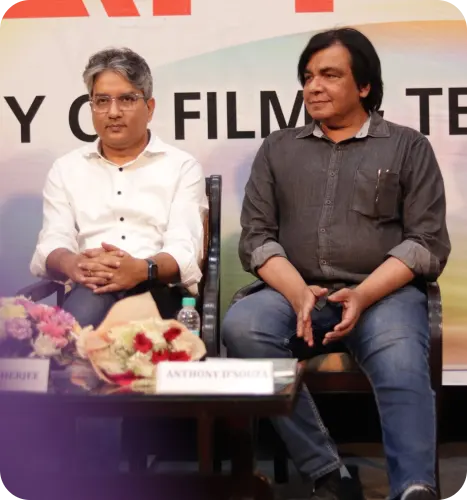
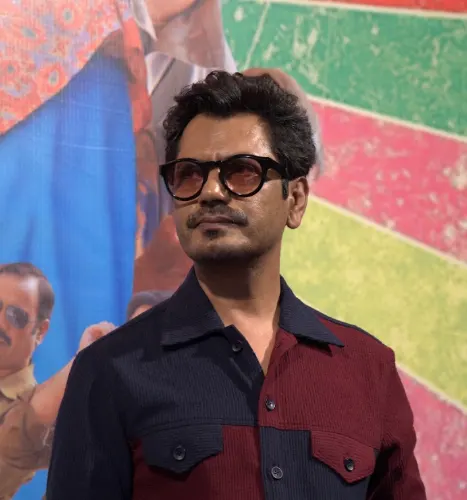
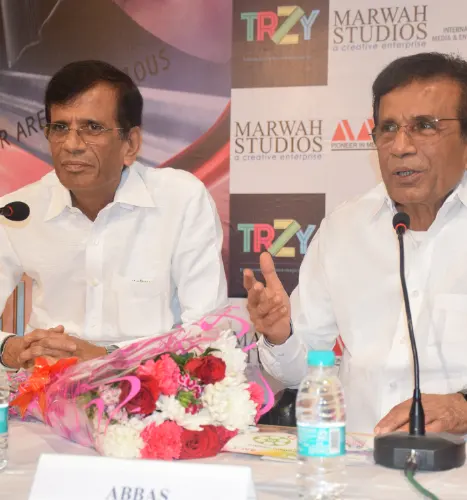
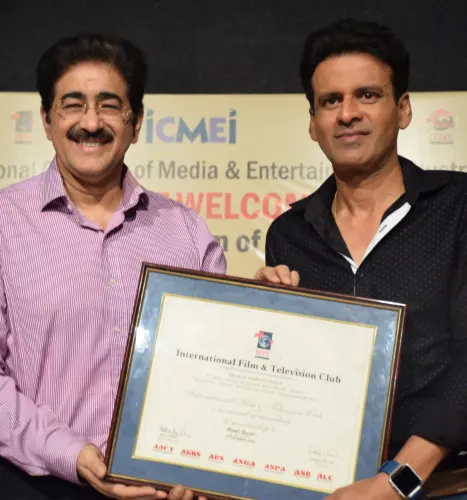

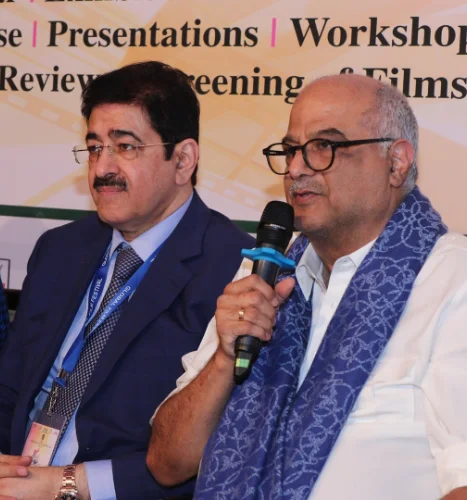

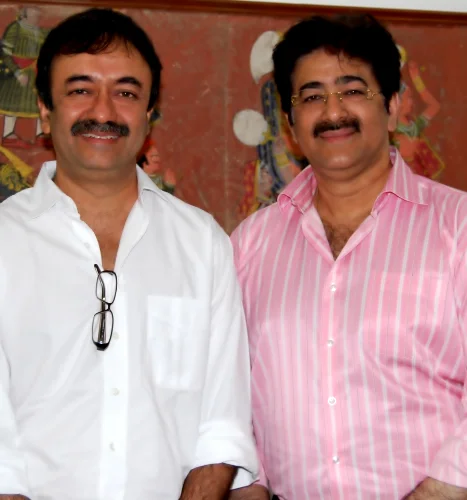
At AAFT School of Cinema, students learn filmmaking through masterclasses, industry visits, and conversations with filmmakers, industry professionals, and creative leaders who bring real-world perspectives.
Our alumni have gone on to work across films, OTT, television, advertising and digital media, taking on diverse creative and technical roles behind and in front of the camera.
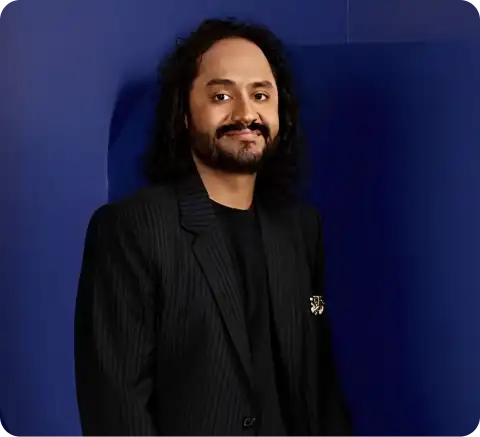
Gurmeet Singh
Director
Mirzapur, Phone Bhoot, Inside edge

Arjun Kapoor
Actor
Gunday, 2 States, Ishaqzaade

Luv Ranjan
Director
Pyar ka Panchnama, Tu Jhoothi Main Makkaar
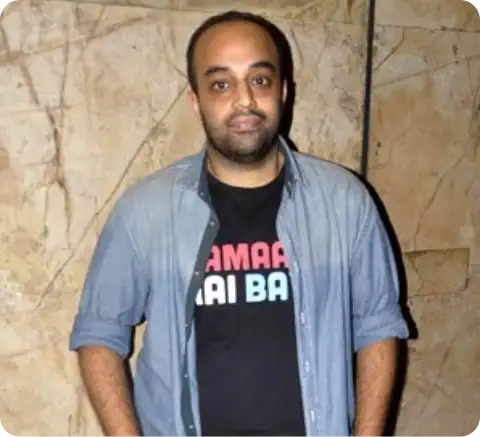
Mrigdeep Singh Lamba
Cinematographer
Fukrey, Don
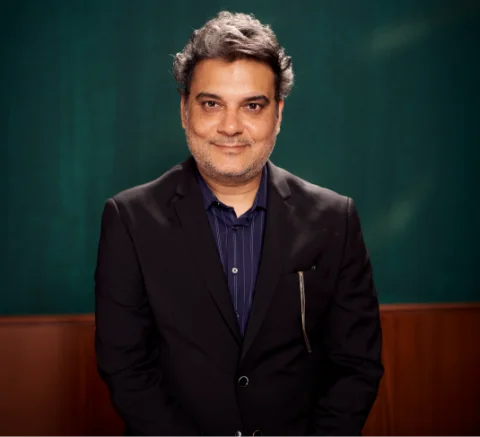
Atul Sabharwal
Film Director
Aurangzeb, Berlin
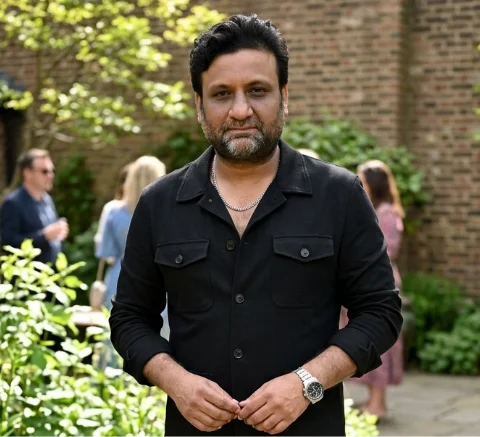
Rajat Arora
Screenwriter
Chandni Chowk, Taxi 9211, Bluffmaster

Akshay S. Poddar
Director/Writer
Aruna
Learn AI-powered filmmaking by integrating AI tools across pre-production, virtual production and post-production while mastering traditional filmmaking craft, visual storytelling and creative technology.
AI-Powered
AI in Filmmaking
AI helps turn ideas into visuals and refine them across every stage of production.
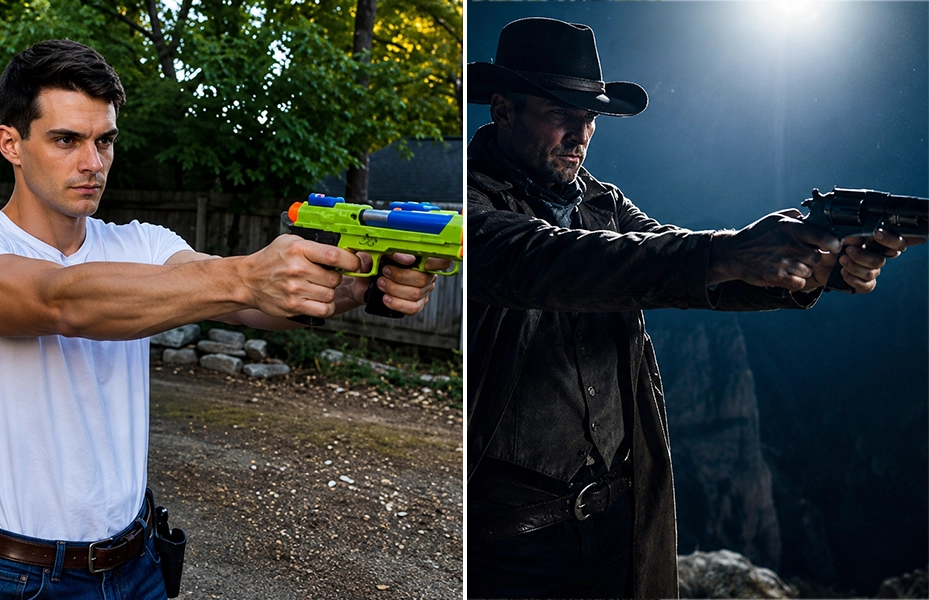




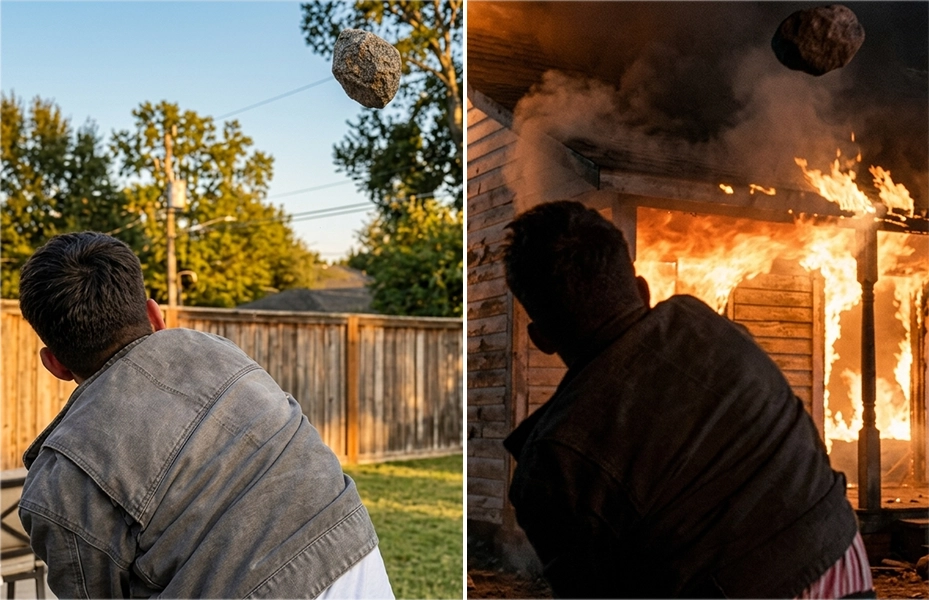
AI-Powered
AI in Filmmaking
AI helps turn ideas into visuals and refine them across every stage of production.










Our Cinema students learn directly from filmmakers, directors and industry professionals.
The best way to understand a film school is through the people who learn there. Explore how students experienced filmmaking, collaboration, and creative education at AAFT School of Cinema.
Every student film deserves an audience. Through film festivals, screenings, and industry showcases, our aspiring filmmakers present their work, gain recognition, and experience the journey from production to public exhibition.
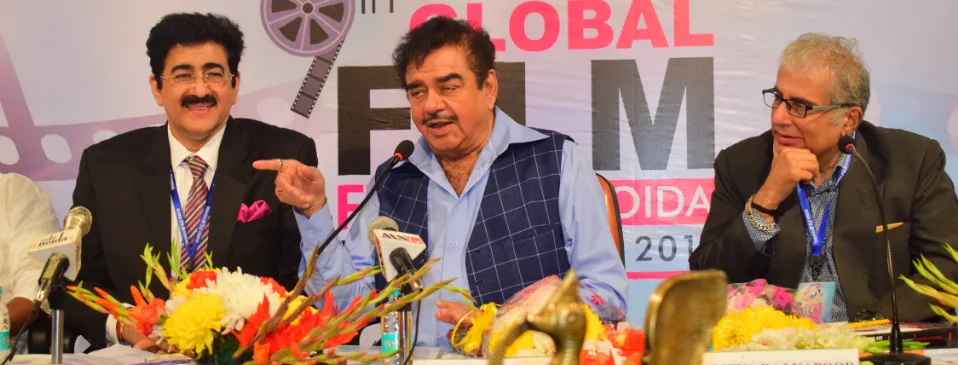
GLOBAL FILM FESTIVAL
Global Film Festival Noida

CELLPHONE CINEMA
International Festival of Cellphone and AI

DOCUMENTARIES
International Documentary Film Festival Noida

SHORT FILMS
AAFT Festival of Short Digital Films
Every student film deserves an audience. Through film festivals, screenings, and industry showcases, our aspiring filmmakers present their work, gain recognition, and experience the journey from production to public exhibition.
GLOBAL FILM FESTIVAL
Global Film Festival Noida
CELLPHONE CINEMA
International Festival of Cellphone and AI
DOCUMENTARIES
International Documentary Film Festival Noida
SHORT FILMS
AAFT Festival of Short Digital Films
Explore Our Courses
A three-year B.A. or B.Sc. in Cinema with a Direction specialisation is best for filmmaking, since it covers scriptwriting, production planning, and on-set leadership. Students who want a narrower technical path can instead choose a Cinematography or Post-Production specialisation.
A B.Sc. in Cinema (Cinematography) is the strongest choice, building camera operation, lighting design, and visual storytelling over three years. A one-year diploma or short-term certificate suits those wanting faster, practical entry into camera work.
Yes. Film schools like AAFT School of Cinema admit students directly after 10+2 from any recognised board, regardless of stream. Selection is typically based on an entrance test and interview, with admission decided on creative aptitude and interest rather than prior academic subjects.
Yes, cinematography offers strong career potential across film, television, OTT platforms, and advertising in India. Demand keeps growing with the expansion of streaming content and regional cinema, offering roles as camera operator, DOP, or independent visual storyteller.
Cinematographer pay varies widely by project and experience. Entry-level professionals earn roughly ₹2.5–6 lakh annually, senior cinematographers ₹15–35 lakh, while established feature-film Directors of Photography can command several times more per project through fees and royalties.
Filmmaking courses cover the entire production process like writing, directing, editing, and sound, while cinematography courses focus specifically on camera work, lighting, and visual composition. Filmmaking suits those interested in the overall film production process, while cinematography suits those who want to specialise in camera and visual storytelling.
Candidates need a pass or appearance in 10+2 from a recognised board, in any stream, for undergraduate film courses. Postgraduate programmes require a bachelor's degree. Admission is usually decided through an entrance test and personal interview.
A filmmaking or cinematography degree course at AAFT School of Cinema takes 3 years to complete. The duration of diploma and short-term courses may vary depending on the programme.
Yes. AAFT's School of Cinema offers 1-year diplomas in Filmmaking and Cinematography alongside 3-year degrees, plus short-term certificate courses in screenplay writing, video editing, and cinematography for faster, practical entry.
Delhi-NCR's leading film schools include AAFT, Jamia Millia Islamia's mass communication programmes, and Whistling Woods extensions. Choice depends on production infrastructure, industry mentorship, and specialisation depth, with hands-on studio access matters more than reputation alone.
Graduates can work as Cinematographer/Director of Photography, Camera Operator, Focus Puller, Lighting Designer, Digital Imaging Technician, or Documentary Cinematographer. Diploma-level roles include Camera or Lighting Assistant and Drone/Steadicam Operator, across film, TV, OTT, and advertising.
AAFT Noida offers RED and Alpha cameras, Chroma studios, and dedicated editing labs across three B.Sc specialisations: Cinematography, Direction, and Post-Production. Students also get 1:1 industry mentorship, a Global Film Festival showcase, and access to the Career Resource Cell for placement support.
Students gain hands-on skills in camera operation, lighting setup, editing software, sound recording, and directing actors. Live projects, short film production, and studio access on RED cameras and Chroma sets build a portfolio-ready skill set before graduation.
India offers B.A./B.Sc. degrees in Cinema (Acting, Direction, Cinematography, Post-Production), postgraduate diplomas, one-year diplomas, and short-term certificates. Each varies in depth and duration, letting students choose between a full production career or a focused technical specialisation.
Yes, filmmaking is a strong career choice straight after 12th, with no stream restriction on eligibility. Graduates enter film, TV, OTT, and advertising as directors, editors, or producers, with growing demand driven by regional cinema and streaming content.