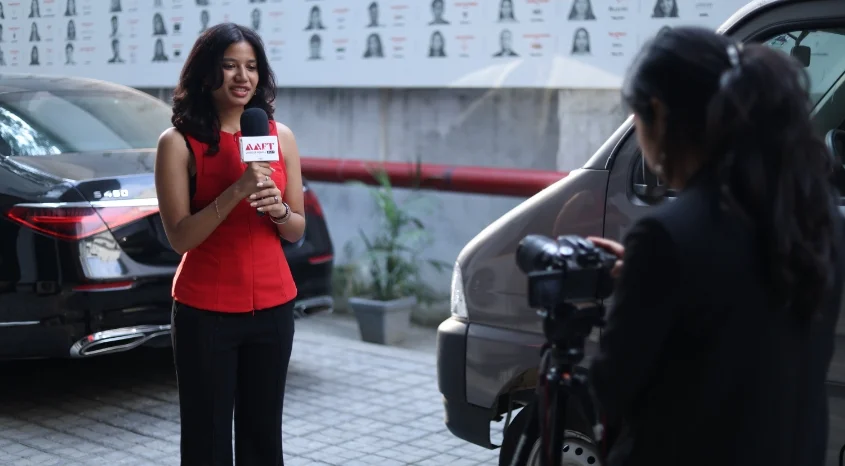
Welcome to a world where aspiring journalists shape their destinies and leave their mark in the dynamic world of news. Enroll in BJMC, MJMC, diploma and short-term news anchoring courses at the AAFT School of Journalism and Mass Communication and master news writing, anchoring and reporting for TV, radio and digital media.
97%
Placement Rate 2025–26
2400+
Alumni Network
500+
Industry & Media Interactions
20+
Industry Visits Every Year
AI
Integrated Curriculum
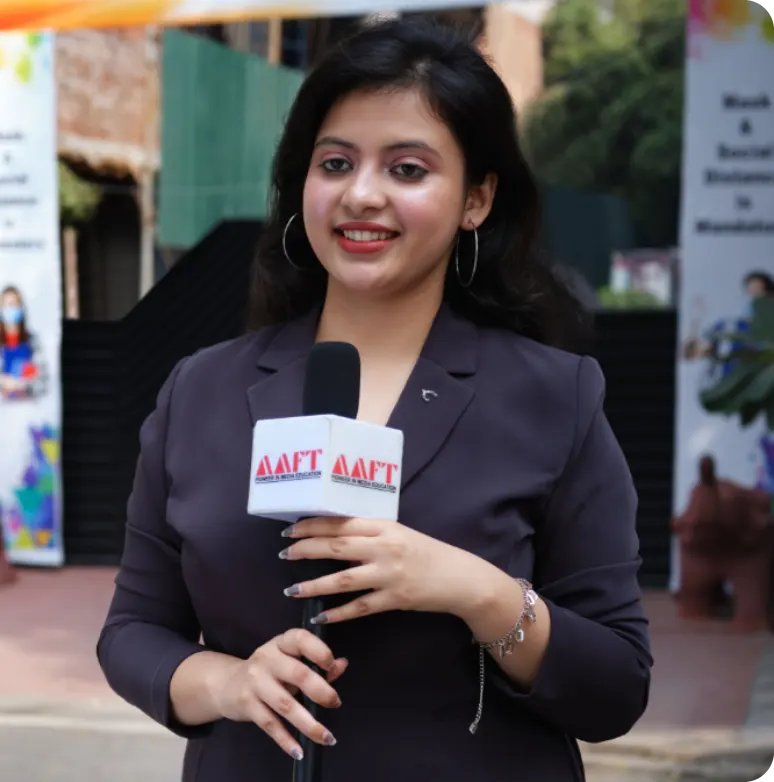
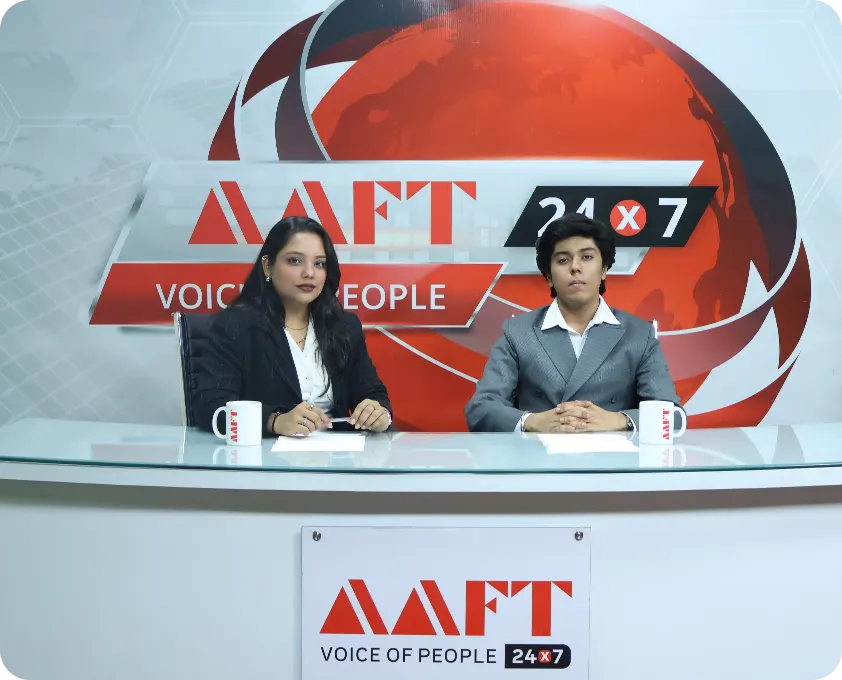
Step into AAFT School of Journalism and Mass Communication, where aspiring journalists shape their destinies and leave their mark in the dynamic world of news.
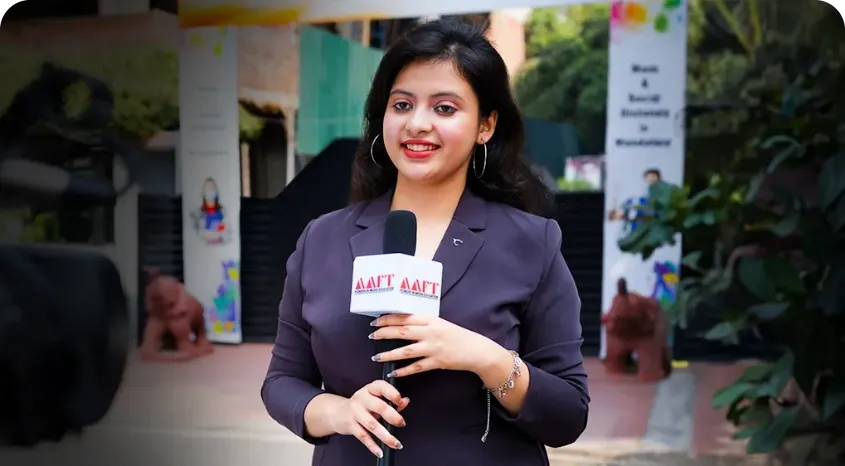
Our comprehensive journalism courses offer a gateway to master the art of news writing and anchoring for traditional and digital media. We believe in the power of practical exposure. That is why our students gain firsthand experience in electronic news gathering (ENG), interviews, radio program production, and more through live projects, as our curriculum provides 85% practical exposure, equipping students with essential tools for the fast-paced world of journalism.






From news production and broadcasting to digital content creation, photography, audio-visual production and editing, students at the School of Journalism and Mass Communication work with industry-relevant tools and facilities to develop the technical skills required across today's media landscape.

Interview Setup
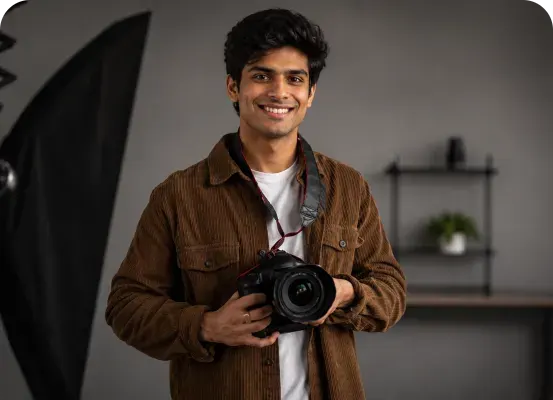
Still Photography Lab
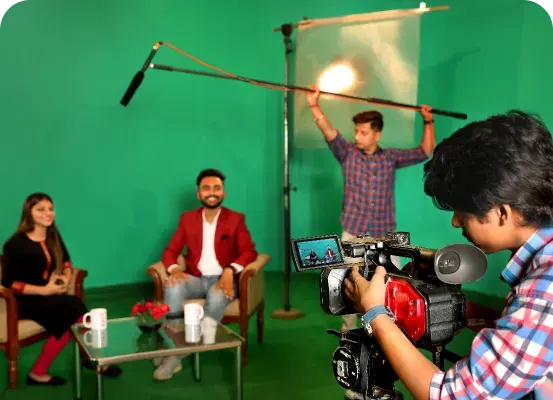
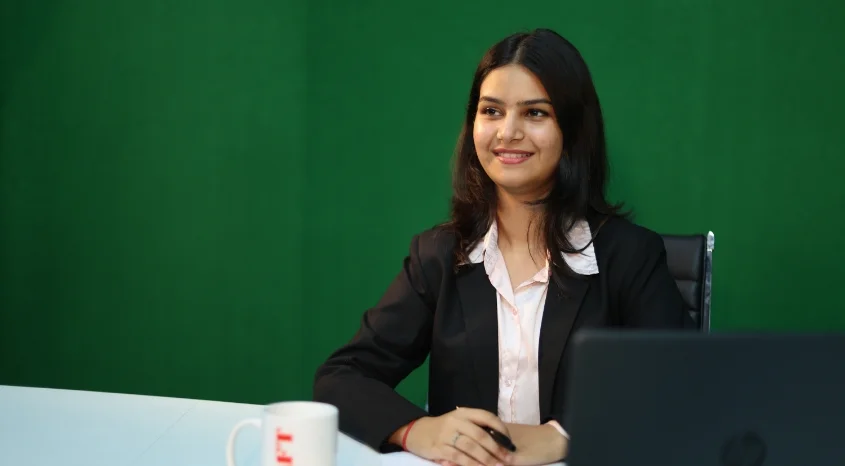
Green Screen Setup
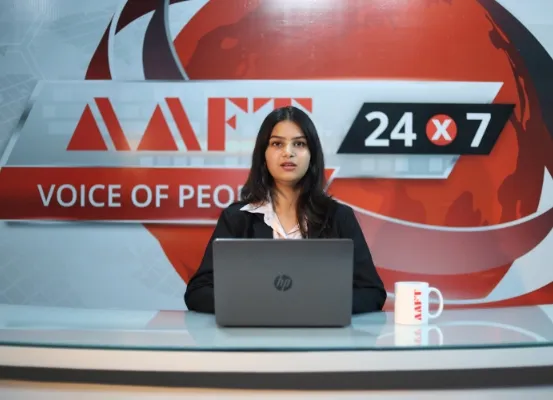
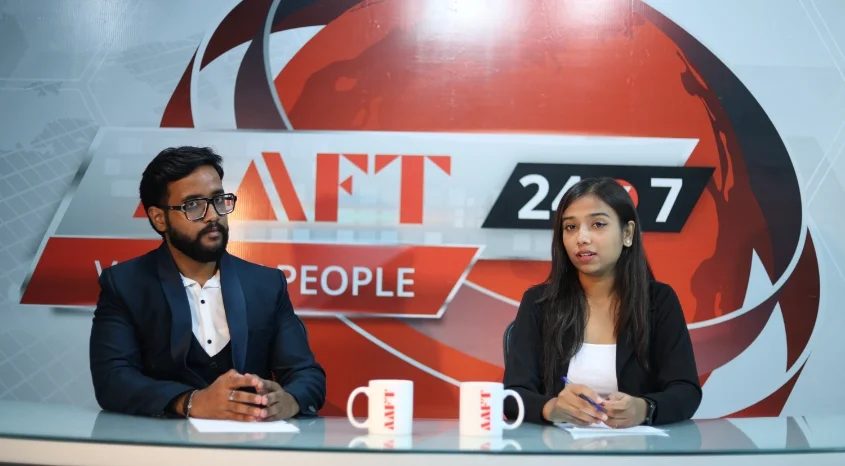
News Anchoring Setup
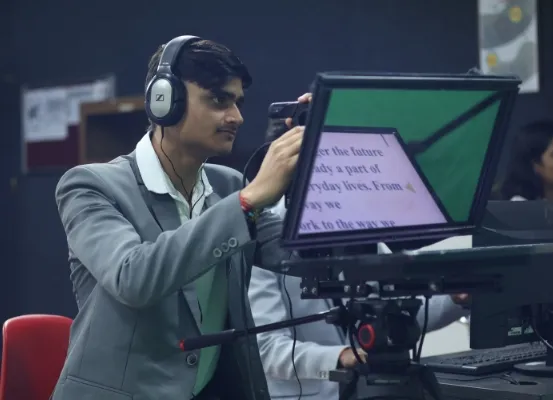
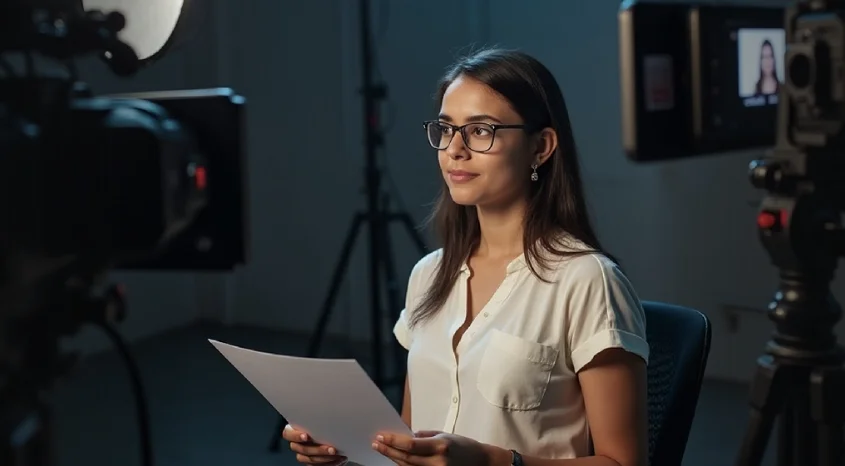
Teleprompter
From journalism to news anchoring, from photography to sound recording, from radio jockeying to news anchoring, learn through live projects on ENG, Documentary Making, and much more.
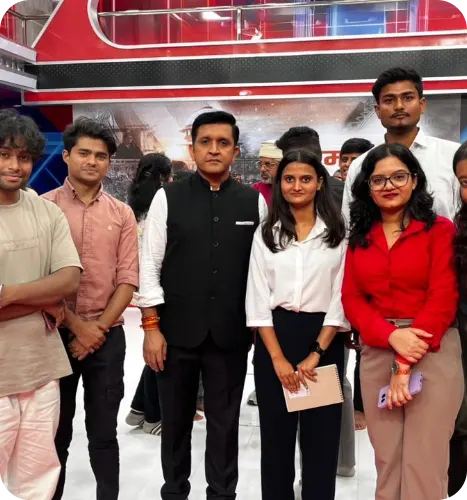

From journalism to news anchoring, from photography to sound recording, from radio jockeying to news anchoring, learn through live projects on ENG, Documentary Making, and much more.
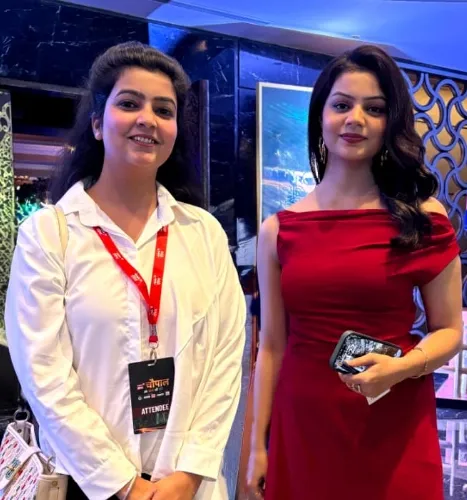
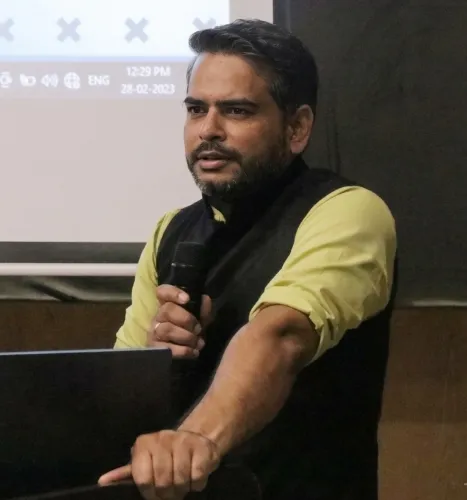
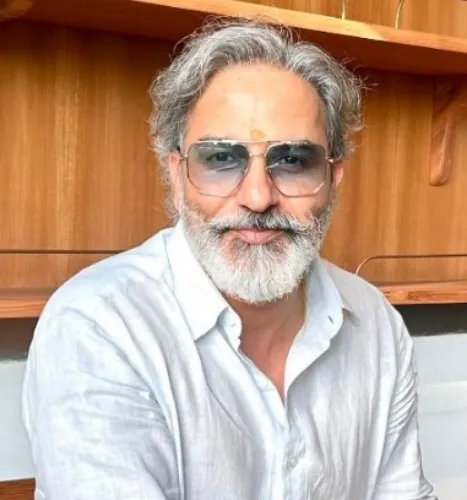
AAFT alumni are building careers across journalism, digital media, advertising, content and communication, bringing their storytelling and industry skills to diverse media platforms.
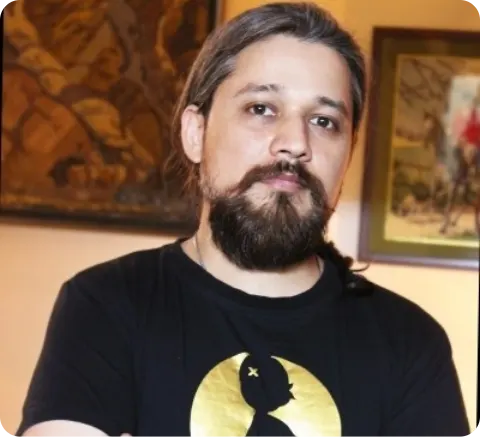
Aman Pratap Singh Negi
Lead Public Relations & Community
Infinix Mobility
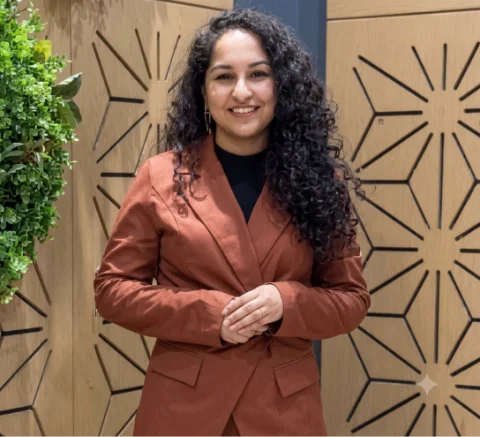
Surbhi Singh
Digital Brand Initiative - AM
Apeejay School International
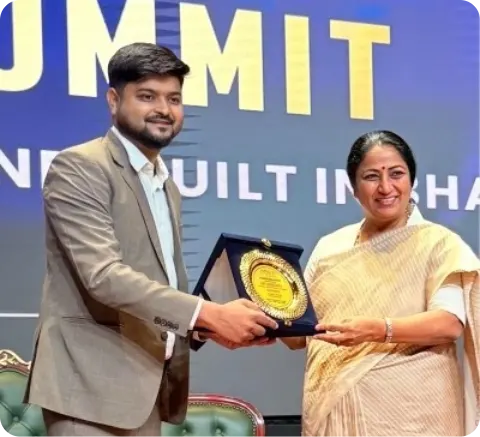
RJ Shouhadra Dixit
Founder & CEO
Radio Damroo
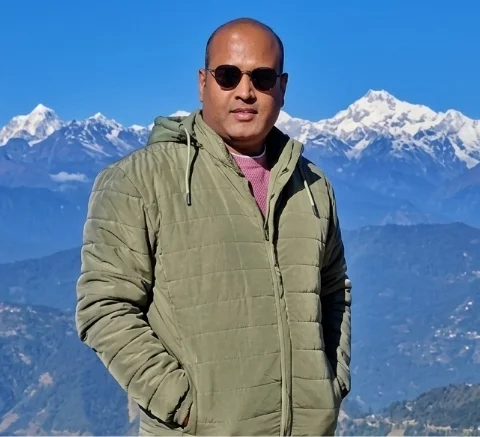
Abhishek Kashyap
Director of Photography
Indian Film & Television Industry
Every media professional begins with a story worth telling. Hear how our journalism and mass communication students turn curiosity, research and ideas into stories and experiences shaped by their learning journey at AAFT.
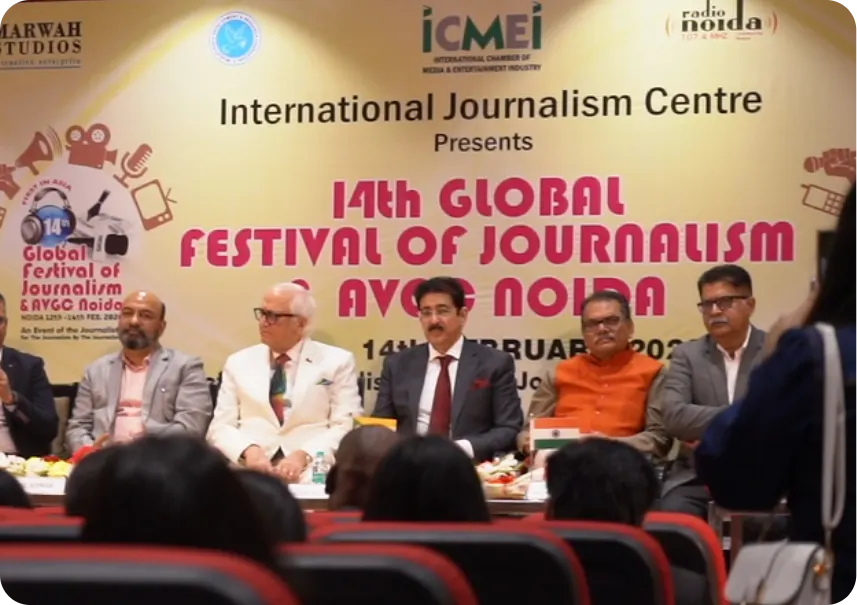
AAFT’s annual Global Festival of Journalism brings together students, media professionals, artists and delegates from across the world. Through screenings, productions, discussions, competitions and creative showcases, the festival creates a dynamic space for students to engage with diverse voices and perspectives. It takes their learning beyond the classroom, helping them understand the collaborative and evolving nature of the media industry. Through interactions with journalists, media practitioners and fellow participants, students gain a broader understanding of journalism and the many perspectives that shape it. The festival also encourages students to exchange ideas, participate actively and experience journalism in action.
Explore Our Courses
After 12th, students can choose a BA in Journalism and Mass Communication (BJMC/BAJMC), a diploma in TV journalism and communication, or short-term certificate courses such as news anchoring and radio production and jockeying. Graduates can go on to an MA in Journalism and Mass Communication (MJMC) or a PG diploma.
Journalism focuses on gathering, verifying and reporting news. Mass communication is broader and includes journalism, advertising, public relations, film, radio and digital media. A journalism and mass communication program combines both.
BJMC stands for Bachelor of Journalism and Mass Communication, also written as BAJMC. It covers news writing, reporting, editing, anchoring, radio and TV production, digital media, and media laws and ethics, with hands-on training in studios and labs.
MJMC is a postgraduate program for graduates who want advanced training in reporting, media production and communication. It suits students from any stream who want a specialised media career or higher-level roles in newsrooms.
A diploma in TV journalism and communication is a skill-focused program covering news reporting, anchoring, scripting, video production and newsroom operations. It suits students who want industry-ready broadcast skills without committing to a full degree.
A PG diploma is a shorter postgraduate program focused on practical broadcast skills such as reporting, anchoring and production. A master’s degree like MJMC goes broader and deeper into theory and research alongside practice.
Short-term certificate courses include news anchoring and radio production and jockeying. They teach specific on-air skills such as voice modulation, teleprompter reading, scripting and live-show handling, and they suit beginners, working professionals and students who want to add a skill.
Complete 12th, then pursue a journalism or mass communication degree, diploma or news anchoring course. Build skills in news writing, voice modulation, teleprompter reading and on-camera presence. Create a showreel and gain experience through internships at news channels.
An RJ needs a clear voice, strong language skills and a sense of storytelling. A radio production and jockeying course teaches scripting, voice modulation, live-show handling and audio editing, and a journalism degree or diploma adds a strong base.
A degree suits students who want a broad foundation after 12th. A diploma suits those who want focused broadcast training, and a short-term course suits those who want one specific skill, such as anchoring or radio. The choice depends on your career goal and how much time you have.
Students typically study news writing and reporting, electronic news gathering (ENG), interviewing, anchoring, radio production, video editing, photography, media laws and ethics, and digital media. Practical training happens in studios, labs and live projects.
Graduates work as reporters, news anchors, producers, content writers, radio jockeys, photojournalists, digital journalists, PR professionals and social media specialists across TV, radio, print and digital media.
Well-known options include IIMC New Delhi, Symbiosis Institute of Media and Communication Pune, Jamia Millia Islamia, Christ University Bengaluru and Madras Christian College Chennai. AAFT is another option, with 85% practical exposure, newsroom visits and live ENG projects.
Fees depend on the program and campus and can change each year. See the official fee structure.
AAFT School of Journalism and Mass Communication reports a 97% placement rate for 2025–26. Students gain practical exposure through live projects, newsroom visits, masterclasses and 20+ industry visits every year, supported by a 2400+ alumni network.