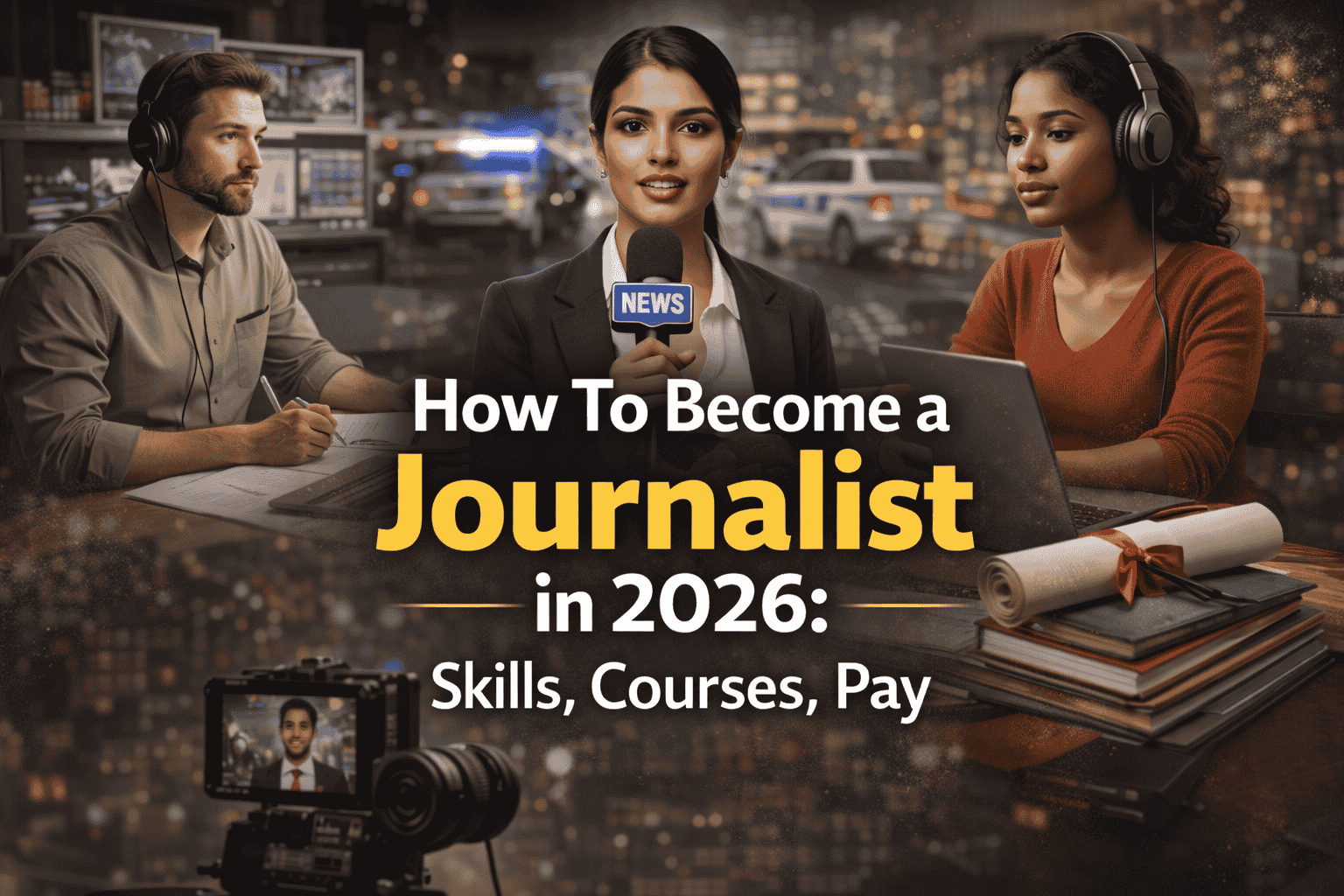
How To Become a Journalist in 2026: Skills, Courses, Pay
Entering the year 2026, journalism is on the verge of truth, technology, and change. The profession has evolved far past newsrooms and printing presses and has gone into the digital-first content, mobile journalism, data-driven narration, and real-time engagement with audiences. The role of the journalist to inform, question and verify may not be evaded but rather a critical role as ever despite the changes made in the tools and formats. The world is a desperate place of qualified and truthful journalists in a world where fake news spreads faster than real news.
The students and young professionals are to be aware of what the field requires at the moment they are putting their ideas regarding journalism as a career. Writing is not any longer viewed as a successful way of journalism; rather, a combination of storytelling, technical prowess, pliability and experience has become the new definition of journalism. The article explains on How To Become a Journalist by breaking down the skills, courses you can take, and wages you will receive, so that anyone who would like to become a part of this exciting career could easily have a roadmap on how to do so.
The Future of Journalism in 2026

Modern journalism does not end anymore at newspapers and television newsrooms. Journalists are now working in the digital frontiers, OTT news channels, YouTube, podcasts, newsletters, and social media. They provide real-time reporting, information breakdown, provide fact-checking to user-created content, and have an inclined tendency to build personal brand alongside institutional work.
The expectation in 2026 is that journalists will be flexible. One journalist can be the author of articles, film videos, edit audio files, update the social media feed, and engage the audience, yet stay ethical and accurate.
Skills and Qualifications to be a Journalist
1. Effective Communication
When the first thing comes up, how to become a journalist? Here is the answer. The basis of journalism is still clear writing and effective speaking. Journalists are required to deliver complex information using simple and interesting language without distorting information.
2. Research and Fact-Checking
As misinformation is rapidly spreading, a journalist should have the ability to check the sources, compare the data and differentiate between facts and opinions.
3. Digital and Multimedia Skills
By 2026, the journalists will be able to:
- Shoot and edit videos
- Audio editing and editing podcasts.
- Minimal graphic and data visualisation tools.
- Content management systems (CMS) work.
4. Social Media Literacy
These are not only the distribution channels but also social media tools such as X, Instagram, LinkedIn, and YouTube. Algorithms, trends, and ethical application of social media should be familiar to journalists.
5. Data and AI Awareness
Simple familiarity with data journalism, spreadsheets, visualisation software, and AI-assisted research software provides a competitive advantage to journalists.
6. Ethics and Critical Thinking
Journalism requires critical thinking, objectivity, and good knowledge of media ethics, particularly where political and social issues are concerned.
Book Now →
Must read: Journalism Career Options in 2026: Digital, Broadcast, Content
Courses and Educational Pathways
Undergraduate Courses
Bachelor’s degrees include:
- Bachelor of Journalism and Mass Communication.
- Bachelor of Multimedia and Journalism.
- BA in Digital Journalism
These courses are usually reporting, editing, media laws, ethics, broadcasting and digital storytelling.
Do you want free career counseling?
Ignite Your Ambitions- Seize the Opportunity for a Free Career Counseling Session.Postgraduate Courses
To specialise or to improve career:
- MA in Journalism and Mass Communication.
- MA in Broadcast Journalism
- PG Diploma in Digital Media or Production of News.
The postgraduate programs specialise in professional reporting, investigative journalism, research about media and media leadership.
Short-term and Skill-Based Courses
In 2026, a significant number of aspiring journalists also enrol in short-term certifications in:
- Mobile journalism (MoJo)
- Data journalism
- Podcast production
- Video storytelling
- Media law and ethics
The need to upgrade and adapt to the dynamics in the industry is assisted by these courses.
Practical Experience and Internships
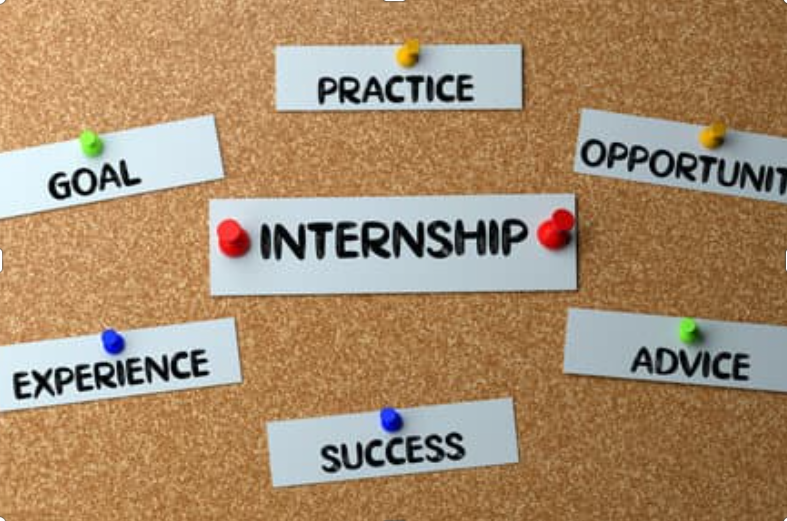
To become a successful journalist, education is not all that is required. Practical exposure is highly valued by the news organisations. Potential journalists are expected to:
- Attend college newspapers or online websites.
- Get an internship in news channels, digital media houses or radio stations.
- Assemble an assortment of articles, video or podcast content.
- Write properly in the local or online papers.
Practical experience instils confidence, professional contacts and practical knowledge in the operations of the newsroom.
Career Choice in Journalism
The career opportunities in journalism are varied in 2026, and they include:
- News Reporter/ Correspondent
- Digital Content Writer
- Video Journalist
- News Anchor or Presenter
- Photojournalist
- Podcast Producer
- Data Journalist
- Investigative Journalist
- Social Media Editor
- Media Researcher
Also, a lot of journalists are freelancers, content developers or media consultants.
Journalism Salary and Pay Scale in 2026

Journalism salaries are pegged to the geographical locations, the institution itself, the medium, and the experience.
Entry-Level (0–2 years)
- ₹2.5 to ₹5 lakh per annum in India
The regional media and online platforms can start with a lower price, and at the same time, the national organisations can offer packages at a higher price.
Mid-Level (3–7 years)
- ₹6 to ₹10 lakh per annum
Proficiency skills like data journalism, video reporting or anchoring are capable of increasing wages.
Senior-Level (8+ years)
- ₹12 lakh per annum and above
The top anchors, heads of different bureaus, editors and the reporters who do investigations are usually paid a lot of higher salaries.
Independent reporters and freelancers have a different opportunity to earn a living depending on their assignments and platforms, and reach.
Challenges in Journalism
Although being a journalist can be a fulfilling venture, there is also the challenge:
- Prolonged and abnormal working hours.
- High-pressure deadlines
- In conflict reporting, there are safety issues.
- Unemployment in the declining conventional media.
- Moral problems and social criticism.
Nevertheless, journalism is not a futile profession for those who are fond of telling stories and serving the people when looking for how to become a Journalist.
Career in Sustainable Journalism
To thrive in 2026:
- Always upgrade your competencies.
- Keep updated with technology and media trends.
- Maintain ethical standards
- Develop a solid business network.
- Establish a social profile or an online identity.
The ability to change and to learn throughout life is the secret of long-term success.
Selecting the Right Academic Environment
In outlining formal training in journalism, the student must seek programs that focus on practical training, current curriculum, industrial exposure and ethical training. AAFT Noida and AAFT Raipur are commonly selected by students who want to have formal academic education in journalism and mass media, as they prepare to adapt to the changing media environment.
How to become a Journalist FAQs
Q1. Does AAFT Noida have courses related to journalism?
Yes, AAFT Noida has programs in journalism and mass communication which specialise in reporting, broadcasting and digital media skills.
Q2. Does AAFT University Raipur have journalism programs?
AAFT Raipur offers journalism and courses related to the media to introduce the students to print, broadcast, and online journalism.
Q3. Do AAFT Noida and Raipur have practical training in journalism studies?
AAFT campuses focus their journalism programs on both practical exposure as well as theoretical learning.
Q4. Is digital journalism taught to students after they study at AAFT?
Indeed, AAFT Noida and AAFT University Raipur students have an opportunity to become digital content creators and multimedia reporters.
Q5. Is journalism a great career in 2026?
Yes, journalism can still be discussed as a valid career in 2026, and people should not be afraid of adapting to the digital platform, training various skills, and maintaining ethical reporting practices.