Fashion Designer Job Interview Questions 2026: What Recruiters Really Look For
In 2026, fashion is more competitive, technologically advanced, and skill-oriented than ever. Design houses, fashion houses, export units, and independent labels do not need designers anymore just to be creative; they are seeking professionals who comprehend trends, production, branding, sustainability, and digital tools. This is why the Fashion Designer Job Interview Questions rounds today are designed in such a way that they test the abilities of creative thinking, as well as practical industry readiness.
When you are ready to be interviewed upon finishing or attending professional courses in fashion, it is helpful to know the most popular interview questions and how to handle them in order to have a good advantage. This guide divides the essential Fashion Designer Job Interview Questions in 2026, the skills behind the questions, and the importance of fashion education in enabling the candidates to respond confidently to the questions.
Fashion Designer Core Job Interview Questions in 2026

1. Describe Who You Are as a Fashion Designer
The question will challenge your definition of design identity. Interviewers would be interested in knowing what inspires you, what your strengths are, and the course of your career.
A strong answer includes:
- Your educational history in fashion.
- Your design sensibility or expertise.
- The nature of the fashion jobs you want to take.
Students in courses like B.Sc. in Fashion Communication and Styling or Diploma in Fashion Design usually relate their studies with their exposure to the real world in the course of their answers.
2. How Is Your Design Process to the Final Garment?
This is among the most significant Fashion Designer Job Interview questions. Recruiters would like to know how you work.
You should clearly explain:
- Research and creation of mood boards.
- Choices of fabric and pre-planning of colors.
- Velvety and technical drawings.
- Art of pattern making and garment construction.
- Final fitting and finishing
The candidates who are trained on the basis of M.Sc. in Fashion Design or PG Diploma in Fashion Design should clarify this process professionally.
Must Read: How To Become a Fashion Designer in 2026: Skills, Courses, Salary
3. What Do You Do To Keep Up With Fashion?
In 2026, trend awareness is important. Recruiters are seeking designers who mirror the trends in fashion and preference worldwide.
Book Now →
Good answers include:
- Reading about the fashion week and runway reports.
- On digital channels and trend predictors.
- Watching street style and cultural thrusts.
Such courses as Fashion Communication and Styling teach the students to comprehend trend analysis, visual storytelling, and market-driven design.
4. Which Software/Tools are You Familiar With?
Modern fashion design significantly involves technology. Technical prowess is another thing that interviewers will tend to question.
Do you want free career counseling?
Ignite Your Ambitions- Seize the Opportunity for a Free Career Counseling Session.You may mention:
- Adobe Photoshop and Adobe Illustrator.
- Digital illustration tools
- CAD software for fashion
- Portfolio presentation utilities.
Students taking B.Des in Fashion Design or PG Diploma in Fashion Communication and Styling tend to go through practical experience with the tools, making their responses to the interview questions even stronger.
5. How To Deal With Creative Criticism?
The design of fashion is a collaborative industry. Recruiters desire designers to be able to receive feedback and develop.
Your answer should reflect:
- Receptiveness to effective criticism.
- Ability to adapt designs
- Ability to work as a team player.
This is usually stressed during practice learning in Diploma in Fashion Communication and Styling and Fashion Design courses.
6. What is your Balance between Creativity and Commercial Viability?
Designers should come up with wearable and commercially friendly collections.
Recruiters expect you to:
- Know target customers.
- Create a balance between innovation and usability.
- Match designs with brand identity.
This art is honed in artisan courses such as B.Sc. in Fashion Design and M.Sc. in Fashion Design, where design and market strategy intersect.
7. What do you know about Sustainable Fashion?
In 2026, sustainability is one of the key priorities in hiring. Eco-friendly practices are challenged with the help of interviewers.
You may discuss:
- Ethical sourcing
- Sustainable fabrics
- Reduction of waste during production.
The current concept of fashion education incorporates the principles of sustainability in both Fashion Design and Fashion Communication and Styling courses.
8. Would You Like to discuss a Difficult Project that you worked on?
This question is an assessment of project management and problem-solving.
Your answer should include:
- The challenge you faced
- How you addressed it
- The outcome
Live projects or styling tasks are frequently mentioned by students of the PG Diploma in Fashion Design or Certificate in Makeup and Styling.
9. What Is Your Work with Stylists, Models, and Production Teams?
The design of fashion is collaborative.
Interviewers look for:
- Communication skills
- Professional attitude
- Group project experience.
Several courses, such as Certificate in Modelling and Fashion Communication and Styling, expose the students to collaborative fashion settings.
10. Where do you fit in the fashion industry?

The question is a challenge to your professional focus and desire.
Strong answers connect:
- Short-term objectives, such as collaborating with brands or studios.
- Long-term goals such as starting a label, becoming a creative director.
Trained students of AAFT Noida are much more focused and realistic in their career paths.
How to Prepare for Fashion Designer Job Interviews in 2026
- Assemble an effective and recent portfolio.
- Exercise in explaining your process of design.
- Pre-interview research on the brand.
- Keep abreast with fashion and sustainability.
- Be active and show yourself as a professional.
This is the chance given to you by preparation, along with the proper education.
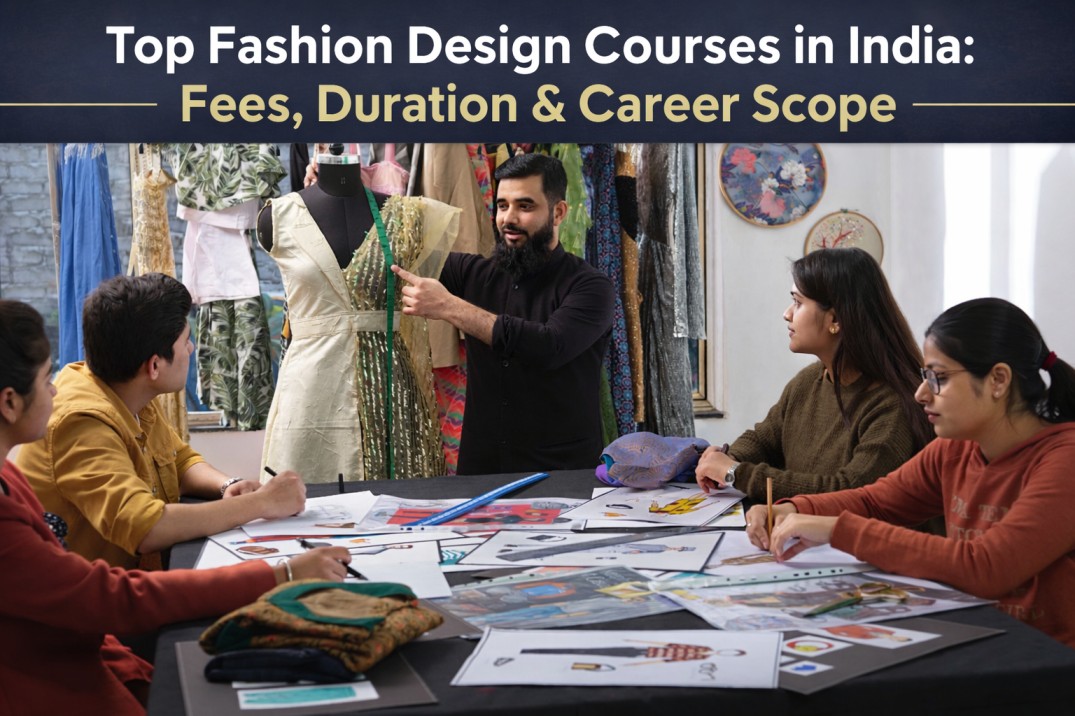
Must Read: Top Fashion Design Courses in India: Fees, Duration & Career Scope
Final Thoughts
To pass a Fashion Designer Job Interview in the year 2026, one needs to be creative, but it also have technical skills, industry awareness, and professional confidence. When properly trained and with the help of courses relevant to the industry set by AAFT Noida, future designers are fully set up to face interviews with the expectation of those who will wield the power to employ them in the sector to begin their successful career in fashion.
Fashion Designer Job Interview 2026 FAQs
1. Which are the most popular Fashion Designer Job Interview questions in 2026?
The common questions revolve around the design process, trend awareness, software skills, sustainability and teamwork.
2. Are professional fashion degrees favored by recruiters?
Yes, structured education, such as a B.Sc. in Fashion Design or PG Diploma in Fashion Design, is preferred for candidates because they are ready to work in the industry.
3. Does a fashion designer interview require a portfolio?
Absolutely. One of the most significant appraisal tools in any Fashion Designer Job Interview is the well-organized portfolio.
4. Do fashion designers need digital skills in 2026?
Yes. Familiarity with design software, computerized illustration, and presentation skills is also very desirable.
5. What does AAFT Noida do to prepare students for fashion interviews?
AAFT Noida offers industry-oriented courses, projects, and developing portfolios as well as exposure that makes students confident in interviews.