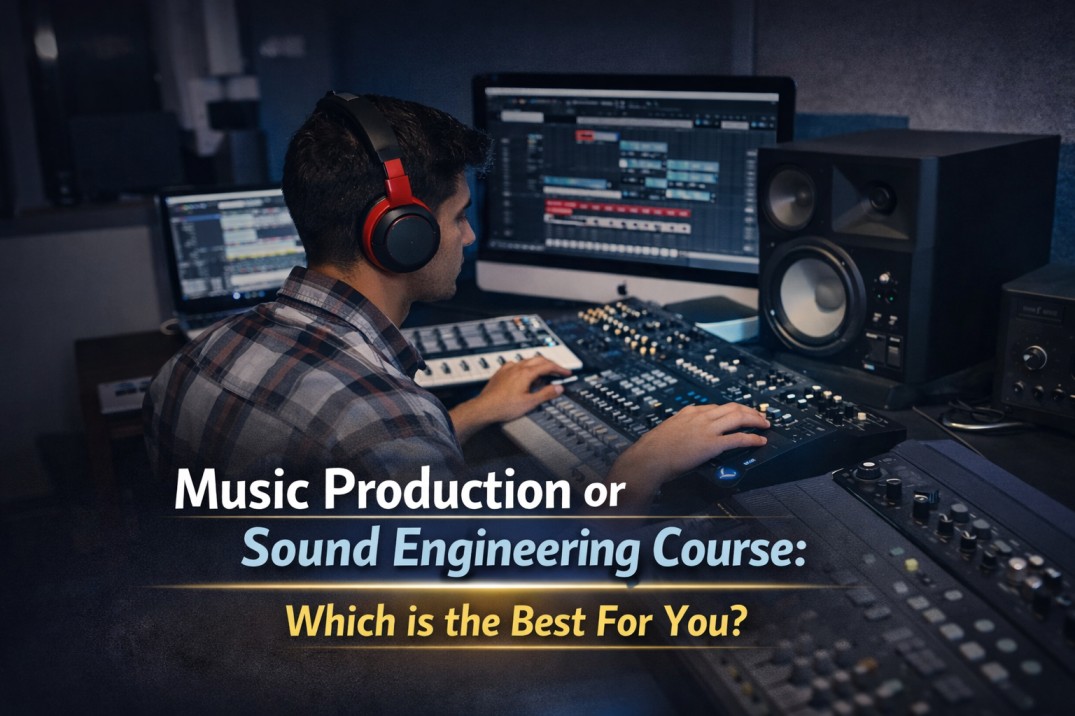
Music Production or Sound Engineering Course: Which is the Best For You?
The music industry in India is expanding fast. However, the scope of the music industry in India is no longer limited to recording songs and albums.
Behind a successful track, there is an artist who sings the song and the creator behind the console.
While making a career in this industry, you may face a crucial decision; whether to create the sound or perform the sound?
Music production and sound design courses are ideal music courses after 12th for students. These courses offer a broad range of skills in music and production. These skills involve creative thinking, understanding varied music techniques, and learning key music areas.
Though, both paths may differ from each other in certain aspects. One path focuses on technicality and sound design, the other focuses on vocal mastery.
This guide is curated to help you understand both career paths in detail. You can study various aspects of course curriculum, salary potential, and key differences between each of these courses.
Must Read: How to Build a Career with Music Production Courses in 2026?
Understanding Music Production
A music production course is centered around the creative and technical process of creating music. The process of music production involves producing, composing, arranging, and recording different musical tracks. Key components of music includes;
- Composition: Learning to create rhythms, melodies that form the foundation of a song. These courses help you craft compelling compositions and music pieces that resonate with your audience.
- Digital Audio Workstations (DAWs): Softwares like FL Studio, Ableton Live, and Logic Pro help create music in today’s tech world. You can edit music and manipulate sounds to create quality tracks.
- Sound Design: You can create unique sounds to enhance the effects of your music. This skill can help develop a unique sound identity to experiment with different music landscapes.
If you are passionate about the creative process of music, this music course after 12th would be an ideal option for you.
Understanding Sound Design
A sound engineering course delves into the technical aspects of the sound design process. You can learn to capture, mix and reproduce sounds. The course is essential to help produce high quality sound. Key areas of focus in this course include;
Book Now →
- Recording Techniques: Learning to use microphones and other recording techniques can help capture sounds effectively. The sound design course assists in understanding nuances of sounds.
- Mixing and Mastering: To create polished tracks, you learn to refine music. Mastery in this area is crucial to make sure that your soundtrack is ready to get distributed in the market.
- Acoustics: As a sound designer, you need to understand how sound behaves in different environments. This knowledge is essential to set up recording spaces to get the best audio performance.
If you are interested in the technical aspect of music and sound, enrolling in this music course after 12th is a suitable option for aspiring students.
Also Read: Top 10 Popular Types of Music Genres You Should Explore in 2026
Music Production or Sound Engineering – Which Course to Choose
Aspirants are always keen to enrol in a music course that offers better career opportunities to them. Music production courses and sound engineering courses unfold various aspects of creative and technical music. Both courses involve working with different audio techniques, their skill and focus area may differ significantly.
Do you want free career counseling?
Ignite Your Ambitions- Seize the Opportunity for a Free Career Counseling Session.However, choosing the right course can be a hard task. That’s why, you need to clearly underline differences between both courses. Understanding their key differences can help you choose the right music course after 12th.
Creative and Technical SkillSet
- The focus of a music production course is clearly on composition and arranging music. If you wish to craft a song from ground level, this course is right fit for you.
- On the other hand, a sound engineering course focuses primarily on the technical aspect of music. Sound recording and mixing are key areas of this course. So, if you are interested in working with technical equipment, you can choose this course as an area of music education.
Educational Programs
- Many music colleges offer music production courses at undergraduate, postgraduate, and diploma levels. The program is designed for students who are planning to master the art and science of music making.
- Sound design programs are available at undergraduate or postgraduate levels. The courses are helpful for students who aspire to understand the art and science of sound design. You will learn about record mixing and sound technicalities in this course.
Subjects to Learn
- In a music production course, you will learn the key areas of music production such as music arrangement, beat making, song composition, basics of mixing, background scoring, and sound composition.
- In a sound engineering course, you will learn various aspects of sound design. You will get the knowledge of audio signal flow, microphone techniques, console operation, live sound setup, studio acoustics, advanced mixing of sounds, and post-production for films.
Career Paths
- Graduates after a music production course can pursue careers in music producers, composers, and sound designers. These roles involve creating music albums for albums, films, and other media.
- Graduates after a sound design course often work as sound designers, recording engineers, or sound technicians. These professionals make sure that the audio quality in varied settings, from recording studios to concerts, are at par with the industry standards.
Salary Spectrum
- As a music producer, you can earn an average salary of 4.2LPA to 4.6LPA [1]
- As a sound engineer or a sound designer in India, you can earn an average salary of 4.5LPA to 5LPA [2]
Choose the Best Music School in India
AAFT Noida is your one-stop destination to enrol in a music course after 12th. The AAFT School of Music is primarily known for its industry-specific music courses known to align structured curriculum with your career aspirations.
In these courses, you will learn core music fundamentals with help of industry experts with enriched experience in the music industry. You can choose to enrol in an undergraduate, postgraduate, or a diploma program based on your skillset and career profile.
Music Courses After 12th FAQs
Why should you enrol in a music course after 12th?
The music industry offers rewarding career opportunities to music aspirants. Formal education in music equips you with the right knowledge and skillset required to outshine others.
Who should choose a music production course?
If you are interested in creating and composing original music or you love doing experiments with beats and melodies, you can choose to enrol in a music production course from an ideal music college in India.
What is the basic eligibility criteria to enrol in a sound design music course after 12th?
To enrol in a sound design music course, you are required to pass 12th standard with a recognised board. Some music colleges also conduct entrance exams to admit students for music courses.
Is enrolling in an AAFT Delhi NCR music course a good idea?
Enrolling in AAFT Delhi NCR music courses can help shape your careers. These music courses in India are well-known for their advanced and comprehensive curriculum and imparting best music education among students.