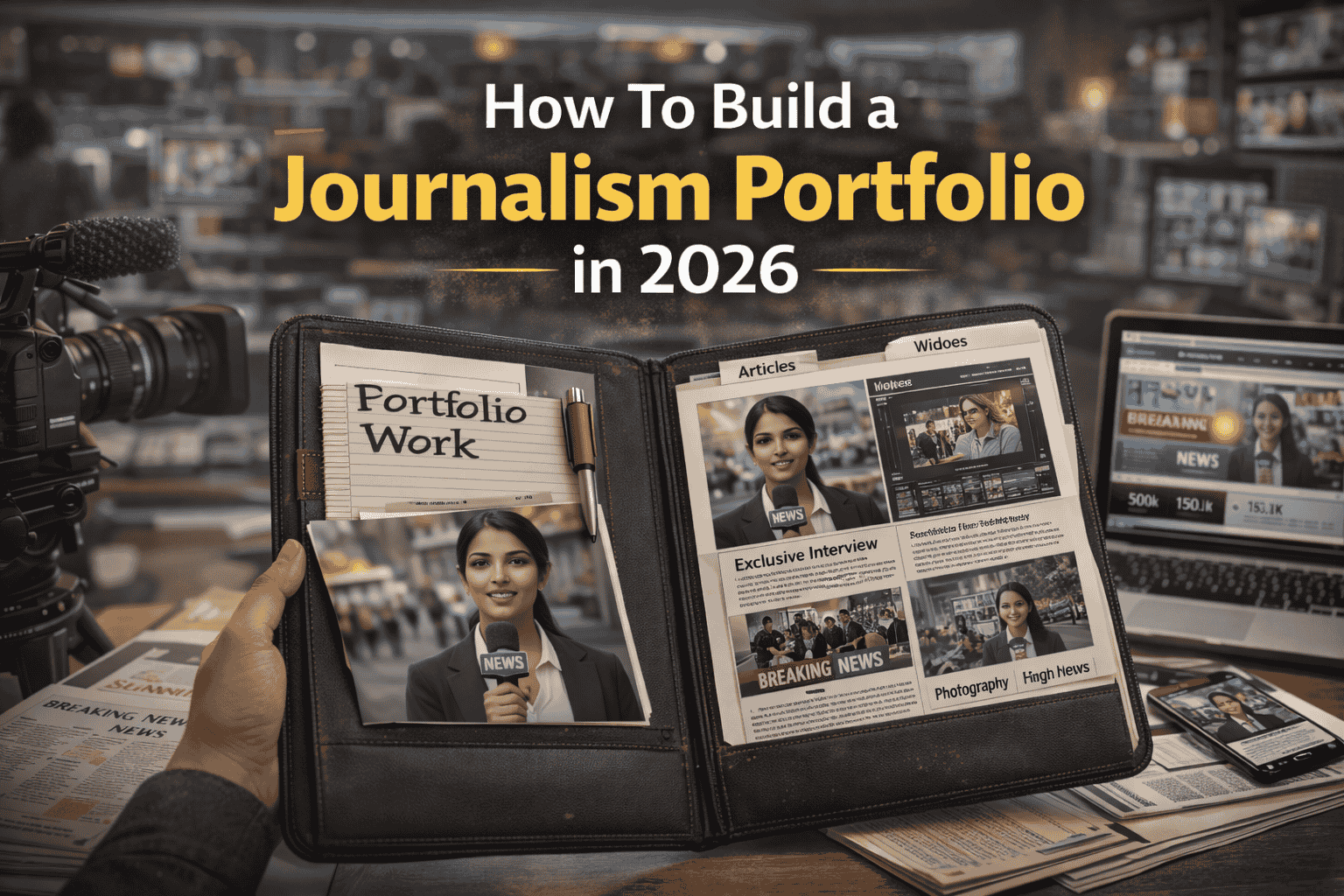
How To Build a Journalism Portfolio in 2026
The media environment of 2026 is fast-paced, and journalism is dynamic. The rise of online products, content solutions that are AI-driven, and changes in the habits of viewers are changing the characteristics of reporting, sharing, and consuming stories. It is through these changes that there is something that cannot be changed, and that is the journalism portfolio. To future journalists, a portfolio is not just a set of pieces but a professional identity, a demonstration of abilities and access to the working opportunities.
This is the guide on how to build a journalism portfolio in 2026 after completing courses like B.A. in Journalism & Mass Communication, and puts emphasis on practical steps, digital strategies, as well as tips for students and new journalists.
Knowing the Purpose of a Journalism Portfolio
A journalism portfolio is simply a list of your finest work. Conventionally, it could have been a physical folder containing printed articles, but nowadays, portfolios tend to be digital. They are used to several purposes:
- Demonstrate Skills: Portfolios represent writing, reporting, multimedia, and investigative skills. They prove to be very versatile in terms of their formats, which include articles, videos, podcasts, and interactive stories.
- Building Credibility: A portfolio gives potential employers, editors, and other people you may work with to evaluate the quality and dependability of what you do.
- Career Development: When it comes to internship applications, freelance, or full-time job applications, a good portfolio stands out in an oversaturated media market.
- Showcasing Your Unique Voice: This is a chance to show your point of view and way of telling stories, demonstrating the way you discuss issues critically and creatively.
Must Read: Journalism Career Options in 2026: Digital, Broadcast, Content
How to Build a Journalism Portfolio
Step 1: Curate Your Best Work
The initial move to build a journalism portfolio is to choose the best work. It is always better to have quality rather than quantity. Pay attention to works that will show your variety, abilities, and development. Here’s what to consider:
- Diversity of Work: Incorporate a variety of formats news reports, feature articles, opinion pieces, investigative stories, multimedia content or digital campaigns.
- Relevance: Highlight contents that cover the current trends in the media, emerging contents or your specialisation.
- Impact: Add the stories that were engaging or recognised in some way, e.g. a high number of reads, social media coverage, or published partnerships.
In the case of students doing media programs, this may be university assignments or articles written in student newspapers or digital content projects. Published material can feature freelancers in the online news portals or blogs.
Must Read: What to Expect in a TV Journalism & Communication Course – AAFT
Step 2: Adopt Digital Platforms
By 2026, it is important to be digital. Journalists with a professional online presence are being demanded by employers and editors more and more. The following are methods of capitalising on the digital platforms:
- Personal Website: A special site is the main point of your portfolio. It may include articles, multi-media and professional life sections. Such platforms as WordPress, Wix, or Squarespace can be customised easily.
- Social Media Integration: Post your work on professional social media profiles such as LinkedIn, X (previously Twitter), Instagram, or YouTube. Reach and engagement are increased on these platforms.
- Interactive Content: Interactive tools that can be incorporated into modern portfolios are data visualisations, embedded videos, podcasts, and infographics. This portrays technological expertise and flexibility to online narration.
- SEO Optimisation: Determine the visibility of your portfolio through search engine optimisation of content. Make use of the appropriate keywords, metadata and descriptive titles of your work.
A digital-first portfolio makes your work always available everywhere, which every 2026 journalism career must have.
Step 3: Put a Premium on Skills other than writing
Journalism has ceased to be a writing act; it involves a mix of competencies:
Book Now →
- Multimedia Reporting: Use videos, podcasts or photography to demonstrate variety.
- Data Journalism: Get exposed to any data analysis, infographics, or interactivity?
- Social Media Savvy: This is a skill that requires your responsibility of using social media in reporting, engaging and building audiences.
- Investigative Skills: Demonstrate research, source checking and fact checking skills.
The variety of skills in your portfolio can also make it more dynamic, and it is also in line with the requirements of contemporary newsrooms, digital media agencies, and freelance platforms.
Must Read : How To Become a Journalist in 2026: Skills, Courses, Pay
Step 4: Design Your Portfolio in a Strategic Way
To build a journalism portfolio, you need to be orderly and simplify navigation and be professional. These are structural elements to take into account:
Do you want free career counseling?
Ignite Your Ambitions- Seize the Opportunity for a Free Career Counseling Session.- Homepage: There has to be a clear introduction including your name and profession, and a short bio. Add a professional photograph.
- Categories of Working: Separate the content into categories- News, Features, Multimedia, Opinion and Investigations.
- Featured Work: Have 3-5 pieces that are highlighted on the home page and these items have to be seen at first sight.
- About Section: offer the areas of education, work experiences, recognitions, or interesting projects.
- Contact information: Add professional inquiries like email, LinkedIn profile, and social media accounts.
In the case of students, dividing university work and freelance or published work into distinct categories can provide experience and development.
Step 5: Keep It Updated
A journalism portfolio is never complete. Regular updates are crucial:
- Add new work consistently.
- Eliminate old or obsolete works.
- Write new descriptions to indicate new skills.
- Check analytics (where available) to know what content will appeal to viewers.
The dynamic digital space of 2026 demands the changeable character of portfolios that keep up with the technological trends and the demands of the audience.
Step 6: Mentorship and Feedback Seek

Positive feedback contributes to improving your portfolio. Reach out to:
- Professors/mentors in journalism schools.
- A professional or editor who can look at your work.
- The peers who can offer feedback on presentation and usability.
Mentorship would be especially useful to the students who are in the process of balancing between the academic and professional world, as this would assist in resolving the disconnect between the course-based knowledge and the expectations of the industry.
Step 7: Ethics and professional issues
The portfolio must not be a simple demonstration of skills, but also of morals:
- Accuracy: Provide only work that is checked; do not exaggerate.
- Licensing: You must make sure that you are free to publish any multimedia material or project-based work.
- Transparency: It is important to be clear on whether it is opinion, sponsored content or journalism.
Ethical behaviour creates credibility and trust in the long term with the audience and employers.
Your Portfolio Is Your Story
A journalism portfolio in 2026 will be more than a collection of articles, but it will be a professional narrative that will indicate your abilities, creativity and integrity. To build a journalism portfolio, one should be properly organised, updated, and digitally optimised, which represents an indication that you are ready to take on the challenges and opportunities of modern journalism. Through the selection of various works, the use of multimedia and digital technologies, and ethical principles, aspiring journalists may develop an outstanding portfolio that will help them to get internships, collaborations, or even full-time employment. It is important to remember that your portfolio is a living document; you should maintain it, perfect it, and use it to narrate the story of your career.
How to Build Journalism Portfolio FAQs
1. What are the resources that AAFT offers to assist students to build a journalism portfolio?
After completing graduation, post graduation or PG Diploma, AAFT Noida offers practical workshops, labs and mentorship programs that will help students to create content, develop multimedia reporting and create a portfolio.
2. Is it possible to add the university projects to the portfolio of AAFT students?
Yes, showing the desire to learn and apply skills in a wide range of projects and research articles and contributions to campus media.
3. What does AAFT do to assist in training in digital journalism?
AAFT integrates the learning of digital technologies, social media news coverage, multimedia journalism, and the latest AI-driven news sources to equip students with the knowledge of contemporary journalism.
4. Do AAFT students have the chance to publish works outside of school?
Yes, AAFT promotes media houses and online platforms, collabs, internships to provide a student with an actual publishing experience.
5. What can the AAFT students do to keep their portfolios up to date and relevant?
By undertaking constant coursework, projects, internships and mentor feedback, the students are mentored to constantly update their portfolios with quality and mixed content.