How to Start a Career in Game Design After 12th: Step-by-Step Guide
If you’ve ever imagined creating game worlds, characters, or adventures that others would love to play, a career in game design could be the right fit for you. With the Indian gaming industry growing rapidly and expected to reach approximately. ₹14,500 crore by 2029, demand for skilled game designers has never been higher. Today, gaming is not just entertainment; it’s a full-fledged career path that blends creativity, tech, art, and storytelling.
If you enjoy sketching characters, designing levels, building mechanics, or exploring how players interact with a game, this field has room for you. After Class 12, you can start your journey by pursuing a game design course.
This guide will help you map out the path, from choosing the perfect course for game design after 12th, how to build a portfolio, and much more.
Who is a Game Designer?
Game design as a career involves creating a game, its rules, goals, and challenges. This requires a game designer to create various elements using different tools and software. Being a game designer, you get to decide how a game looks, feels, and plays.
A game designer has a strong understanding of linguistics, sociology, and human psychology. This is essential to understand how people interact with each other while playing. It also involves 3D modeling software that helps create 3D models for textures that can be used in video games.
Also Read: Animation Course After 12th in 2026: Fees, Duration, Career Scope & Salary
Step-By-Step Guide to Pursue Game Design After 12th
Game design is a dynamic field with various tools and technologies involved. To enter this field, you must gain advanced skills and knowledge to use these tools, and a suitable course can help you with this. You can straightaway start your journey into game design after 12th by following the steps explained below.
Step 1: Opt for the Best Game Design Course
If you’ve completed Class 12 and want to enter the gaming industry, your first step is understanding the game design course eligibility and selecting a programme that matches your goals. The good news, most institutes allow students from any stream to apply, as long as they have passed Class 12.
Once you meet the eligibility criteria, you can choose from the following options:
- B.Sc. in Game Design (3–4 years): If you want a comprehensive start, pursuing a bachelor’s degree would be the best. These programmes are suited for students beginning right after Class 12. They cover game theory, design principles, programming basics, tools, and offer strong placement and internship support.
- Diploma or Certification Courses in Unreal Engine (1–2 years): If you prefer a shorter route, you can go for a diploma or certificate course. These courses provide focused training and faster entry but are more suitable if you already hold a related degree or want to upskill quickly.
Choosing the right course after Class 12 ensures you build a solid foundation in game design and step confidently into one of the fastest-growing creative industries.
Book Now →
Step 2: Choose a Trusted Institute
You will come across various game design colleges in India. However, you must pick the best one to pursue a course by considering the following factors.
- Accreditation and reputation of the institute
- Curriculum updated to the industry trends
- Faculty expertise
- Studio-style learning environment
- Portfolio-building opportunities
- Internship & placement support
- Alumni success stories
- Fee structure
- Location and accessibility
Among the institutes offering specialised programmes in this field, we at AAFT provide both Bachelor’s and Master’s degrees in Game Design. With a legacy of over 30 years in creative education, our learning model is built around real-world exposure.
We also provide opportunities for live projects, facilities for in-house productions, studio shoots, and industry briefs, so students don’t just learn game design; they experience how it actually works in the professional world.
Do you want free career counseling?
Ignite Your Ambitions- Seize the Opportunity for a Free Career Counseling Session.Book a campus visit and explore our studios, labs, and facilities firsthand.
Also Read: Top Animation Institutes in India 2026: Fees, Courses, Placement
Step 3: Learn Core Tools & Concepts
Game design focuses on practical learning. It requires you to learn about certain advanced tools, such as:
- Game engines: Unity (C#) and Unreal Engine (Blueprints + C++).
- 3D modeling & animation: Blender (free), Autodesk Maya, ZBrush for characters
- 2D art & UI: Photoshop, Illustrator, Krita
- Level design & prototyping tools: Tiled, Godot, Construct, or engine editors.
- Sound basics: Audacity, basic Foley understanding.
- Version control & project tools: Git/GitHub, Trello, Jira
The tools might differ based on the course you choose. Also, you will study game mechanics, core loops, progression systems, level pacing, player onboarding, reward systems, and UX for games.
Step 4: Build an Impressive Portfolio
While pursuing your game design programme, you will get several chances to work on real-world projects. Do not forget to add them to your portfolio. These projects should be visually attractive, short, and interactive, and must include:
- Playable prototypes: Even tiny, binary builds (Windows/Android) that show your mechanics
- Level walkthrough videos: 2–3 minute clips showing design intent
- Design docs: 1-page GDDs (Game Design Documents) for 2–3 projects
- Art and UI samples: Clean mockups and sprites
- Case studies: Show problem, solution, iteration, and result
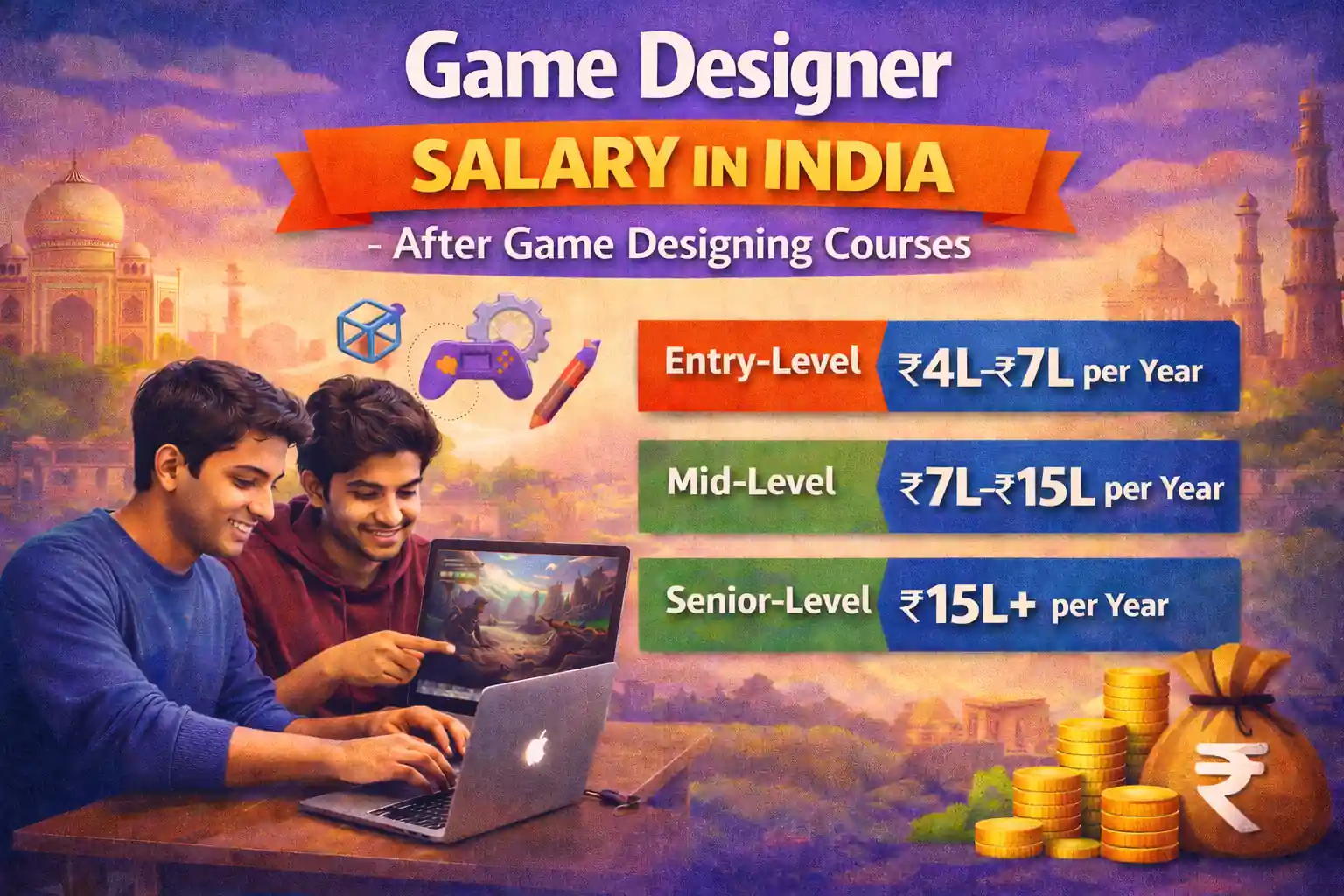
Must Read: Game Designer Salary in India After Game Designing Courses: A 2026 Guide
Step 5: Intern, Network, and Explore Career Roles
Once you have completed your course, start building real experience through internships and freelance projects. Most top colleges provide internship opportunities, and you should apply for them without delay. Internships expose you to production pipelines, teamwork, deadlines, and client expectations. You can also use platforms like LinkedIn and other job boards to find freelance game design gigs that match your skill level and help you build a portfolio.
As you gain experience, start exploring the different roles available in the industry. The gaming career scope in India is expanding rapidly, and you can choose from a variety of paths, such as:
- Game Designer: Works on core gameplay mechanics, systems, and balance
- Level Designer: Designs maps, pacing, and player progression
- Game Developer: Handles coding, scripting, and game engines
- Game Artist/Animator: Creates characters, environments, animation, and rigging
- UI/UX Designer for Games: Designs menus, HUDs, and user interfaces
- QA/Tester: Identifies bugs, tests gameplay, and provides balancing feedback
Internships and networking help you understand which of these roles suits your strengths, allowing you to shape a career that aligns with your interests in the gaming world.
Also Read: Animation Career Options in 2026: From 2D to VFX to Gaming
Game Developer vs Designer
The confusion between a game developer and a designer is common. However, you must understand the differences between the two roles when deciding to opt for one as your career. Below is a detailed game developer vs designer comparison.
| Category | Game Designer | Game Developer |
| Primary Role | Creates game concepts, story, characters, and gameplay rules | Builds the game using programming, engines, and technical tools |
| Focus Area | Creativity, storytelling, and user experience | Coding, mechanics, performance, and technical execution |
| Key Skills | Writing, visual thinking, level design | Programming (C#, C++, Python), debugging, engine knowledge |
| Output | Game idea, design documents, level layouts | Playable game, mechanics, UI functionality |
| Who Should Choose It? | Students who enjoy creativity and brainstorming ideas | Students who enjoy coding, logic building, and technical systems |
Must Read: Game Design vs Game Development: Which Career Path Should You Choose?
Conclusion
Once you finish Class 12, entering the game design field becomes much easier when you follow a clear path and choose the right programme. The most crucial step is enrolling in an industry-relevant game design course that teaches you practical skills, not just theory. We at AAFT offer bachelor’s, along with diploma and certificate courses, so you can begin your journey at a level that suits your interests and career plans.
Our learning approach is built around real projects, allowing you to apply what you learn and understand how games are actually created. If you’re serious about turning your passion for gaming into a career, explore our courses and take your first step into the world of game design.
To know more about the courses, you can fill out the enquiry form, and our team will get back to you.
FAQs on Career in Game Design After 12th
Is coding knowledge necessary to start a career in game design?
You can enrol in a game design course without prior coding knowledge. However, the course will help you learn languages like C#, C++, or Python.
Do game design colleges offer placement support?
Enrolling in courses from a trusted college like AAFT ensures you get placement support. AAFT provides placement and internship support, portfolio guidance, and industry exposure to help students enter the gaming workforce.
How long does it take to become a game designer after 12th grade?
You will need around 3-4 years to complete a B.Sc. in Game Design course. After this, you can apply for jobs or continue with education by pursuing an M.Sc. course in Game Design. So, the duration depends on the path you choose.
Which is better: Game Design or Animation?
Choose Animation if you enjoy storytelling, character movements, and visual art. Choose Game Design if you like gameplay, logic, mechanics, and interactive experiences.
What types of companies hire beginner game designers?
The following types of companies hire freshers regularly.
1. Mobile game studios
2. Indie game companies
3. Animation studios
4. AR/VR startups
5. eLearning companies
6. Major gaming publishers
Can you freelance while studying?
Freelancing while completing your game design course can help you gain practical experience. Top colleges like AAFT guide you to find such gigs and also offer internship opportunities during the course to help you build your portfolio.
What are the best beginner game design tips?
Follow the following game design tips for a successful career.
1. Start small
2. Learn one game engine deeply
3. Build mini prototypes
4. Participate in game jams
5. Collaborate with artists/programmers
6. Maintain an active portfolio