Best Animation Courses in India: Skills, Scope, & Career Options in 2026
Best Animation Courses in India: When you are interested in visual effects, video games or movies and want to make something by yourself, undertaking a career in animation might be a good option for you. In India, animation is no longer a niche as it is growing at a rapid pace, due to the rise of digital media, gaming, OTT series, and films.
However, to have a good animation career in India, you need a proper guide, such as where to study, what to study and opportunities that come after learning. This blog explores the best animation programmes, how they are structured, what skills you need to learn and where they can take you by 2026.
When you are interested in visual effects, video games or movies and want to make something by yourself, undertaking a career in animation might be a good option for you. In India, animation is no longer a niche as it is growing at a rapid pace, due to the rise of digital media, gaming, OTT series, and films.
What Types of Animation Courses Exist in India?
Leading film schools in the nation offer many kinds of courses in animation after 12th, depending on how you want to proceed and how much time you can invest. Here are some of the courses to choose from:
- Diploma Courses in Animation: These 1-year (or a bit more) programmes are for you if you want to learn about the basics of animation.
- Bachelor’s Degrees (UG): Some programs like B.Sc in Animation and B.Des in Animation have a duration of 3 to 4 years and offer a proper foundation in game design, animation and even VFX.
- Master’s Degrees (PG): The PG programmes like MSc in Animation come with a duration of 1.5 to 2 years. It offers much deeper learning along with specialisation.
Also Read: How To Become an Animator in 2026: Skills, Courses, Salaries
Things You Learn: Techniques and Skills
The top animation colleges in India offer programmes that typically cover a wide range of skills by blending storytelling, technology and art. Here are some of the primary areas that you can study:
1. 3D and 2D Animation
In a 3D animation course in India, students learn how to bring characters and objects to life.
You learn:
- How to animate characters, expressions, and movements
- 3D rigging, modelling, and keyframe animation
- 2D frame-by-frame animation and digital drawing
Skills gained: Timing, motion understanding, anatomy basics, and character design.
Book Now →
2. Visual Storytelling and Storyboarding
This teaches you how to turn ideas into visual sequences.
You learn:
- Storyboarding for films, ads, games, and animated videos
- Scene planning, shot divisions, and camera movements
- Narrative structure and visual pacing
Skills gained: Storytelling, direction sense, and clarity in visual communication.
Do you want free career counseling?
Ignite Your Ambitions- Seize the Opportunity for a Free Career Counseling Session.3. Rendering, Lighting, Texturing and Modelling
Essential for creating believable 3D worlds.
You learn:
- Building 3D characters, props, and environments
- Creating textures (skin, cloth, surfaces)
- Setting up lighting for mood and realism
- Rendering high-quality final output
Skills gained: Attention to detail, realism creation, and understanding of 3D software like Maya or Blender.
4. Post-Production, Compositing and VFX
This is where raw visuals are enhanced and finalised.
You learn:
- Adding effects like smoke, magic, explosions, or weather
- Merging animated elements with live footage, clean up scenes, and creating effects
- Scene clean-up and colour correction
Skills gained: Precision editing, compositing, and expertise in tools like After Effects, Nuke, etc.
5. Multimedia, Game Design and Motion Graphics
Animation today goes beyond movies, and colleges prepare you for that.
You learn:
- Motion graphics for ads, YouTube content, OTT, and branding
- Basics of game design and character development
- Creating animated elements for apps, websites, and interactive media
Skills gained: Versatility, digital design, and cross-media creativity.
Also Read: Animation Tips for Beginners: Your Complete 2026 Guide to Starting A Good Animation Career
Scope and Career Options in Animation by 2026
Here is the scope of the animation career:
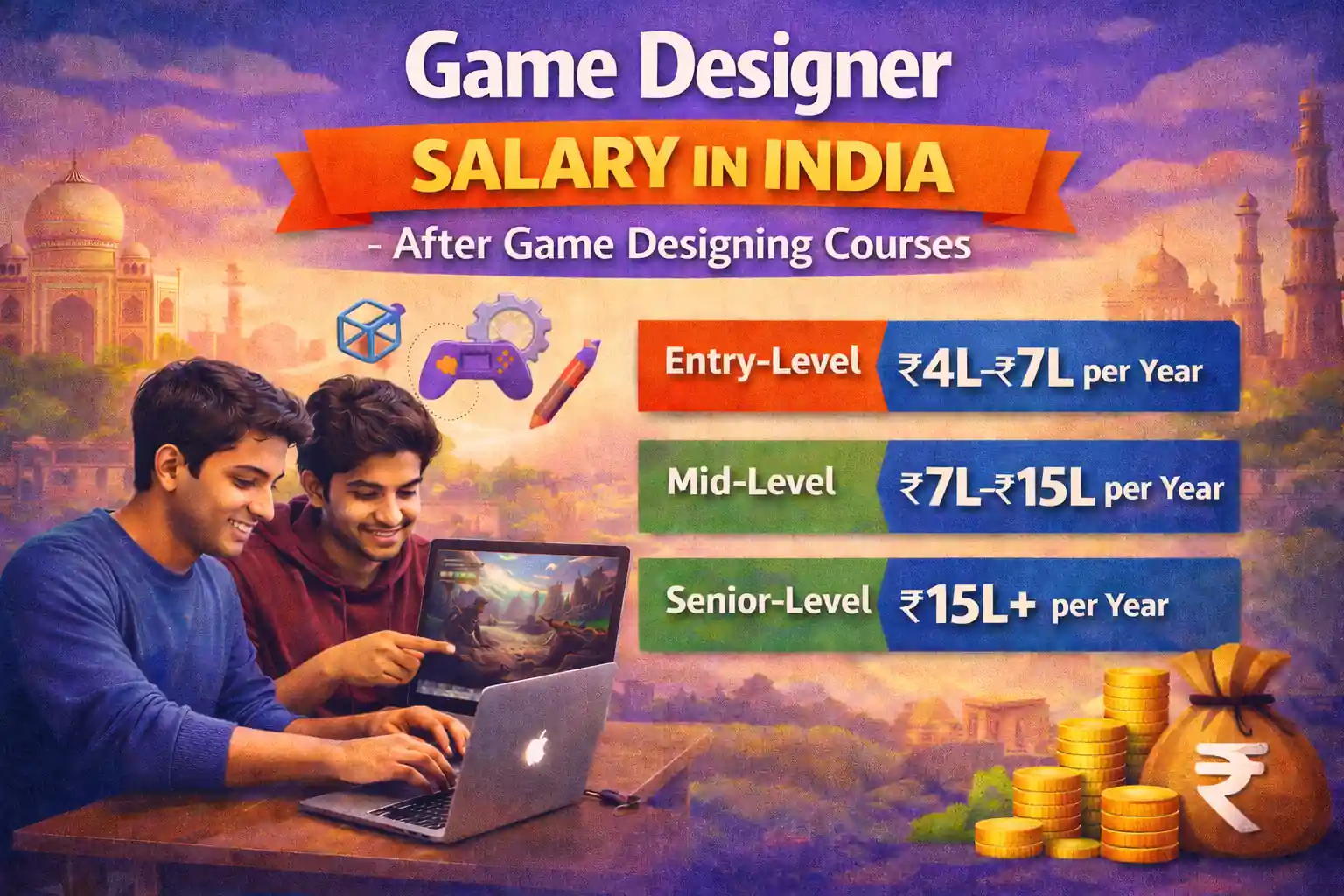
| Job Position | Annual Income | Job Description |
| 3D or VFX Artist | ₹2 Lakh to ₹9 Lakh | Build 3D models, composites for ads and movies, and add visual effects. |
| Motion Graphic Designer | ₹2.1 Lakh to ₹8 Lakh | Make animated graphics for video intros, social media and advertisements. |
| Content Designer | ₹2.1 Lakh to ₹28 Lakh | Design the character, sketch or animate their appearance and movement. |
| Storyboard Artist | ₹1.5 Lakh to ₹8.8 Lakh | Plan out the shots, sequences, make animatics and storyboards. |
| Game Artist | ₹2.0 Lakh to ₹13 Lakh | Work with video-game agencies for assets, UI, design world and animation. |
| Freelance Illustrator | ₹1 Lakh to ₹12.4 Lakh | Work on different projects for clients, advertisements, animations and short films. |
Furthermore, animation skills are helpful beyond films. You can use the skills in graphic design, mobile games, educational content, and social media.
Also Read: Animation Job Roles in 2026: Studios Hiring the Most
How to Pick the Correct Animation Course?
When you are planning to opt for an animation course, you should keep the following things in mind:
- Budget and Time: If you want a quicker start or wish to build foundational skills, opt for certification or diploma courses. However, when you want a deep understanding of the subjects, a BSc or MSC course might be a good choice.
- Portfolio and Practical Work: Make sure the programme you pick offers hands-on work and helps in building a showreel. This is usually what employers want to check when you apply for a related position in the industry.
- Broad Skills vs Specialisation: When you like VFX or 3D modelling, pick courses that teach these techniques. If you are interested in games or storytelling, opt for game design and animation courses.
- Software and Infrastructure: Animation needs effective computer software and even labs. Opt for programmes by colleges that offer modern-day labs where learners can practice animation, learn skills and even create 2D/3D models.
Also Read: What Makes a Good Animation School? Checklist Before You Join
Conclusion
Animation is rising fast in India as films, OTT, ads, and gaming demand more VFX and animated content. If you are creative and willing to practise consistently, this field can turn imagination into a real profession.
To begin, choosing the right course matters. Many institutes offer animation programmes in India, and AAFT is one of them. While there are many institutes offering animation programmes, AAFT is one of the institutions that blends creative learning with practical industry exposure, helping learners understand how animation is produced in real settings, not just on paper.
If you’re curious to see how this learning environment works and whether it fits your goals, fill out the enquiry form and get a personalised overview of the course and opportunities available.
Also Read: Animation Career Options in 2026: From 2D to VFX to Gaming
FAQs on Best Animation Courses in India
2. Can learners begin animation courses after completing class 12?
Yes. Many animation courses are available for students who have completed their senior secondary. However, some certificate and diploma courses require a 10+2 pass.
3. What software skills are essential for beginners in animation?
Beginners are usually expected to learn industry-standard software such as Adobe Animate, Photoshop, After Effects, and 3D tools like Maya or Blender. Familiarity with these programs helps in both learning and securing entry-level animation roles.
4. Is maths required for studying animation?
Not necessarily. Basic arithmetic helps in areas like timing, scaling, and measurements, but animation relies far more on creativity, observation, and software practice than complex mathematics.
5. Can I become an animator without knowing how to draw?
Yes. While drawing skills are useful, especially for 2D animation and storyboarding, they are not mandatory. Many animators specialise in 3D tools, modelling, rigging, and VFX, which depend more on software skills than hand sketching.
6. What should I include in my animation portfolio?
Your portfolio should showcase 2–3 of your best projects, character models, motion samples, VFX shots, or storyboards. Employers want to see how you think, not just the final result.
7. Which field in animation has the most demand by 2026?
Game art, motion graphics, and VFX are projected to see the highest demand as OTT platforms, mobile gaming, and advertising continue expanding rapidly in India.
8. Can animators work as freelancers?
Yes. Many animators take freelance projects for advertisements, YouTube creators, startups, indie game developers, and educational brands. The field offers strong flexibility for independent artists.