How to Become a Podcaster in India: Step-by-Step Guide (2026)
A microphone, a story, and the right skills, that’s how great podcasts begin. But turning an idea into a professional podcast requires more than just hitting the record button.
Podcasting has grown into a powerful career opportunity in India, with creators, brands, and media companies investing heavily in audio and digital content.
India has over 57 million podcasts listeners, a number that has more than doubled since 2020. With platforms like Spotify, JioSaavn, and YouTube fueling audio and video content consumption, podcasting is no longer a hobby.
Whether you want to launch a solo commentary show, host celebrity interviews, or build a brand through social media content creation, the path is more accessible than ever.
This guide walks you through every practical step, from choosing your niche to building a professional portfolio and shows you how a Podcasting and Content Creation Course can help you learn the craft professionally in 2026 and beyond.
Common Myths About Starting a Podcast You Should Know
Starting a podcast may seem challenging at first, but many assumptions about podcasting are not true. From expensive equipment to having expert knowledge, several myths stop beginners from taking the first step. Let’s clear up these common misconceptions.
Myth #1: You Have to Be a Natural-Born Speaker to Start a Podcast
Many people believe that only those with excellent speaking skills can become podcasters. However, podcasting is a skill that improves with practice. With preparation, confidence-building, and regular recording, anyone can develop their communication style and connect better with listeners.
Myth #2: You Need a Huge Audience From the First Episode
Many beginners expect instant listeners, but podcast growth takes time. Building an audience requires consistency, valuable content, engaging topics, and understanding what your listeners want.
Myth #3: You Need Expensive Equipment to Start a Podcast
Many beginners believe that starting a podcast requires a high-end studio and costly equipment. However, you can begin with a good-quality microphone, a quiet recording space, and valuable content. The quality of your ideas and conversations matters more than expensive gear.
Myth #4: Starting a Podcast Is Only About Recording and Uploading Episodes
Creating a successful podcast involves much more than just recording. It requires planning topics, researching ideas, editing episodes, promoting content, and understanding your audience. Every step, from preparation to publishing, plays an important role in creating an engaging podcast experience.
Book Now →
How to Start a Podcast: A Step-by-Step Guide for Beginners
Step 1: What Niche Should You Choose for Your Podcast?
Choosing the right niche is the single most important decision before you record your first episode. A well-defined niche helps you attract a loyal audience, build credibility faster, and stand out in a crowded space.
In India, high-performing podcast categories include true crime, personal finance, Bollywood commentary, mental health, startup culture, spirituality, and sports. Pick a topic you can speak about for 100 episodes without running dry.
Start by listing five topics you are genuinely passionate about. Then cross-check which of those have existing audiences on Spotify or YouTube, use their search bar and note how many shows already exist. If the space has 10–30 shows, it is healthy. If it has thousands, you need a tighter sub-niche (e.g., not “fitness” but “fitness for Indian women over 35”).
Do you want free career counseling?
Ignite Your Ambitions- Seize the Opportunity for a Free Career Counseling Session.Your niche will also determine your eventual content strategy, guest list, and even your social media content creation approach, so spend real time here before moving to equipment.
Step 2: Choose the Right Equipment to Start Your Podcast
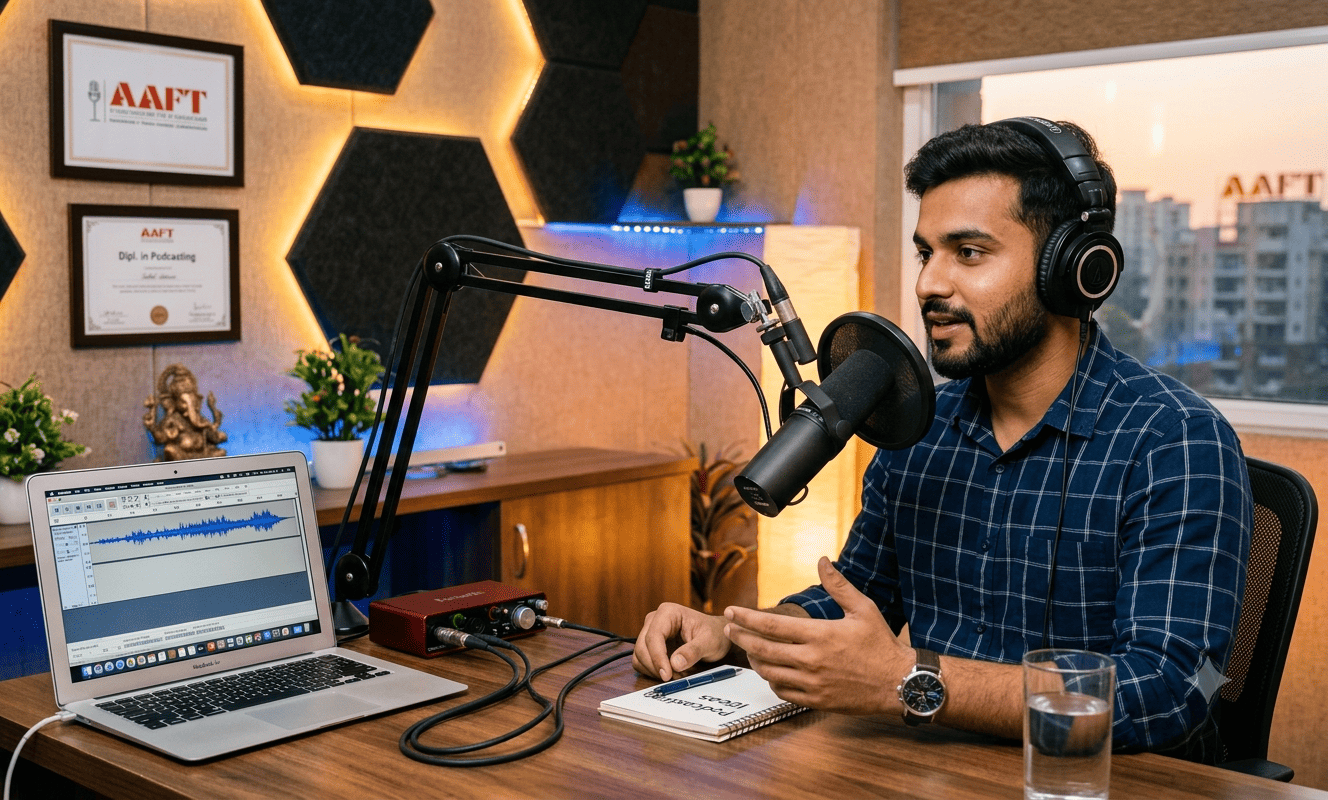
You do not need a professional studio setup to start a podcast in India. A USB condenser microphone (₹3,000–₹8,000), closed-back headphones, and free recording software like Audacity or GarageBand are enough for your first few episodes.
In fact, audio quality depends more on your recording environment than expensive equipment. A quiet room with soft furnishings or a wardrobe filled with clothes can help reduce background noise and improve sound quality without additional costs.
If you plan to create video podcasts for platforms like YouTube or Instagram, you will need a good camera or a recent smartphone, basic lighting equipment, and video editing software.
Learning these skills through a content creation course can help you develop the technical knowledge required to create professional-quality podcasts and digital content.
Step 3: How Do You Plan and Script a Podcast Episode?
Start each episode with a strong hook, followed by key discussion points or interview questions, and end with a clear CTA (call to action). Script your introduction and closing, while keeping the main section flexible with bullet points to maintain a genuine flow.
Research plays a crucial role in creating valuable content. For interviews, prepare relevant questions and understand your guest’s background. For solo episodes, organize your ideas and use credible sources to support your points. Many creators also batch-record multiple episodes to maintain consistency.
Developing skills like voice modulation, storytelling, and episode planning through a podcasting course can help you create more engaging and professional-quality content.
Step 4: How Do You Distribute and Publish Your Podcast?
If you are planning about publishing your podcast, the first step is choosing the right podcast hosting platform rather than directly uploading episodes to platforms like Spotify or Apple Podcasts. Hosting platforms such as Buzzsprout, Spotify for Podcasters, Podbean, and Acast store your audio files and distribute them through an RSS feed to multiple podcast directories.
Choose a platform based on factors like storage, analytics, and monetisation options. For beginners, Spotify for Podcasters is a simple and accessible option to get started.
Once your podcast is live, submit your RSS feed to platforms like Apple Podcasts, Amazon Music, and other listening apps. After the initial approval process, new episodes will automatically appear across platforms.
You can make your podcast easier to discover by paying attention to details like episode titles, descriptions, and tags. Using the right keywords and writing clear descriptions helps listeners find your content. Learning these optimisation techniques through a digital content creation course can help you create better strategies to grow your podcast and connect with your audience.
Step 5: How Do You Grow an Audience Through Social Media Content Creation?
Growing a podcast in India without a social media strategy is like publishing a book without a cover. Repurpose every episode into at least three content formats: a short video clip for Instagram Reels or YouTube Shorts, a quote graphic for Twitter or LinkedIn, and a written thread or blog summarising the key takeaways. This multi-platform approach, rooted in social media content creation best practices, means each episode does the work of five pieces of content.
Consistency plays a bigger role than chasing viral moments when building a podcast audience. Regularly publishing valuable episodes helps you create a loyal listener base over time. Interacting with your audience through comments, online communities, and collaborations with other creators can strengthen connections.
Understanding how to build trust, tell authentic stories, and grow an online presence are important skills that can be developed through an influencer marketing course.
Paid promotion through Instagram ads or YouTube pre-rolls works best once you have at least 10 strong episodes live. This give new listeners enough archived content to binge before spending money on acquisition.
How Can You Monetise Your Podcast in India?
Podcast monetisation in India is maturing rapidly. The four main revenue streams are: brand sponsorships (₹5,000–₹50,000 per episode depending on audience size), listener support through platforms like Buy Me a Coffee or Patreon, merchandise, and paid content (premium episodes or private communities).
Indian creators with audiences above 5,000 monthly listeners regularly attract sponsorships from D2C brands, edtech platforms, and FMCG companies.
YouTube content creation is an increasingly important monetisation layer for Indian podcasters. When you record your podcast in video format and upload it on YouTube, you can reach a wider audience and unlock monetisation opportunities through the platform. Many Indian creators now use podcast platforms to share audio episodes while using YouTube to build their video presence and increase their reach.
As your podcast grows, you can also explore income opportunities through affiliate marketing, online courses, and speaking engagements. By consistently sharing valuable content and building expertise in your niche, you can turn your podcast into a strong personal brand and a long-term career opportunity.
Why Choose a Podcasting and Content Creation Course?
Self-learning through YouTube tutorials can take you far, but a structured podcast production course compresses years of trial and error into focused, mentored training. A formal program covers not just technical production but also storytelling, voice culture, platform strategy, monetisation, and creator branding, which provides you a complete skill set for a sustainable content creator career.
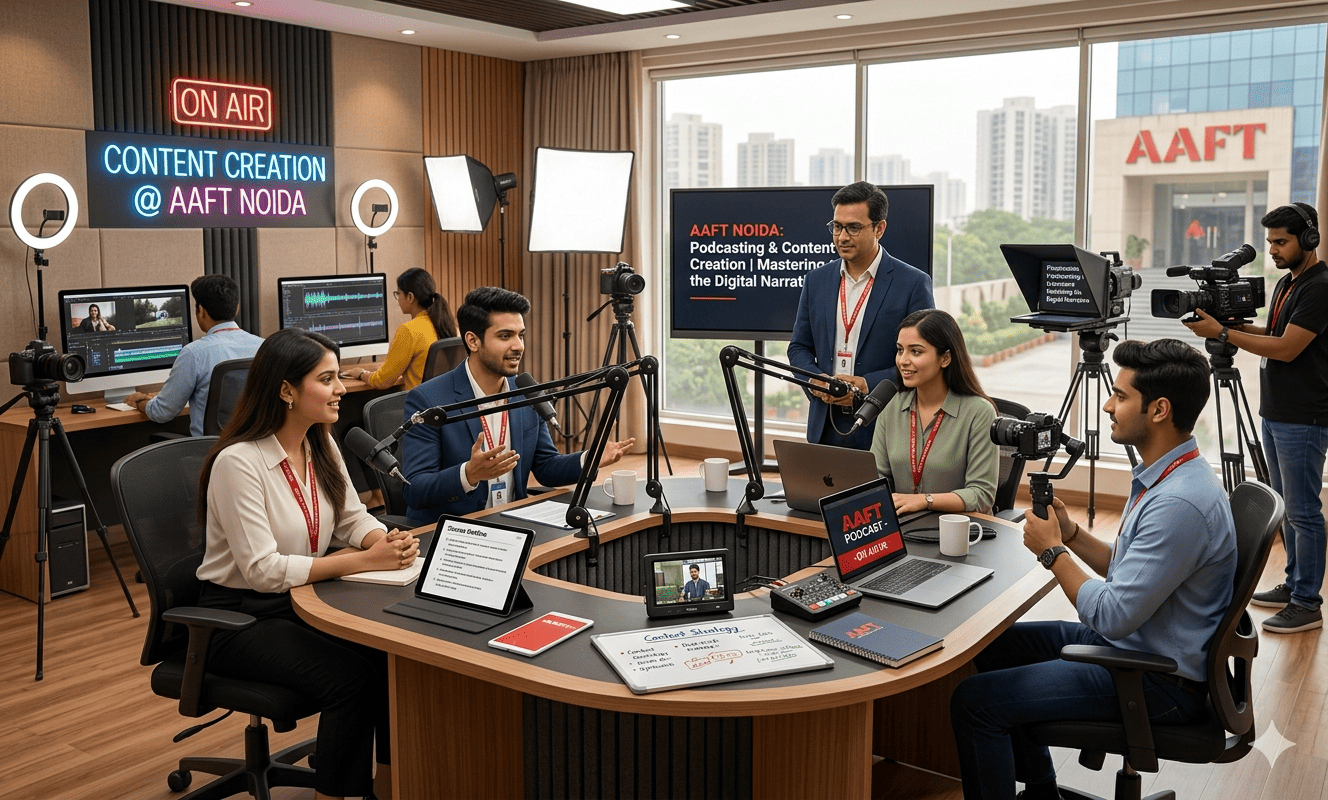
For aspiring creators in India, the Diploma in Podcasting and Content Creation at AAFT, Noida offers one of the most comprehensive programmes available. Here is what sets it apart:
- Exclusive mentorship by Faye D’Souza — one of India’s most respected independent journalists and media voices
- Hands-on studio training in audio recording, video production, editing, and publishing workflows
- Industry-standard media equipment used in every practical session
- Social media, branding, and monetisation covered alongside core production skills
- Internships and real industry exposure through established media networks
- Portfolio-ready output — graduates leave with a launched podcast or digital content channel, not just a certificate
- Workshops and masterclasses by working media professionals
For fee and admission details, visit the official Diploma in Podcasting and Content Creation page.
Final Thoughts
Podcasting in India is no longer a side project for the creatively restless. It is a legitimate, growing career path with a clear skill set, multiple income streams, and an industry infrastructure that did not exist five years ago. The creators who succeed are not necessarily the most naturally talented, but they are the most consistent, the most strategic, and the best trained.
Whether you start with a microphone and a laptop or invest in a full diploma in content creation, the steps are the same: find your niche, build your skills, publish consistently, distribute strategically, and grow your audience through multi-platform social media content creation. The best time to start was two years ago. The second-best time is today.
Frequently Asked Questions (FAQs)
How long does it take to become a successful podcaster in India?
Most creators see meaningful audience traction after 6–12 months of consistent weekly publishing. Structured training through a podcasting course can shorten this significantly by giving you production proficiency and content strategy from the start.
Is podcasting a viable content creator career in India?
Yes. India’s creator economy crossed $1 billion in 2024 and is expanding rapidly. Podcasters who combine audio with YouTube content creation and social media content creation have multiple monetisation pathways including sponsorships, subscriptions, and merchandise.
What is a diploma in podcasting and how is it different from a short podcast course?
A diploma in podcasting is a one-year structured program covering production, storytelling, content strategy, and platform management, resulting in a professional portfolio. A short podcast course typically covers only technical production basics without the business, branding, or strategic components.
Do I need a degree in journalism or media to become a podcaster?
No prior degree is required. A passion for storytelling and a willingness to learn production, voice, and content strategy are the core prerequisites. A digital creator course or diploma in content creation gives you the structured foundation to build professionally from scratch.
What skills does a social media content creation course teach alongside podcasting?
A strong social media content creation course teaches platform-specific storytelling, short-form video creation, audience engagement, community building, content scheduling, analytics interpretation, and creator branding. It directly support podcast growth when applied across Instagram, YouTube, and LinkedIn.


Team AAFT
AAFT has been providing the world with limitless creativity and expression since 1993! Through a dynamic and industry-driven curriculum, AAFT provides engaging and captivating articles to persuasive blogs and empowers its readers to explore diverse avenues of creative media education-related content.