How to Start a Career in Podcasting After 12th in India?
Are you someone who spends hours listening to podcasts and wonders if it can become a career?
Let’s settle this right away.
A few years ago, podcasting was something people did in their spare time for fun. Today, it’s a professional industry worth ₹2,000+ crore in India alone, and it’s growing at 30–35% every single year. Spotify India, JioSaavn, Amazon Audible, and YouTube Podcasts are actively investing in original Indian audio content.
Brands like Zerodha, Razorpay, and BYJU’S have dedicated podcast strategies. News channels, OTT platforms, and PR agencies are hiring podcast producers, hosts, editors, and strategists.
If you’ve ever finished a podcast episode and thought, “I’d love to do something like this someday,” you’re not alone. Whether you aspire to become a podcaster, content creator, producer, or digital storyteller, a podcasting and content creation course can help you develop the creative and technical skills that the industry demands.
It’s a game-changing opportunity to turn your interest in content creation into a structured learning experience and a future-ready career opportunity.
What Does the Indian Podcasting Industry Look Like in 2026?
India now has over 57–60 million active podcast listeners, and that number is climbing fast. The boom is driven by affordable smartphones, cheap data, regional language content, and a generation of listeners who prefer audio over video for commutes, workouts, and downtime.
Industry reports from PwC, Grand View Research, and IMARC Group suggest that India is among the world’s fastest-growing podcast markets, driven by rising digital audio consumption, regional-language content, and increasing investments from streaming platforms, media companies, and brands looking to engage highly targeted audiences.
The Indian podcast market is projected to grow at over 25% CAGR over the coming years, highlighting the sector’s strong growth potential.
Here’s a snapshot of where the industry stands today:
Book Now →
| Data Points | Key Information |
| Indian Market Size | ₹2,000+ crore |
| Active podcast listeners in India | 57–60 million (estimated) |
| Growth rate (year-wise) | 35-40% |
| Top platforms | Spotify, JioSaavn, Amazon Music, YouTube Podcasts |
| Fastest-growing genres | True Crime, Business, Education, Mythology, Politics |
This is more than a trend. As audiences for podcast continues to evolve, so does the need for skilled creators who can turn ideas into compelling audio experiences.
What Jobs Can You Get After a Podcasting and Content Creation Course?
Many students assume podcasting is only about becoming a host and speaking into a microphone. In reality, the industry offers a wide range of career opportunities. Behind every successful podcast are content creators, producers, scriptwriters, audio editors, content strategists, and distribution specialists working together to create engaging experiences for audiences.
The skills gained through a video content creation course can open doors to diverse roles across digital media, entertainment, marketing, and the creator economy.
Do you want free career counseling?
Ignite Your Ambitions- Seize the Opportunity for a Free Career Counseling Session.Here’s a breakdown of real roles in the podcasting ecosystem:
| Job Role | Core Responsibility | Avg. Monthly Salary (India) |
| Podcast Host / Presenter | Record, narrate, and present episodes | ₹50,000 to ₹80,000 |
| Audio Producer | Edit, mix, and master audio | ₹35,000 to ₹95,000 |
| Podcast Scriptwriter | Research and write episode scripts | ₹30,000 to ₹55,000 |
| Podcast Manager | Publishing, distribution, analytics | ₹35,000 – ₹60,000 |
| Brand Podcast Strategist | Create audio content for corporate clients | ₹50,000 to ₹1.2 Lakhs |
| Sound Designer | Create music, intros, and sound effects | ₹35,000 and ₹50,000 |
| Podcast Journalist | Investigative or news-based audio content | ₹30,000 – ₹80,000 |
Why Choose a Podcasting and Content Creation Course After 12th?
Many students assume they need a traditional degree before exploring careers in media, podcasting, or content creation. In reality, starting right after Class 12 can give you a significant advantage in an industry that values skills, portfolios, and practical experience over lengthy academic timelines.
By enrolling in a podcasting and content creation course early, you begin building industry-relevant skills while many of your peers are still figuring out their career direction. Instead of waiting until graduation, you gain hands-on exposure to content planning, storytelling, audio production, video content creation, editing, and audience engagement from day one.
Key Features
- Building a professional portfolio of podcasts and digital content
- Gaining practical experience with industry-standard tools and software
- Learning from media professionals and industry mentors
- Developing skills in both podcasting and video content creation
- Creating networking opportunities through workshops, events, and collaborations
- Becoming job-ready for roles in digital media, content marketing, and the creator economy
This is where AAFT stands out. With its industry-focused curriculum, professional studio infrastructure, experienced faculty, and strong media ecosystem, AAFT provides students with practical training that goes beyond theory.
The program is designed to help aspiring podcasters and content creators build real-world projects, understand audience behaviour, and develop the skills required by today’s rapidly evolving digital content industry. Rather than waiting years to enter the field, students can start creating, learning, and building their careers from the very beginning.
What Skills Do You Need to Become a Professional Podcaster?
Podcasting is a craft, and like any craft, it has multiple layers. The professionals who succeed in the industry aren’t just confident speakers. They understand storytelling, production, audience engagement, and content strategy. A well-structured podcasting and content creation course helps students develop these industry-relevant skills and prepares them for a range of opportunities in digital media.
Storytelling and Scriptwriting
Every memorable podcast begins with a strong story. Learning how to structure episodes, write engaging scripts, conduct research, and communicate ideas clearly helps keep listeners invested from start to finish. These skills form the foundation of compelling audio content.
Audio Production and Editing
Professional-quality audio can make or break a podcast. Understanding recording techniques, sound design, editing software, and post-production workflows helps creators deliver a polished listening experience.
Content Strategy and Audience Growth
Creating content is only half the job. Podcasters must understand audience preferences, content planning, platform algorithms, and distribution strategies to grow and retain listeners over time.
Interviewing and Communication Skills
Many podcasts rely on meaningful conversations. Strong interviewing techniques, active listening, and clear communication help creators host engaging discussions and bring out valuable insights from guests.
Personal Branding and Content Marketing
Successful podcasters know how to market their content across multiple platforms. Through a Diploma in Podcasting and Content Creation at AAFT, students learn how to build a personal brand, promote content effectively, and create a sustainable presence in the creator economy.
Branding, Analytics, and Monetisation
Professional podcasters track performance, build personal brands, and explore revenue opportunities through sponsorships, advertising, and premium content. These business-focused skills help transform a creative passion into a long-term career in the creator economy.
Why Choose AAFT Noida to build a career in Podcasting and Content Creation?
AAFT Noida has been shaping India’s media professionals since 1993. For more than three decades, the institution has trained journalists, filmmakers, broadcasters, and digital content creators who have gone on to work across leading media and entertainment organisations.
What sets AAFT apart from a conventional communication or media college is its strong emphasis on practical, industry-integrated learning. Students don’t just study media theories; they create content, work on live projects, and gain hands-on experience using professional equipment.
From the very first semester, they learn in real studio environments under the guidance of industry-experienced faculty.
What Sets AAFT Apart?
Real Studio Access from Day One
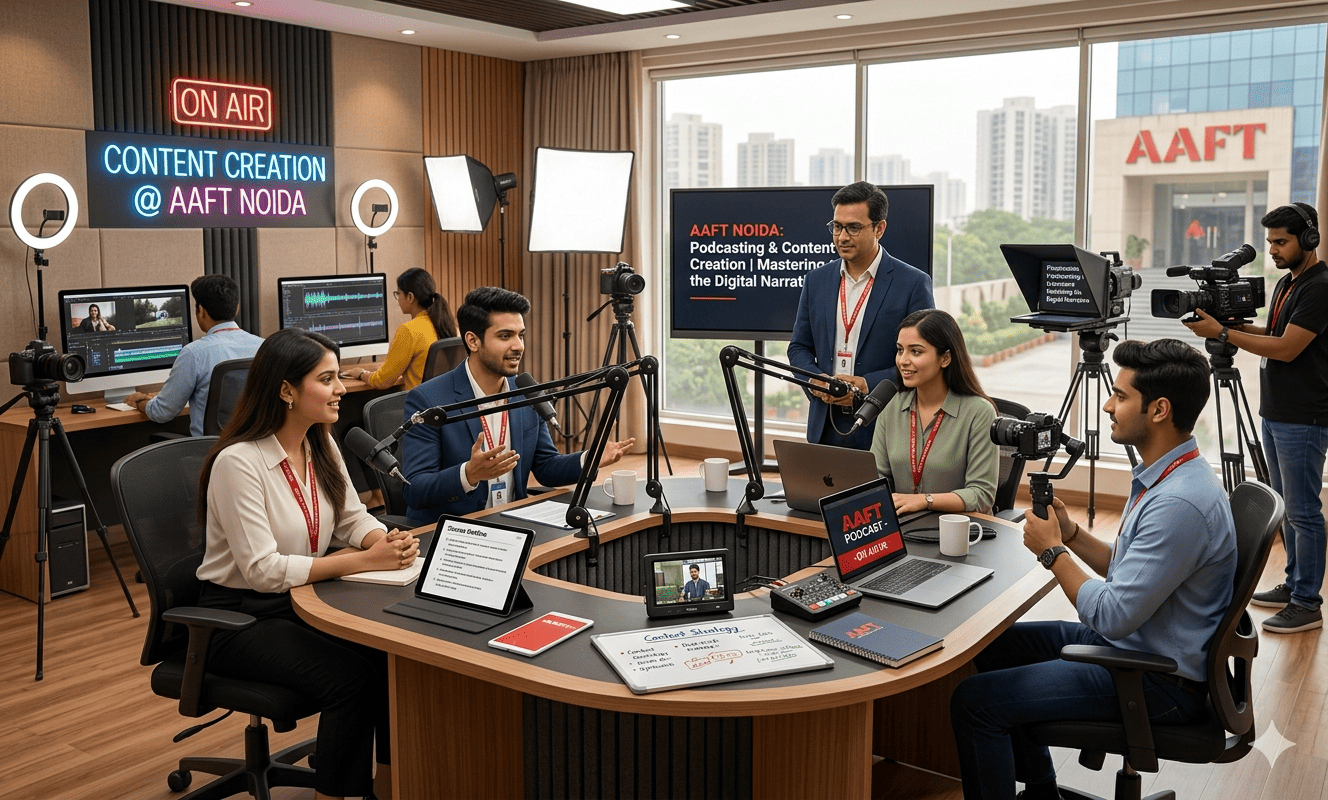
AAFT’s campus features professional recording studios, editing suites, and broadcast facilities designed to simulate real-world media environments. Rather than learning production through demonstrations alone, students gain practical experience by creating content and working with industry-standard equipment from the beginning of the programme.
Faculty with Industry Experience
AAFT’s faculty includes professionals with experience across television, radio, filmmaking, journalism, and digital media. Their industry insights help students understand current trends, workflows, and expectations beyond what is typically covered in textbooks.
Strong Industry Exposure and Internship Opportunities
Over the years, AAFT has built relationships with media houses, production companies, PR agencies, and digital content studios. These connections provide students with opportunities for internships, industry interactions, and practical exposure that can strengthen their career prospects.
A Network of Successful Alumni
An institution is ultimately judged by the success of its graduates. AAFT alumni have established careers across television networks, OTT platforms, production houses, radio stations, digital media companies, and international film festivals. This strong alumni network reflects the institution’s long-standing commitment to industry-focused education.
Which Content Creation Course Is Right for You?
If you’re interested in storytelling, digital media, and creative content creation, AAFT’s Diploma in Podcasting and Content Creation is designed for you. The course blends creative skills with technical training in audio production, scripting, editing, and audience building. It also provides hands-on studio experience and industry exposure, helping you build a strong portfolio.
For students after 12th looking to enter the growing creator economy, this program offers a practical and career-focused pathway into podcasting and digital content creation.
The AAFT Admission Process: Everything You Need to Know
Getting into AAFT is straightforward — there’s no intimidating entrance exam. What matters is your interest in media and your commitment to the craft.
| Criteria | Details |
| Minimum Qualification | 10+2 (Class 12) from any recognised board |
| Stream Requirement | None — Science, Commerce, and Arts all eligible |
| Age | No Bar |
| Entrance Test | Personal interview / counselling session |
How to Apply: A Step-by-Step Guide
Step 1: Choose Your Program. Visit AAFT’s official website and compare courses by duration, curriculum, and career outcomes. Shortlist the one that fits your interest.
Step 2: Fill the Application Form. The application is available online. You’ll need to enter basic personal and academic details. It takes nearly about 15 minutes.
Step 3: Submit Your Documents. Prepare scanned copies of your 10th and 12th marksheets, school leaving certificate, government ID (Aadhaar/passport), and passport-size photographs.
Step 4: Attend the Counselling Session. AAFT conducts a personal interview or virtual counselling session with faculty. This is basically a conversation about your interests and goals. Be honest and enthusiastic.
Step 5: Receive Your Offer Letter. After the counselling session, successful applicants receive an admission offer.
Step 6: Pay and Confirm Your Seat. Complete the fee payment within the deadline to lock in your place.
FAQs
Can I pursue podcasting after 12th without a science or arts background?
Absolutely. AAFT accepts students from all streams — Science, Commerce, and Arts. There’s no subject requirement. What matters is your interest in communication and storytelling.
Is a formal degree necessary to become a podcaster?
Not for starting a podcast, anyone can do that. But if you want to work at a media company, news network, or agency as a professional, a degree or diploma from a recognised institution significantly improves your profile and salary prospects.
Which AAFT course is best specifically for podcasting?
The Diploma in Podcasting is the best choice if you’re looking podcasting and content creation courses. This program gives you for a broader foundation with podcasting as a key specialisation.
Which equipments do I need to start a podcast channel?
A USB microphone (₹3,000–₹8,000), free software like Audacity, and a quiet room is enough to start. At AAFT, you’ll have access to professional studio equipment throughout your content creation course.
Does AAFT offer scholarships?
Yes. AAFT offers merit-based scholarships and financial assistance programs. Contact the admissions office directly for current availability and eligibility criteria.


Team AAFT
AAFT has been providing the world with limitless creativity and expression since 1993! Through a dynamic and industry-driven curriculum, AAFT provides engaging and captivating articles to persuasive blogs and empowers its readers to explore diverse avenues of creative media education-related content.