Music Production Course Fees in Delhi NCR: What Should You Expect?
If you’ve ever dreamed of turning your passion for music into a full-fledged career in music production, Delhi NCR is one of the best places in India to make it happen. With a thriving creative economy, a booming OTT and film industry, and a growing demand for skilled audio professionals, the region has become a hub for aspiring producers, sound engineers, and performing artists.
However, one question almost every student asks before enrolling is: how much do music production course fees in Delhi NCR actually cost, and what do you get for that investment?
This guide breaks it all down.
Why Delhi NCR Is the Right Place to Study Music Production?
Delhi NCR, and Noida in particular, has emerged as a vibrant creative hub. Film City in Noida is home to some of India’s most active production studios, media houses, and entertainment companies. For students exploring music courses after 12th, being close to this ecosystem offers a significant advantage, not just in terms of learning but also access to internships, industry exposure, and future career opportunities.
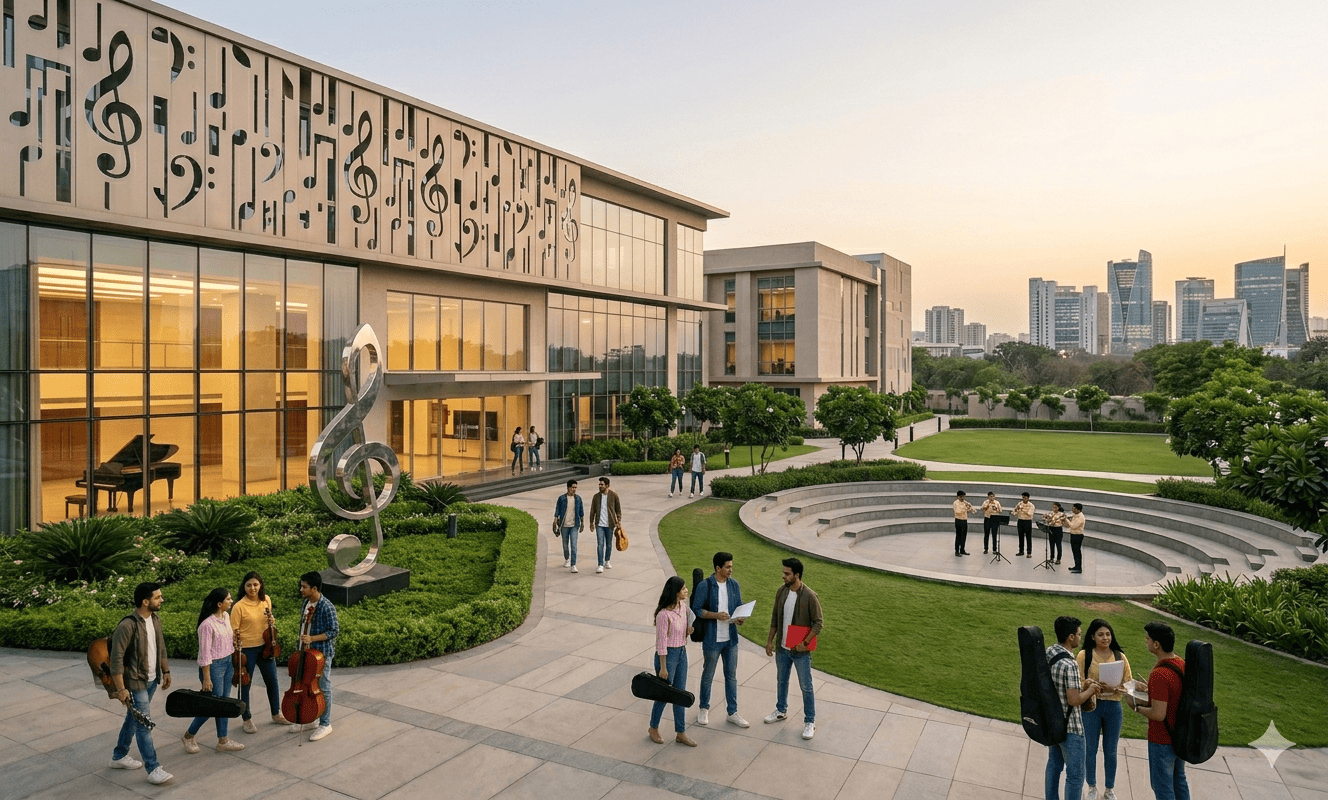
Beyond location, the region is known for its reputed music colleges and institutions that bring together experienced faculty, advanced studio infrastructure, and strong industry connections. When you study in Delhi NCR, you’re not just earning a degree or diploma, you’re becoming part of a professional network from day one, which can play a crucial role in shaping your music career.
Types of Music Production Courses Available in Delhi NCR
Before understanding fees, it’s important to know what kinds of programs are available. Professional music institutes in Delhi NCR typically offer four levels of study:
Undergraduate Degree Programs (3 Years)
These are full bachelor’s programs like a Bachelor of Performing Arts (Music Production) or a B.Sc. in Sound Design. They are the most comprehensive option, covering music theory, digital audio workstations (DAWs), composition, recording, mixing, mastering, and live performance.
Ideal for students who want to build a strong academic foundation and pursue long-term careers in the music and entertainment industry. Students with a minimum of 50% marks in Class 12 from any stream are typically eligible to apply.
Postgraduate Programs (2 Years)
For graduates who want to deepen their expertise, a Master of Performing Arts (Music Production) or an M.A. in Vocal offers advanced specialization. These programs are suited to those who already have a foundational understanding of music and want to move into more senior creative or technical roles.
Diploma Programs (1 Year)
One-year diploma courses in music production strike an excellent balance between depth and duration. With a curriculum structured around a 70:30 ratio, where 70% practical sessions include live performances, stage work, and studio training, and 30% theory, these programs are highly effective for developing job-ready skills quickly.
Short-Term Certificate Programs (3–6 Months)
Certificate courses are designed for those who want focused, skill-specific training without committing to a multi-year program. They cover essentials like DAW operation, audio engineering, sound recording, and music composition, perfect for working professionals or those exploring the field before enrolling in a longer course.
Music Production Course Fees in Delhi NCR: A Realistic Breakdown
Music course fees vary significantly depending on the level of the program, the infrastructure offered, and the industry connections the institution provides. Here’s what you can generally expect in the Delhi NCR market:
Degree programs at reputed colleges typically range from **₹80,000 to ₹1,50,000 per semester**, covering tuition and access to professional studio facilities. Over a three-year program, this represents a substantial but strategically sound investment for a career in music production.
Diploma programs are usually priced as a full-year package, commonly falling in the ₹1,50,000 to ₹2,50,000 range for the complete course. The best programs at this level provide hands-on studio time, mentorship from working industry professionals, and placement support, elements that justify the cost.
Certificate courses are the most accessible entry point, typically ranging from ₹50,000 to ₹1,20,000 for a three-to-six-month program, inclusive of all practical training and studio access.
It’s worth noting that the sticker price rarely tells the full story. The best music course colleges in Delhi NCR factor into their fees things like access to industry-standard DAWs and recording equipment, guest masterclasses by Grammy-winning professionals, international curriculum affiliations, and dedicated placement cells. When you compare fee structures, always evaluate what’s included, not just the number.
What Makes a Music Production Program Worth the Investment?
Not all professional programs are created equal. Here’s what separates a genuinely transformative music education from a basic classroom course:
Industry-Driven Faculty: The most impactful programs are taught by professionals who are actively working in the industry, like sound engineers, producers, musicians, and composers who bring a real-world perspective into every session.
International Affiliations: Leading institutions have academic tie-ups with globally recognized music schools such as the Rock School (RSL) in London and Trinity College, London. These partnerships ensure that the curriculum is globally relevant and that students can pursue internationally recognized certifications alongside their Indian qualifications.
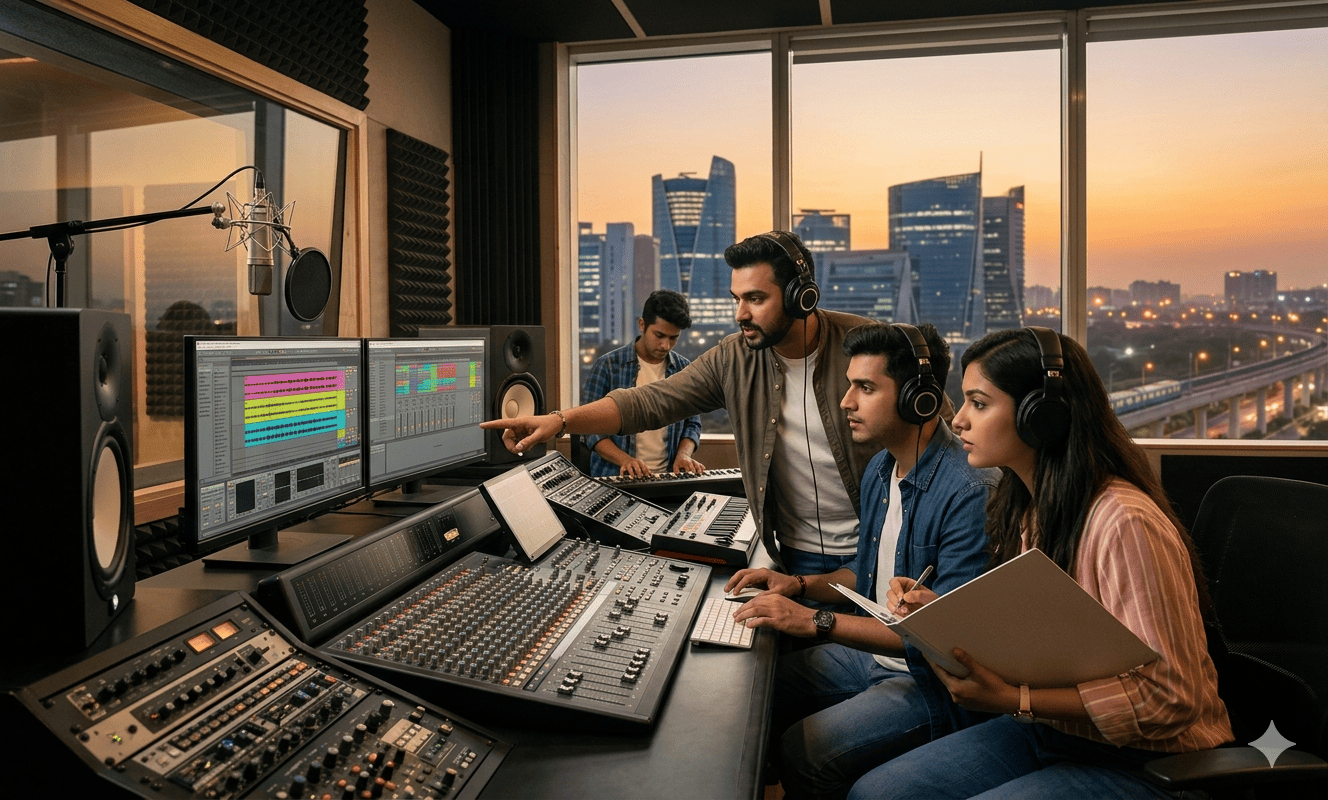
Studio Infrastructure: A career in music production is built on hands-on experience. Programs that offer access to professional recording studios, mixing consoles, and post-production labs give students the practical fluency that employers look for.
Placement Support: Dedicated career cells, job fairs, and industry partnerships are what turn a diploma or degree into a job. Look for institutions with strong alumni networks working at real organizations such as record labels, production houses, film studios, and media companies.
Practical-First Curriculum: The best music courses dedicate the majority of contact hours to live studio work, performance, and project-based learning, not just textbooks and lectures.
Is a Professional Music Course the Right Choice for You?
If you’re drawn to sound, creativity, and the technical side of making music, a professional music course in Delhi NCR can be the beginning of a genuinely fulfilling career. Graduates go on to work as music producers, sound engineers, voice-over artists, studio musicians, DAW specialists, and music directors across Bollywood, OTT platforms, advertising, gaming, and international music markets.
The fees are an investment, not just an expense. When the program is designed around industry outcomes and backed by experienced mentors, the return is in skills, confidence, and career opportunities.
If you’re ready to explore your options, request a free counselling call to understand which level of program, like a degree, diploma, or certificate, best matches your goals, timeline, and budget. Your journey in music starts with a single decision.
Book Now →


Team AAFT
AAFT has been providing the world with limitless creativity and expression since 1993! Through a dynamic and industry-driven curriculum, AAFT provides engaging and captivating articles to persuasive blogs and empowers its readers to explore diverse avenues of creative media education-related content.