Radio Jockey Course After 12th: Course Details, Fees & Career Opportunities
Have you always been told you have a pleasant and charismatic voice? Do you want to work in an environment where you can combine art, technology, and a little fun? If this resonates with you, or if you are just out of school/college wondering if a short-term course can help you get a job/internship, this is for you.
Trained RJs are highly employable and have a scope of working with diverse companies and people. Your constant drive for creativity, being up-to-date with trends and innovations, and knack for hosting shows/podcasts are all you need to excel as an RJ.
Read Also: Mass Communication Course at AAFT: Fees, Media Labs, Placements & Admission Guide
What Does a Radio Jockey Do?
A Radio Jockey does more than just host radio programs. It is a versatile role that involves constantly engaging with the audience/listeners – they take calls/phone-ins, talk directly with the viewers on live shows, create playlists depending on the mood of the show, and provide commentary on different topics. Other than a charming voice, and voice modulation qualities, they also need to be aware of current affairs and have exceptional communication and problem-solving skills.
Why Take a Professional RJ Course?
While you don’t always need a professional degree to work as an RJ, a formal course would guide you through the little details of the job role, and enable you to become proficient in the skills required. A well-structured syllabus would help you get an idea of the different types of programs you might host, and help you understand the right way to approach them.
Read Also: India’s Highest Paying Certificate Courses for 2024: Top Job Opportunities
Formal courses also provide training that is at par with the industry requirements. Technological skills are a must in any industry today – they allow you to keep up with the shifting trends and aim for better opportunities. You would be made accustomed to the post-production processes – including the use of relevant tools and software.
Project-oriented curricula are great for creating a sort of portfolio of your work. You would learn how to create effective showreels highlighting your skills, talents, and areas of interest. With industry experts as facilitators and course conductors, you can build a strong network, apply for internships with popular media houses, and get a sneak peek of the industry even before you step in. So, when you start your journey as a professional RJ, you will have an idea of the challenges and complexities you might encounter and know how to deal with them.
Read Also: Best Course After 12 Arts: The Complete Guide to Career Options, Colleges & Fees
Who Can Apply for Radio Jockey Course?
Anyone who has completed their 10+2/graduation can apply to this course, irrespective of their stream or subject studied. The radio jockey course fees at AAFT are around ₹60,000 for the 3-month program. You can view the brochure for details and apply online via our website.
Book Now →
If you are still wondering if this would be a good fit for you, run a quick skill check before you apply. To be a successful RJ, you would need to be a quick learner, be fluent while speaking, have clear pronunciations, and have the ability to engage your listeners. A basic understanding of the medium is a plus too.
This course is perfect for anyone who wants to work as an RJ, Voice-Over, and Dubbing artist, podcast host, or moderator for reality TV.
Radio Jockey Course Syllabus
Certification course is a 3-month long program that covers all the relevant knowledge and skills that you would need to become a Radio Jockey. This course has a comprehensive syllabus and a skill-focused, project-oriented approach that will provide you with the right training to navigate the industry.
Do you want free career counseling?
Ignite Your Ambitions- Seize the Opportunity for a Free Career Counseling Session.A radio jockey course covers everything you need to know about working in radio, from using your voice effectively to producing engaging shows. Some of the important topics covered include:
Voice Modulation & On-Air Presentation
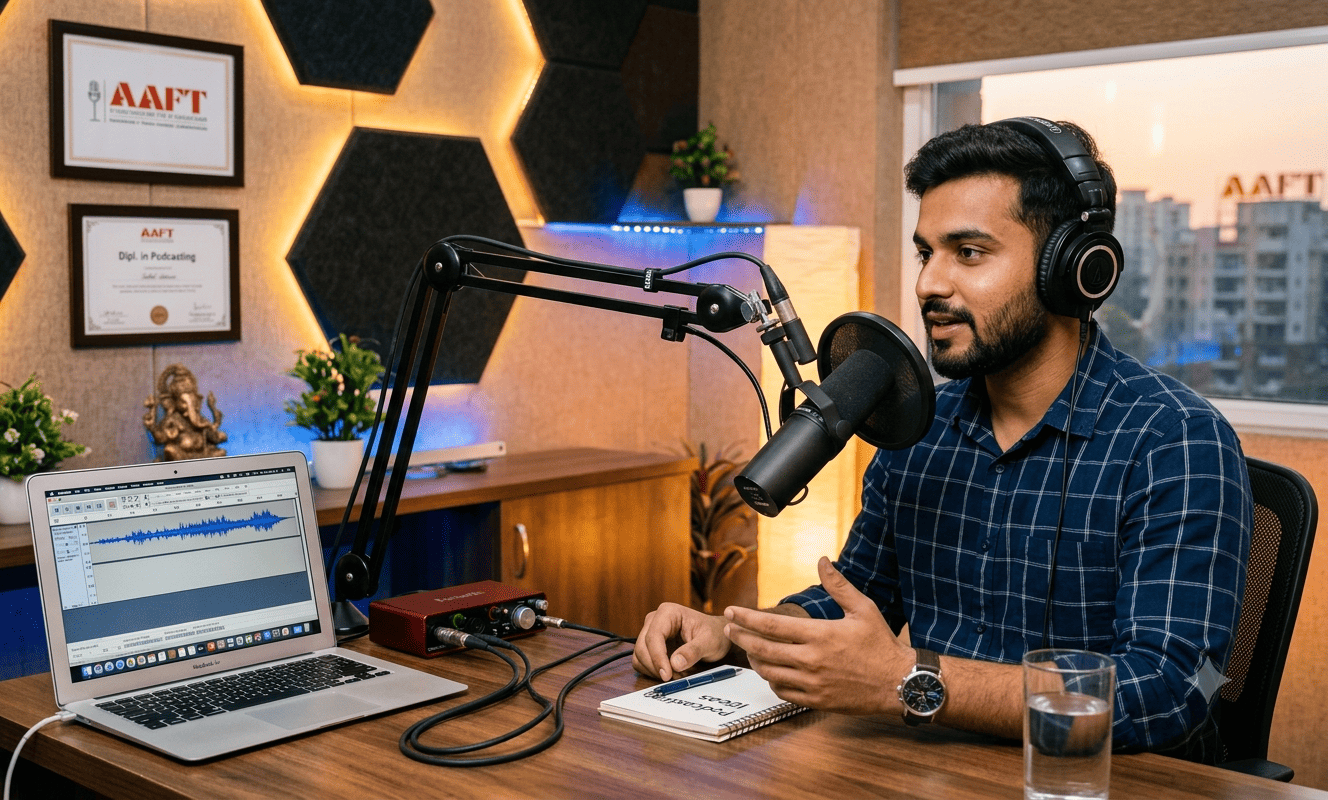
Voice modulation is an important part of being an RJ. You will learn how to control your pitch, tone, pace, pronunciation, and expressions to make your on-air presentation more engaging. The focus is also on developing confidence and creating a natural connection with your listeners.
Radio Production & Audio Editing
A radio jockey also needs to understand what goes on behind the microphone. This part of the course introduces you to radio production, audio recording, sound effects, music selection, and basic audio editing. These skills help you put together interesting and well-produced radio shows.
Interviewing, Podcasting & Show Planning
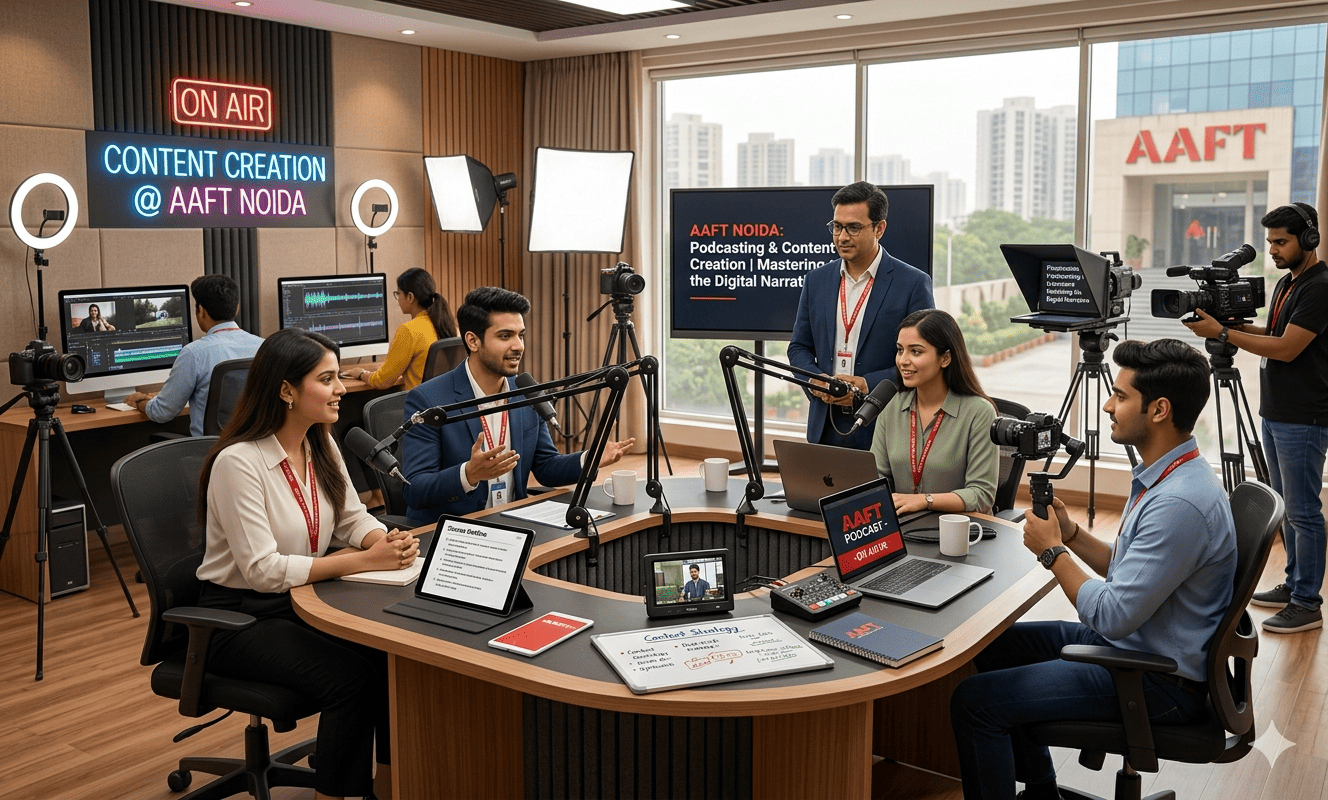
Interviewing and show planning are important skills for an RJ, especially when interacting with guests or creating different types of programmes. You will learn how to prepare questions, conduct interviews, plan show segments, and develop content for podcasts and other audio formats.
Skills Required to Become a Radio Jockey
Being an RJ is not just about having a good voice. You also need the right communication skills and the ability to keep your audience interested. Some of the important skills include:
- Good Communication: Speak clearly and express your thoughts confidently.
- Voice Modulation: Use the right tone, pitch, pace, and expressions while speaking.
- Quick Thinking: Respond naturally to unexpected situations and conversations.
- Creativity: Come up with interesting ideas, stories, questions, and show content.
- Confidence: Stay comfortable while speaking on-air and interacting with guests.
- Listener Engagement: Understand your audience and keep them connected to your show.
- Basic Audio Skills: Have an understanding of recording, editing, music, and sound.
Job Opportunities and Salaries You Can Expect
After a professional course, you can apply for multiple positions and roles depending on your skills and area of interest. Trained RJs are employed all over the entertainment and TV industry in diverse jobs with varying salaries.
Read Also: Is Citizen Journalism the Future of News?
You can host Podcasts and Radio shows using your research and interviewing skills, or work in reality TV and host reality shows/contests and award ceremonies. These jobs require you to narrate anecdotes, provide commentary, and connect with different demographics. You could also become an online content creator and start your podcast.
If you have a business or management degree or are planning to get one, this course can help you work in media management and plan, strategize, and execute content creation and production in leading Radio channels/media houses.
For anyone who is just starting a career as an RJ, you can expect a salary between 2-5 LPA, however with skill, knowledge, experience, and a strong and impactful portfolio, you can earn up to 5-12 LPA in tier-2 cities and 10-20 LPA in tier-1 metro cities.
End Note
With an all-around skill development and familiarity with how the industry functions, a certificate course in jockeying and production for radio could really elevate your career and add to the skillsets in your resume. Along with the RJ course, the School of Journalism and Mass Communication at AAFT offers multiple undergraduate and postgraduate degree/diploma programs. These are designed to introduce you to reporting, journalism, and mass media, and enhance your journalistic skills so you can work with the leading news channels and media houses.
Frequently Asked Questions
Q.1 Can I become a radio jockey after 12th?
Yes, you can become a radio jockey after 12th. You can enroll in a radio jockey course to develop skills in voice modulation, communication, radio production, interviewing, and on-air presentation.
Q.2 What is the qualification required for an RJ course?
The basic qualification for an RJ course is generally 10+2 from a recognised board. Graduates can also apply, and students from any stream can pursue a radio jockey course.
Q.3 How long is a radio jockey course?
The duration of a radio jockey course depends on the institute and programme. At AAFT, the Radio Jockey program is designed as a 3-month course focused on practical skills and radio production.
Q.4 What is the average radio jockey course fee?
The radio jockey course fee varies by institute and program duration. At AAFT, the fee is around ₹60,000 for the 3-month Radio Jockey program.
Q.5 What is the starting salary of a radio jockey in India?
The starting salary of a radio jockey in India can vary based on the city, radio station, experience, and skills. Entry-level RJs may typically earn around ₹2 to 4 LPA.


AAFT Team
AAFT has been providing the world with limitless creativity and expression since 1993! Through a dynamic and industry-driven curriculum, AAFT provides engaging and captivating articles to persuasive blogs and empowers its readers to explore diverse avenues of creative media education-related content.